6 Best Tarot Decks for Beginners in 2026 (Tested & Reviewed)
The best tarot deck for beginners is the Wyspell Wild Reflections Tarot — a nature-inspired deck with 988 reviews, traditional RWS symbolism, and a 200-page guidebook for just $15.99. Every Wyspell deck follows the Rider-Waite-Smith structure, so all existing learning resources still apply. For a modern feminine alternative, the Neoteric Feminine Tarot features borderless pastel artwork with all-female figures. This guide from Taro's Tarot reviews 6 beginner-friendly Wyspell decks with detailed analysis, expert insights, and specific recommendations for different learning styles. Updated June 2026.
Choosing your first tarot deck is exciting — and overwhelming. The Wyspell range makes it easier: every deck costs between $14 and $16, follows traditional RWS symbolism that works with any learning resource, and includes a 200-page guidebook with upright/reversed meanings plus love, career, and finance interpretations. All artwork is hand-drawn by human artists. We reviewed each deck against real learning outcomes: how quickly new readers learned card meanings, how often they practiced, and how confident they felt doing their first readings. Already have a deck? Jump to our beginner's guide to reading tarot.
Disclosure
This article is published by Taro's Tarot. The “Buy on Amazon” links below are affiliate links: as an Amazon Associate we earn from qualifying purchases, at no extra cost to you. Commission plays no part in the rankings — we read with every deck listed here, and decks we didn't rate simply aren't on the page.
In This Guide
Best Tarot Decks for Beginners at a Glance
| # | Deck | Best For | Price | Guidebook | Art Style |
|---|---|---|---|---|---|
| 1 | Wild ReflectionsTop Pick | Nature lovers, all-round beginners | $15.99 | Nature-inspired, gilded edges | |
| 2 | Neoteric Feminine | Modern, empowering feminine energy | $15.99 | Borderless pastel, all-female | |
| 3 | Starlight | Cosmic & celestial aesthetic | $15.99 | Cosmic blue, gilded edges | |
| 4 | Sacred Witch | Shadow work & deep readings | $13.99 | Dark folkloric, mythical | |
| 5 | Gold Tarot | Premium feel, gifting | ~$15.99 | Gold foil, gilded edges | |
| 6 | Pantheon | Mythology & archetype exploration | $14.99 | World mythology gods |
Wyspell Wild Reflections Tarot — The Best All-Round Beginner Deck
by Wyspell · 78 cards · $15.99

With 988 reviews and a 4.7-star rating, the Wild Reflections Tarot has become one of the most popular modern beginner decks on Amazon. The nature-inspired artwork is hand-drawn by human artists, featuring lush botanical illustrations, wildlife, and organic landscapes across all 78 cards. Gilded edges give the deck a premium feel that belies its $15.99 price point. Most importantly, it follows traditional Rider-Waite-Smith symbolism faithfully — meaning every tarot book, course, YouTube tutorial, and card meaning reference will work perfectly with this deck.
“There's no such thing as a 'wrong' first deck. What matters is that when you look at the images, something stirs. That's your intuition recognising a language it wants to learn.”
The included 200-page guidebook is one of the most comprehensive we've seen bundled with a deck. It covers upright and reversed meanings for all 78 cards, plus love, career, and finance interpretations — areas where beginners most frequently want guidance. Several spread layouts are included so you can progress from single-card draws to more complex readings as your confidence grows. The 400 GSM matte cardstock shuffles smoothly and feels substantial in hand without being stiff.
Pros
- + Nature-inspired art accessible to all readers
- + Traditional RWS symbolism — every learning resource applies
- + 200-page guidebook with upright/reversed/love/career/finance meanings
- + Gilded edges and premium presentation
- + Affordable at $15.99 with 400 GSM card quality
Cons
- − Smaller brand than classic publishers
- − Fewer online discussions than the original RWS
- − Nature theme may not suit everyone's taste
Best For
All-round beginners who want a beautiful modern deck that follows traditional symbolism. The nature-inspired art is universally appealing.
Wyspell Neoteric Feminine Tarot — Modern Empowerment Meets Tradition
by Wyspell · Art by Nataliia Habruk · 78 cards · $15.99
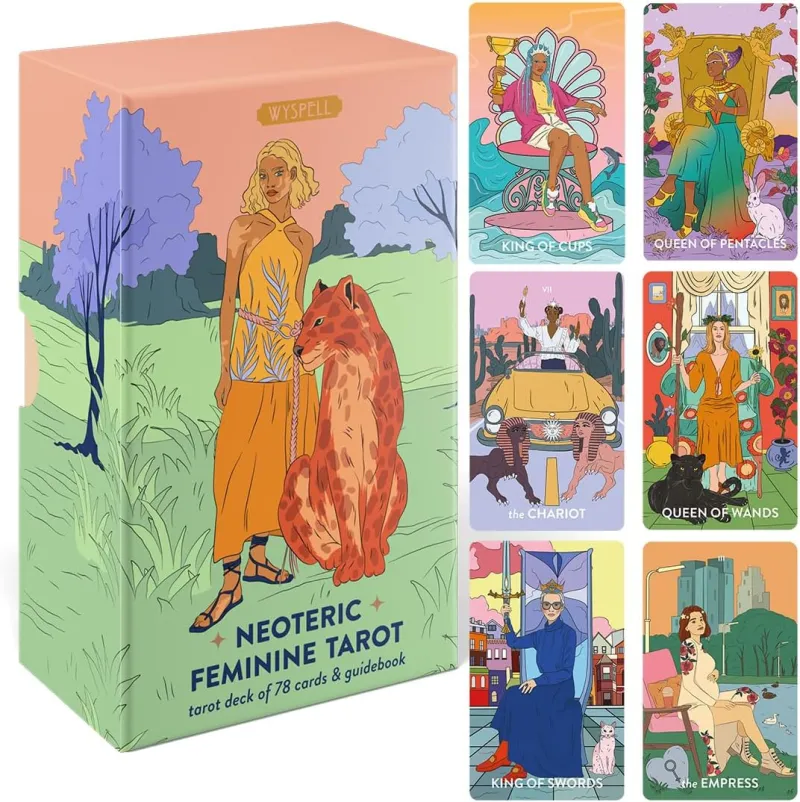
The Neoteric Feminine Tarot reimagines the traditional tarot through a distinctly modern feminine lens. Every card features exclusively female figures in contemporary settings, illustrated in a gorgeous borderless pastel pink design by artist Nataliia Habruk. The hand-drawn artwork is striking — soft pastels create an immersive, dreamy quality that draws you in, while the borderless design means there's no frame creating distance between you and the scene. Despite the fresh aesthetic, the deck preserves the full RWS structure faithfully, so every learning resource you find online or in books will work perfectly.
“The best beginner deck is one that makes you want to pick it up every single day. If the art doesn't excite you, the deck will collect dust.”
Like all Wyspell decks, it comes with a 200-page guidebook covering upright and reversed meanings, plus love, career, and finance interpretations for every card. The 400 GSM matte cardstock provides a satisfying weight and shuffles smoothly. For beginners who want their tarot practice to feel personally empowering from day one, the Neoteric Feminine delivers representation and beauty in equal measure.
Pros
- + Stunning modern feminine artwork by Nataliia Habruk
- + Borderless design for immersive reading experience
- + Diverse female representation throughout
- + Traditional RWS structure fully preserved
- + 200-page guidebook and pastel aesthetic
Cons
- − All-female figures may not resonate with every reader
- − Pastel colour palette is soft, not bold
- − Relatively new deck with fewer community discussions
Best For
Beginners who want modern, empowering feminine representation in their tarot practice. The borderless pastel design is genuinely beautiful.
Wyspell Starlight Tarot — Cosmic Beauty, Traditional Core
by Wyspell · 78 cards · $15.99 · Blue edition (2 variations available)
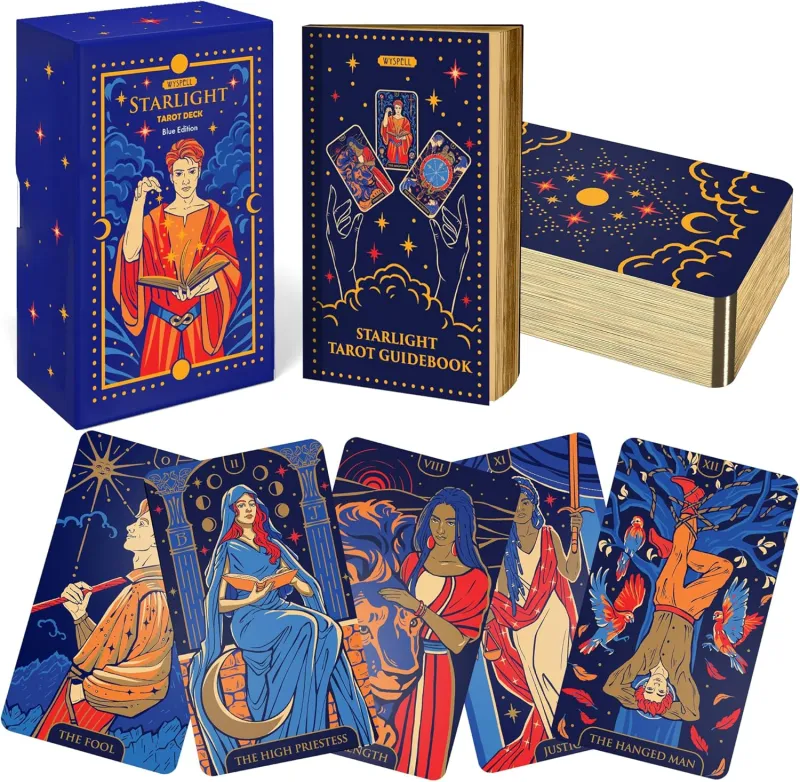
With 434 reviews and a celestial theme that resonates with astrology enthusiasts, the Starlight Tarot is Wyspell's cosmic offering. A deep blue palette with gold accents creates an otherworldly atmosphere across all 78 cards, while gilded edges add a premium touch that catches the light beautifully during readings. Two colour variations are available, letting you choose the palette that speaks to you most. The deck follows traditional RWS symbolism throughout, so the celestial aesthetic never comes at the cost of learnability.
“The Rider-Waite deck did something revolutionary for its time — it gave every card, including the Minor Arcana, a pictorial scene. Before Smith's illustrations, the Five of Cups was simply five cups on a card. She turned every card into a story.”
The included 200-page guidebook provides comprehensive upright and reversed meanings, plus love, career, and finance interpretations for every card. If you're drawn to astrology and want your tarot practice to feel connected to the cosmos, the Starlight creates that bridge beautifully. The celestial imagery pairs naturally with astrological correspondences that many readers explore as they deepen their practice.
Pros
- + Stunning cosmic blue artwork with gold accents
- + Gilded edges feel premium and eye-catching
- + Two colour variations available
- + Traditional RWS symbolism throughout
- + 200-page guidebook — pairs beautifully with astrology practice
Cons
- − Dark colour scheme may be harder to read in low light
- − Cosmic theme is specific — not for everyone
- − Fewer reviews than Wild Reflections
Best For
Readers drawn to cosmic and celestial aesthetics. Especially appealing if you're also into astrology and want a deck that bridges both worlds.
Wyspell Sacred Witch Tarot — Dark Folklore for Deep Readers
by Wyspell · 78 cards · $13.99
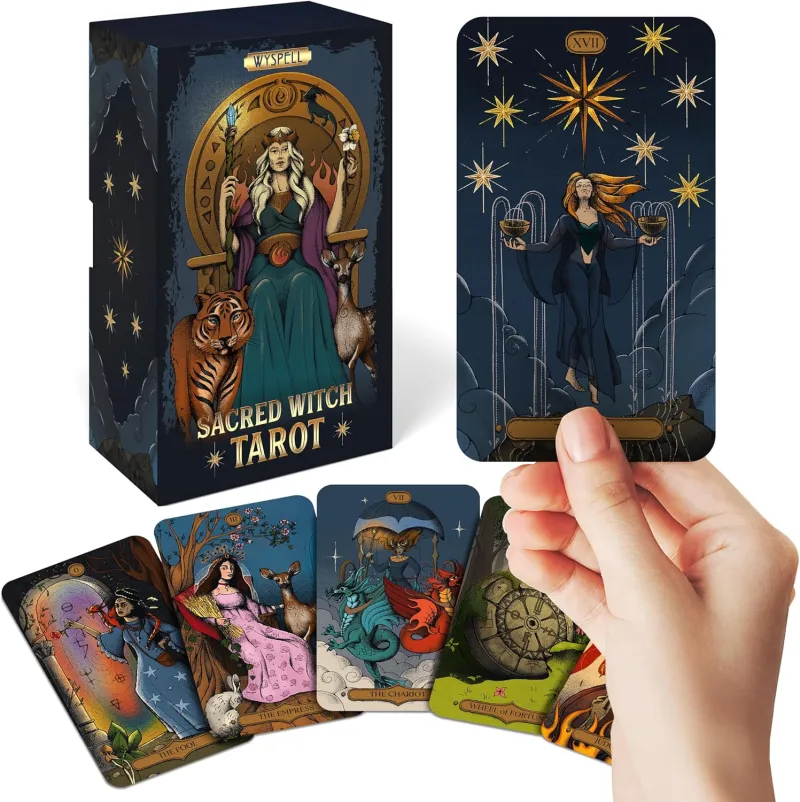
The Sacred Witch Tarot leans into the darker, more mystical side of tarot with rich folkloric artwork featuring mythical beings and shadowy landscapes. With 226 reviews, it's proven itself with readers who want their deck to feel connected to witchcraft traditions and shadow work practice. The deep, saturated colour palette creates an atmosphere of mystery and depth that draws you into each card's narrative. At $13.99, it's also the most affordable deck in this guide — remarkable given the quality of artwork and the included 200-page guidebook.
“Tarot cards don't predict doom. They illuminate possibilities. Every card, even the ones that look alarming, carries wisdom about growth, change, and the human experience.”
Despite the darker aesthetic, the Sacred Witch follows traditional RWS symbolism, making it fully compatible with standard learning resources. The 200-page guidebook provides upright and reversed meanings alongside love, career, and finance interpretations. If you're drawn to the witchcraft side of tarot, or you want a deck that doesn't shy away from the challenging cards, the Sacred Witch delivers authenticity at an unbeatable price.
Pros
- + Most affordable deck in this guide ($13.99)
- + Rich folkloric artwork with mythical beings
- + Perfect for shadow work and deep introspective practice
- + Traditional RWS symbolism throughout
- + 200-page guidebook included
Cons
- − Dark imagery may feel intense for some beginners
- − Folkloric style is niche — not universally appealing
- − Less mainstream appeal than nature or cosmic themes
Best For
Beginners interested in shadow work, witchcraft, or a darker aesthetic. Also the best budget pick at just $13.99.
Wyspell Gold Tarot — Luxury Feel at a Beginner Price
by Wyspell · 78 cards · ~$15.99
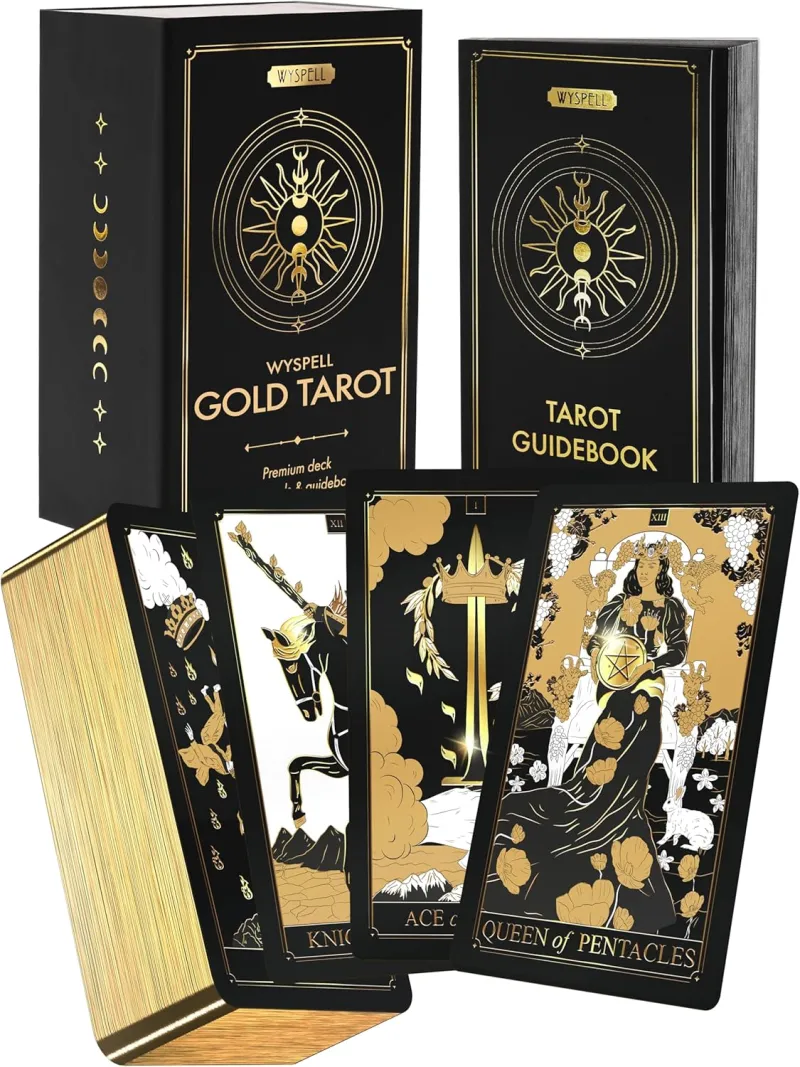
The Gold Tarot is Wyspell's most elegant offering — gold foil stamping and gilded edges give every card a luxurious weight and shimmer that feels far more expensive than its ~$15.99 price. The classic design takes a more traditional approach to artwork compared to the nature or cosmic themes of other Wyspell decks, making it ideal for readers who appreciate timeless aesthetics. The unboxing experience alone makes this a standout gift for anyone curious about tarot.
“The real skill in tarot is not memorizing 78 definitions. It's learning to listen to what a card is showing you before your mind tells you what it should mean.”
Under the premium exterior, the Gold Tarot follows traditional RWS symbolism and includes the same comprehensive 200-page guidebook as every Wyspell deck — upright and reversed meanings, love, career, and finance interpretations, plus spread layouts. The 400 GSM cardstock provides excellent durability and a satisfying shuffle. If you're buying a tarot deck as a gift, or you simply want your first deck to feel special, the Gold Tarot delivers premium presentation without the premium price.
Pros
- + Gold foil stamping and gilded edges feel luxurious
- + Classic design suits traditionalists
- + Premium unboxing experience — makes a beautiful gift
- + Traditional RWS symbolism throughout
- + 200-page guidebook and 400 GSM cardstock
Cons
- − Classic design may feel less distinctive than other Wyspell decks
- − Gold aesthetic is taste-dependent
- − No review count available yet
Best For
Those who want a premium-feeling deck or are buying a tarot deck as a gift. The gold foil and gilded edges make a memorable first impression.
Wyspell Pantheon Tarot — Ancient Gods, Modern Learning
by Wyspell · 78 cards · $14.99 · 2.75"×4.75"
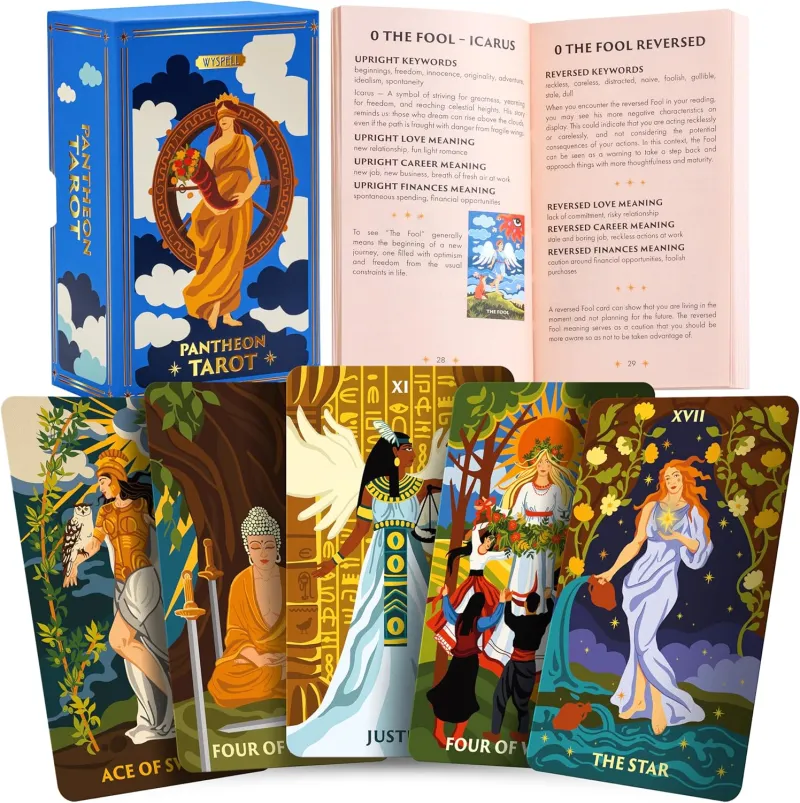
The Pantheon Tarot takes a unique approach among beginner decks: each card draws inspiration from ancient gods and archetypes across world mythologies. Greek, Egyptian, Norse, Hindu, and other traditions are woven together into artwork that adds a rich layer of meaning to the traditional RWS structure. With 84 reviews, it's the newest deck in this guide, but its cross-cultural approach to tarot archetypes offers something genuinely different — a deck that teaches you about mythology and symbolism simultaneously.
“A tarot practice doesn't have to be elaborate. One card a day, a moment of reflection, and you're building a relationship with the deck that will deepen over years.”
The archetype-based approach has a genuine learning benefit: understanding that The Emperor connects to figures like Zeus, Odin, and Ra deepens your grasp of what that archetype represents across human cultures. The 200-page guidebook covers upright and reversed meanings with love, career, and finance interpretations, and the 400 GSM matte cardstock at 2.75"×4.75" provides a comfortable reading size. At $14.99, the Pantheon offers a distinctive entry point for anyone who connects with mythology and wants their tarot learning enriched by archetypal wisdom.
Pros
- + Unique mythology-inspired artwork from world traditions
- + Cross-cultural representation deepens archetype understanding
- + Traditional RWS symbolism throughout
- + 200-page guidebook included
- + Affordable at $14.99 with 400 GSM matte cardstock
Cons
- − Mythology theme adds a layer of complexity for pure beginners
- − Fewest reviews in this guide (84)
- − Niche appeal compared to nature or cosmic themes
Best For
Mythology enthusiasts and readers who connect with archetype-based learning. A distinctive choice that enriches tarot study with cultural depth.
How to Choose Your First Tarot Deck
Prioritise Illustrated Minor Arcana
The biggest difference between beginner-friendly and advanced decks is whether the Minor Arcana cards have illustrated scenes or just geometric pip patterns. A Five of Cups showing a cloaked figure mourning over spilled cups tells you the meaning instantly. Five cup symbols arranged on a blank card does not. All six decks in this guide feature fully illustrated Minor Arcana — this is non-negotiable for beginners.
Choose Art That Speaks to You
You'll spend hours studying these images, so pick a deck whose artwork genuinely excites you. Love nature themes? Wild Reflections. Prefer modern feminine art? Neoteric Feminine. Drawn to cosmic aesthetics? Starlight. Into darker folklore? Sacred Witch. There's no wrong answer — the "best" deck is the one you'll actually want to pick up and use every day.
“There's no such thing as a 'wrong' first deck. What matters is that when you look at the images, something stirs. That's your intuition recognising a language it wants to learn.”
Stick to RWS-Based Structure
As a beginner, choose a deck that follows the Rider-Waite-Smith tradition. This means the suits are Wands, Cups, Swords, and Pentacles, and the Major Arcana follows the standard sequence from The Fool to The World. Decks that rename suits or reorder the arcana add unnecessary confusion when you're still learning card meanings. Save the experimental decks for after you've built a solid foundation.
Check for a Companion Guidebook
A good companion guidebook gives you card meanings, spread layouts, and reading tips matched specifically to your deck's imagery. While you can always use our tarot meanings cheat sheet as a quick reference, a deck-specific guide helps you connect each card's unique artwork to its traditional meaning.
Budget Tip
Every Wyspell deck in this guide costs between $13.99 and $15.99 and includes a 200-page guidebook, so you don't need to buy a separate learning resource. The Sacred Witch at $13.99 is the most affordable option. Save your premium deck budget for after you know what art style and card size you prefer.
First Steps After Buying Your Tarot Deck
Cleanse Your New Deck
Reset your deck's energy before your first reading. Our guide to cleansing tarot cards covers 9 methods from smoke cleansing to moonlight bathing — pick the one that resonates with your practice.
Learn to Shuffle Comfortably
Find a shuffle technique that works for your hand size and deck. The overhand shuffle is easiest for beginners — see all 7 methods in our tarot shuffling guide.
Start With Daily Single-Card Draws
Pull one card each morning and reflect on its meaning throughout the day. This is the fastest way to learn your deck. Try our free one-card tarot reading to practice alongside your physical deck and compare interpretations.
Progress to Three-Card Spreads
After a week of daily draws, try a three-card spread (Past/Present/Future). It's the natural next step that introduces card relationships without overwhelming complexity.
Store Your Cards Properly
Protect your investment with proper storage. Our tarot card storage guide covers 8 methods from silk wraps to dedicated wooden boxes.
“A tarot practice doesn't have to be elaborate. One card a day, a moment of reflection, and you're building a relationship with the deck that will deepen over years.”
Free PDF: Complete Tarot Reference Guide
Download our 44-page guide with all 78 card meanings, keywords, and 8+ spreads to reference while you learn your new deck.
- All 78 upright & reversed meanings
- Love, career & money interpretations
- 8+ popular spreads included
- Print it or use it on your device
Frequently Asked Questions About Beginner Tarot Decks
What is the best first tarot deck for a complete beginner?
The Wyspell Wild Reflections Tarot is the best first deck for most beginners. With 988 reviews, nature-inspired artwork, and traditional RWS symbolism, it's both beautiful and fully compatible with every tarot learning resource. At $15.99 it includes a 200-page guidebook with upright/reversed meanings plus love, career, and finance interpretations. If you prefer a modern feminine aesthetic, the Wyspell Neoteric Feminine Tarot follows the same RWS structure with borderless pastel artwork featuring all-female figures.
How much should I spend on my first tarot deck?
All six Wyspell decks in this guide cost between $13.99 and $15.99, making them some of the most affordable quality beginner decks available. Every deck includes a 200-page guidebook with detailed card meanings, spreads, and interpretations — so you don't need to buy a separate learning resource. You won't find better value for a beginner deck.
Do I need to be gifted my first tarot deck?
No — this is one of the most persistent tarot myths. You absolutely can (and should) buy your own first deck. Choosing a deck yourself means you pick artwork and energy that resonates with you personally, which makes learning easier and more enjoyable.
Should my first deck have 78 cards or just the Major Arcana?
Go for a full 78-card deck. While Major Arcana-only decks (22 cards) exist, they limit what spreads you can do and skip the Minor Arcana entirely — which makes up the majority of a standard tarot reading. All six decks in this guide include the full 78 cards.
How do I know if a deck is beginner-friendly?
Look for three things: fully illustrated Minor Arcana (not just pip cards with symbols), a companion guidebook, and imagery based on the Rider-Waite-Smith tradition. All six Wyspell decks in this guide include 200-page guidebooks with upright/reversed meanings, love/career/finance interpretations, and spread layouts. Decks that follow RWS symbolism let you use any tarot book or course as a study companion.
What should I do after buying my first tarot deck?
Start with three things: cleanse your new deck to reset its energy, learn a simple shuffle technique you're comfortable with, and try a single-card daily draw for your first week. Don't jump into complex spreads — build familiarity with individual cards first, then progress to three-card spreads.
Practice While You Wait for Your Deck
Try a free AI-powered tarot reading online while your deck ships. Learn card meanings interactively with personalised interpretations that adapt to your questions.