Anyone can learn to read tarot cards. You don't need psychic abilities, expensive courses, or years of study — just a deck, curiosity, and the willingness to practise. This guide walks you through everything from understanding the structure of the 78-card deck to performing your first reading and developing your intuition over time. By the end, you'll be able to pull cards, interpret them, and read for yourself or others with confidence.
In short, to read tarot cards:
- Choose a question and hold it in mind while you shuffle the deck.
- Draw one card (or three for past–present–future) and lay it face up.
- Note your first impression of the imagery before looking anything up.
- Check the card's traditional meaning — upright or reversed.
- Connect that meaning back to your question and situation.
What Is Tarot? A Brief History
Tarot cards originated in 15th-century northern Italy as a card game called tarocchi. It wasn't until the 18th century that occultists began using the cards for divination, linking the imagery to astrology, numerology, and Kabbalah. The deck most people recognise today — the Rider-Waite-Smith (RWS) — was published in 1909 and remains the standard reference for tarot readers worldwide.
Modern tarot reading has moved away from fortune-telling and toward self-reflection and personal insight. Rather than predicting a fixed future, the cards act as a mirror: they help you see your situation from new angles, surface subconscious thoughts, and consider possibilities you might not have examined on your own. Therapists, coaches, and journaling practitioners increasingly use tarot as a structured tool for introspection.
You don't need to believe in anything supernatural to benefit from tarot. The cards work as a framework for asking better questions about your life. When you pull The Tower and feel a jolt of anxiety, that emotional response tells you something real about your situation — regardless of whether the card has mystical power or is simply triggering your own buried awareness.
Understanding Your Tarot Deck: 78 Cards Explained
Every standard tarot deck contains 78 cards split into two groups: the Major Arcana (22 cards) and the Minor Arcana (56 cards). Understanding this structure is the foundation of every reading.
The Major Arcana — 22 Cards of Life's Big Themes
The Major Arcana cards are numbered 0 (The Fool) through XXI (The World) and represent the major turning points, life lessons, and spiritual themes in your journey. When these cards appear in a reading, pay close attention — they signal something significant.
Many readers understand the Major Arcana through The Fool's Journey — a narrative arc where The Fool (representing you) travels through each card as stages of personal growth. The journey begins with innocence and potential (The Fool), moves through self-discovery (The Magician, The High Priestess), encounters challenges and transformation (The Tower, Death), and ultimately reaches wholeness and completion (The World).
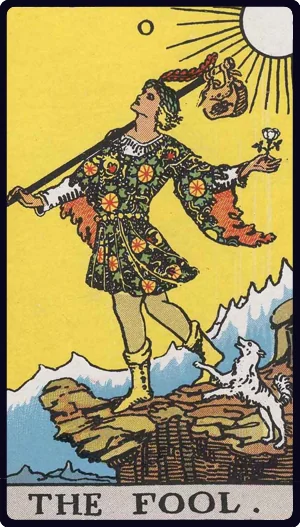
The Fool
New beginnings, innocence, the leap of faith that starts every journey
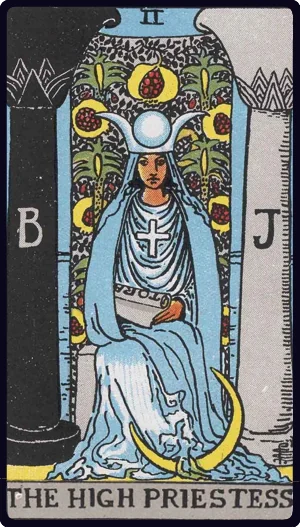
The High Priestess
Intuition, the subconscious, inner knowledge waiting to be accessed
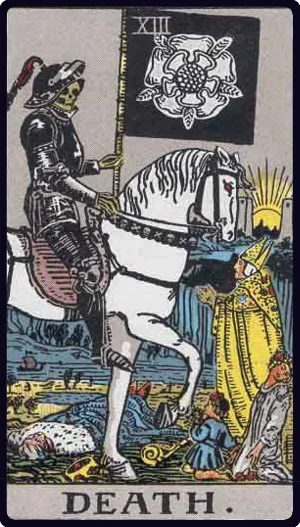
Death
Transformation, endings that create space for new beginnings
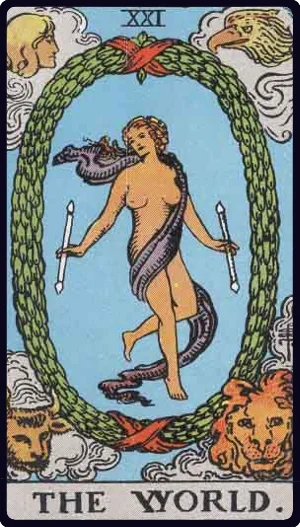
The World
Completion, wholeness, the end of a major cycle
Explore all 22 Major Arcana in our complete card meanings reference.
The Minor Arcana — 56 Cards of Daily Life
While the Major Arcana deals with life's big themes, the Minor Arcana covers the everyday situations, decisions, and emotions you encounter. These 56 cards are divided into four suits, each governing a different area of life:
Wands (Fire)
Passion, creativity, ambition, career drive. Wands cards speak to what excites and motivates you — your projects, your energy, and your willpower.
Cups (Water)
Emotions, relationships, love, intuition. Cups reveal your inner emotional world — how you feel, who you love, and what your heart is telling you.
Swords (Air)
Thoughts, communication, conflict, truth. Swords address the mental realm — decisions, clarity, arguments, and the stories you tell yourself.
Pentacles (Earth)
Material world, finances, health, security. Pentacles ground you in practical matters — money, work, the body, and long-term stability.
Each suit runs Ace through 10, then four Court Cards: Page (student/message), Knight (action/movement), Queen (mastery/nurture), and King (authority/leadership). Court cards often represent people in your life or aspects of your own personality that are active in the situation you're asking about.
Choosing Your First Tarot Deck
Your first deck shapes how you learn, so choose one with fully illustrated Minor Arcana cards. The original Rider-Waite-Smith (RWS) is the most recommended beginner deck for good reason: its imagery is rich with visual cues that help you read intuitively, and nearly every tarot book and course uses it as a reference. When the Six of Cups shows two children exchanging flowers, you instantly sense nostalgia and innocence — no memorisation needed.
That said, the best deck is one whose art resonates with you. Modern decks like the Modern Witch Tarot, Light Seer's Tarot, and Everyday Tarot use the same structure and symbolism as the RWS but with contemporary, diverse imagery. If the traditional 1909 art feels dated, a modern alternative will keep you engaged through the learning process.
Avoid oracle decks for your first purchase — they have different structures (varying card counts, no suits) and won't teach you standard tarot. Also avoid decks with abstract or heavily stylised art that strips away the visual storytelling. You need to be able to see what's happening in each card while you're learning.
Recommended for You
AdWyspell Wild Reflections Tarot
Nature-inspired 78-card deck with 200-page guidebook — traditional symbolism, modern art.
Wyspell Starlight Tarot
Cosmic-themed 78-card deck with gilded edges, 200-page guidebook included.
As an Amazon Associate we earn from qualifying purchases.
How to Prepare for a Tarot Reading
You don't need crystals, candles, or a velvet cloth — though if those things help you focus, use them. What matters is that you create a few minutes of undistracted attention. Turn off notifications, sit somewhere comfortable, and give yourself permission to take the reading seriously.
Shuffling Your Deck
There is no correct shuffling method. Overhand shuffle (moving clumps of cards from one hand to the other), riffle shuffle (interleaving the halves), or pile shuffle (dealing cards into several piles and recombining) all work. What matters is that you shuffle long enough to feel the cards are randomised and that you're focused on your question while you do it.
When you feel ready — a subtle sense of "that's enough" — stop and draw your cards. Some readers cut the deck into three piles and restack them before drawing. Others fan the cards face down and pull ones they feel drawn to. Experiment and find what feels natural.
Cleansing Your Deck (Optional)
Some readers like to cleanse a new deck or reset the energy between readings. Common methods include knocking on the deck three times, placing a clear quartz crystal on top overnight, leaving the deck in moonlight, or simply shuffling thoroughly with the intention of clearing previous readings. None of this is required — it's about whatever helps you feel focused and present.
Get Weekly Tarot Guidance
One card to guide your week — tarot wisdom in your inbox every Sunday.
How to Ask Powerful Tarot Questions
The quality of your reading depends on the quality of your question. Vague questions produce vague answers. The best tarot questions are open-ended, specific, and focused on what you can learn or influence.
Strong Questions
- "What do I need to understand about my relationship with [name]?"
- "How can I move past the fear that's blocking my career?"
- "What will help me make a decision about [specific situation]?"
- "What energy surrounds my finances this month?"
- "What lesson is this difficult period trying to teach me?"
Weaker Questions
- "Will I get the job?" → Try: "What do I need to know about this opportunity?"
- "Does he love me?" → Try: "What is the energy between us right now?"
- "When will I get married?" → Try: "What's blocking me from the love I want?"
- "What's going to happen?" → Too vague. Specify the area of life.
If you want to ask yes/no questions, our yes-or-no tarot reading is designed specifically for that format.
Your First Tarot Reading: Step by Step
Follow this process for every reading. With practice, it becomes second nature.
Get familiar with your deck
Study the 78 cards: 22 Major Arcana (life themes) and 56 Minor Arcana across four suits (Wands, Cups, Swords, Pentacles). Learn the structure before memorising individual meanings.
Choose and frame your question
Ask open-ended questions starting with What, How, or Why. Be specific but allow room for insight. Good: "What do I need to know about my career?" Less useful: "Will I get promoted?"
Shuffle and draw your cards
Shuffle while focusing on your question. When you feel ready, draw cards for your chosen spread. There is no wrong way to shuffle — overhand, riffle, or pile shuffling all work.
Observe your first impressions
Before checking any meanings, notice your gut reaction to each card. What emotions arise? What details catch your eye? Your initial response often holds the most important message.
Read each card in position
Now check the traditional meaning and consider how it relates to its position in the spread (e.g., past, present, future). Combine the textbook meaning with your intuitive impression.
Connect the cards into a story
Look at the cards together, not just individually. What narrative emerges when you read them as a sequence? Notice patterns — repeated suits, numbers, or themes tell you where the energy is concentrated.
Journal and reflect
Write down your cards, interpretation, and the question you asked. Come back to your journal after days or weeks to see how the reading unfolded. This is how you build real tarot skill over time.
Tip: Don't worry about getting it "right." Your first dozen readings will feel uncertain — that's normal. The more you practise, the more naturally the interpretations flow. Start with a free three-card reading to get the feel for it.
Sample 3-Card Reading Walkthrough
Let's walk through a real reading so you can see how interpretation works in practice. The question: "What do I need to know about my career right now?"
Past
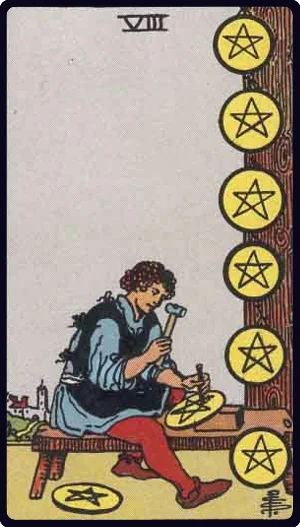
Eight of Pentacles
Present
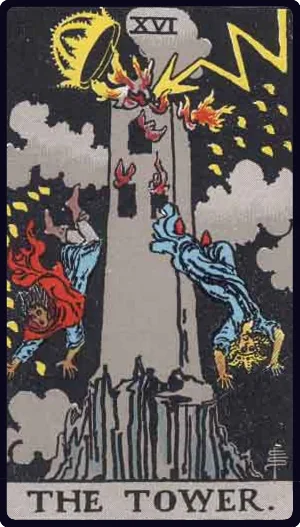
The Tower
Future
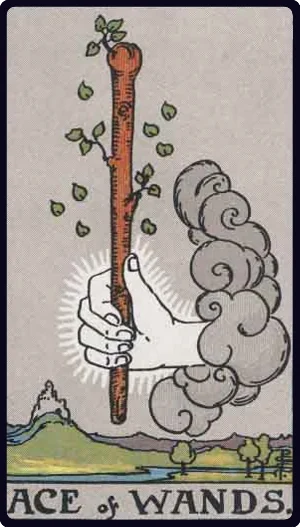
Ace of Wands
Step 1: First Impressions
Before looking anything up, notice your gut reaction. The Eight of Pentacles shows someone working diligently — a sense of craft and effort. The Tower is jarring — lightning, falling figures, disruption. The Ace of Wands feels fresh and energetic — a single wand bursting with potential. The emotional arc goes: steady work → sudden disruption → new creative spark.
Step 2: Card-by-Card Interpretation
Past — Eight of Pentacles: You've been putting in the work. This card represents dedication to your craft, skill-building, and steady effort. You've been the reliable worker, learning and improving through repetition.
Present — The Tower: Something is being shaken up right now. The Tower doesn't necessarily mean disaster — it means a structure that wasn't built on solid foundations is being cleared away. In a career reading, this could be a company restructure, a project falling apart, or a personal realisation that your current path isn't right.
Future — Ace of Wands: After the disruption, a new creative opportunity emerges. Aces represent beginnings, and Wands represent passion and inspiration. This suggests that whatever the Tower clears away will make room for something you're genuinely excited about.
Step 3: Weave the Story
Reading all three cards together: "You've been working hard and building your skills (Eight of Pentacles), but the current situation is being disrupted or needs to change (The Tower). Don't resist this disruption — it's making space for a new beginning that aligns with your passion and creativity (Ace of Wands). The skills you've built aren't lost; they're the foundation for what comes next."
Notice what happened: We didn't predict the future. We reflected on a pattern (hard work → disruption → new opportunity) that helps the reader think about their career situation with fresh perspective. That's what good tarot reading looks like.
Essential Tarot Spreads for Beginners
A spread is the layout pattern you use when placing cards. Each position in a spread has a specific meaning. Start simple and add complexity as you gain confidence.
Single Card Draw
The simplest and most powerful daily practice. Pull one card each morning and ask "What do I need to know about today?" or "What energy should I focus on?" Journal your card and check back in the evening to see how it played out. This single habit builds tarot fluency faster than anything else.
Best for: Daily practice, yes/no questions, quick guidance. Try a single card reading →
Three-Card Spread
The most versatile beginner spread. The three positions can represent different frameworks depending on your question:
- Past – Present – Future: How a situation has evolved and where it's heading
- Situation – Action – Outcome: What's happening, what to do, and likely result
- Mind – Body – Spirit: A holistic check-in on your well-being
- You – The Other Person – The Relationship: For relationship questions
Best for: Most questions, learning card relationships, daily reflection. Try a three-card reading →
Five-Card Cross Spread
A step up from the three-card spread. The positions are: (1) the present situation, (2) the challenge or obstacle, (3) the past influence, (4) the future direction, and (5) the underlying energy or advice. This gives you more context without the complexity of a full Celtic Cross.
Best for: Decision-making, relationship questions, career crossroads.
The Celtic Cross (10 Cards)
The most famous and comprehensive tarot spread. The Celtic Cross uses 10 cards covering your current situation, challenges, subconscious influences, past and future, your self-perception, external influences, hopes, fears, and the likely outcome. It's powerful but complex — save it until you're comfortable interpreting individual cards and weaving stories with smaller spreads.
Best for: Deep, complex questions when you need the full picture. Try a Celtic Cross reading → or learn about more tarot spread types →
How to Read Reversed Tarot Cards
A reversed card is one that appears upside-down when you flip it over. Reversals are optional — many respected readers don't use them — but they add an extra layer of nuance if you choose to include them.
Reversals do not mean the opposite of the upright meaning. Instead, they typically suggest the card's energy is:
- Blocked or delayed: The energy is present but not flowing freely
- Internalised: The theme is playing out internally rather than externally
- In shadow form: The less constructive side of the card's energy
- Diminished: The card's influence is fading or weakening
For example, The Sun upright is joy, vitality, and success. Reversed, it might mean temporary sadness, delayed success, or happiness that you're struggling to access — not misery or failure. The core energy is the same; the expression is different.
Beginner advice: Read upright-only for your first month or two. When 78 upright meanings feel comfortable, add reversals for cards where the nuance genuinely changes your interpretation. You can always incorporate more reversals over time. Our tarot deck with reversals lets you practise with reversed cards digitally.
Reading for Yourself vs. Reading for Others
Reading for Yourself
Self-reading is where most people start, and it remains valuable at every skill level. The main challenge is objectivity — when you're emotionally invested in the outcome, it's easy to see what you want to see.
Tips: Write down your interpretation before you rationalise it. Read the cards as if they were for a friend. Don't re-draw cards because you didn't like the first answer. Give a reading time to unfold before judging its accuracy.
Reading for Others
Reading for other people accelerates your learning because you receive real-time feedback. Start with friends or family who are open-minded and patient. Ask them to share their question, pull the cards, and talk through your interpretation together.
Tips: Don't claim to be an expert — say "I'm learning and this is what I see." Ask them what resonates. Never give medical, legal, or financial advice through tarot. Remember that your role is to help them think, not to tell them what to do.
Developing Your Tarot Intuition
Intuition isn't mystical — it's your subconscious mind processing information faster than your conscious mind can articulate. When you look at a tarot card and "feel" something before you think about it, that's intuition at work. Here's how to strengthen it:
Daily Card Pull
Pull one card each morning without looking up its meaning. Write down what you see, feel, and think. Then check the traditional meaning. Over time, your intuitive hits become more frequent and accurate.
Card Meditation
Choose one card and study it for 5 minutes. Notice every detail — the colours, expressions, symbols, and background. Close your eyes and describe it from memory. This builds visual fluency with the deck.
Story Telling
Draw 3 random cards and tell a story connecting them, without referencing any meanings. This exercises the same narrative skill you use in readings and trains you to find connections between cards.
Track Your Accuracy
Journal your readings and revisit them weeks later. Which interpretations were accurate? Which were influenced by what you wanted to hear? This feedback loop is the fastest way to calibrate your intuition.
Common Beginner Mistakes (and How to Avoid Them)
Trying to memorise all 78 cards before doing a reading
Start reading immediately with a guidebook open beside you. You learn faster by doing than by studying. Even professional readers check references.
Taking "negative" cards literally
Death doesn't mean physical death. The Tower doesn't mean your life is falling apart. Learn to read symbolically. Every card holds growth potential.
Ignoring your gut reaction
Your first impression of a card is often the most important message. Note it before you look up the textbook meaning.
Re-drawing cards when you don't like the answer
The uncomfortable card is usually the one with the most important message. Sit with it. Journal about why it bothers you.
Only reading during a crisis
Low-stakes daily readings build the skill you need for high-stakes moments. Practise when things are calm.
Reading each card in isolation
Cards in a spread are having a conversation. Look at the whole picture — repeated suits, number patterns, and the visual flow between images all carry meaning.
Expecting every reading to be profound
Some readings are mundane. "Focus on rest today" is as valid a message as "major life change ahead." Not every pull needs to be life-altering.
How Long Does It Take to Learn Tarot?
Tarot has a low floor and a high ceiling. You can do a meaningful single-card reading on day one, but mastering complex spreads and reading fluently for strangers takes dedicated practice over months or years. Here's a realistic timeline:
| Milestone | Typical Timeline |
|---|---|
| First meaningful reading | Day 1 |
| Comfortable with 3-card spreads | 2–4 weeks |
| Recognise Major Arcana on sight | 1–2 months |
| Read full 78-card deck without reference | 3–6 months |
| Comfortable reading for others | 6–12 months |
| Celtic Cross and complex spreads | 6–12 months |
| Intuitive fluency (cards feel natural) | 1–2 years |
The single best accelerator is daily practice. A one-card pull every morning (5 minutes) beats a weekend binge study session. Tarot is a practice, not a subject you cram for.
“You don't need to memorise 78 card meanings to read tarot. You need to learn 78 ways of asking 'what is this card showing me about my life right now?' The meanings are in the imagery, the colours, and your gut reaction — not in a textbook.”
Tarot Reading FAQs
Everything beginners need to know
How long does it take to learn tarot reading?
Do I need to memorise all 78 tarot card meanings?
Can anyone learn to read tarot cards?
Should I read reversed cards as a beginner?
What is the best tarot deck for beginners?
What is the best tarot spread for beginners?
Can I read tarot for myself?
How do I ask good tarot questions?
What if I draw a scary card like Death or The Tower?
Do I need to cleanse or bless my tarot deck?
How is tarot different from fortune-telling?
Can I learn tarot from a website or do I need an in-person teacher?
Still have questions? We're here to help!
Contact Support →Explore More Tarot Readings
Discover different ways to gain insight and guidance through our free tarot card readings