What Is the Anxious-Avoidant Trap?
The pursuit-withdrawal cycle that keeps you stuck
The anxious-avoidant trap - also called the pursuer-distancer or demand-withdraw cycle - is a self-reinforcing relationship pattern where two insecure attachment styles collide. One partner (anxious) desperately seeks closeness. The other (avoidant) desperately seeks space. Each partner's coping mechanism triggers the other's deepest fear, creating an escalating loop that can repeat for months or years without either person understanding why.
The tragedy of this dynamic is that both partners are in pain. The anxious partner feels abandoned; the avoidant partner feels suffocated. Both interpret the other's defensive behavior as a character flaw rather than recognising it as a survival strategy wired in childhood. The anxious partner isn't "needy" - their nervous system is screaming that they're about to be abandoned. The avoidant partner isn't "cold" - their nervous system is screaming that they're about to be engulfed.
Understanding the mechanics of this cycle is the first step toward breaking it. If you're wondering whether your relationship patterns are shaped by attachment, our attachment style quiz can help you identify your style, and a relationship tarot reading can offer additional reflection on your dynamic.
Why Anxious and Avoidant Partners Attract Each Other
Attachment magnetism: when "chemistry" is a childhood wound in disguise
The initial attraction between anxious and avoidant partners is often explosive - an intense honeymoon phase that feels like a cosmic connection. But the magnetism is rooted in something less romantic: both partners are subconsciously drawn to someone who confirms their existing beliefs about love.
The Anxious Partner's Draw
They grew up with inconsistent caregivers - sometimes loving, sometimes absent. When the avoidant partner is initially warm but eventually pulls back, it activates a deep, familiar reflex: "If I try hard enough, I can win their love back." The chase feels like home because it mirrors childhood. Successfully recapturing the avoidant's affection feels like a victory over that original wound.
The Avoidant Partner's Draw
They grew up with emotionally neglectful or intrusive caregiving, teaching them that safety means self-reliance. The anxious partner's warmth and emotional depth initially feels like a refreshing breach of their wall. But as the relationship deepens and demands grow, the old alarm fires: "If I let them in, I'll lose myself." They retreat - not because they don't care, but because closeness feels dangerous.
The Honeymoon Trap
During the first ~3 months, the brain is flooded with dopamine, oxytocin, and norepinephrine. In this state, the avoidant partner's deactivating strategies haven't triggered yet because the relationship doesn't feel like a permanent commitment. They may appear secure, attentive, even vulnerable. The anxious partner misinterprets this as proof they've found "the one." But around the three-month mark, deeper emotional risk sets in - and the cycle begins.
The 5 Phases of the Anxious-Avoidant Cycle
Every conflict in this dynamic follows the same predictable arc - and recognising it is the first step to interrupting it.
1
Connection & Perceived Disconnection
Things feel close - but the anxious partner's nervous system is constantly scanning for threats. A minor event (a shorter text, a tired look, an evening spent apart) triggers a "proximity alarm." They perceive a shift that may not actually exist, but their hyperactivated system demands immediate repair.
2
Closeness Triggers Deactivation
As the anxious partner reaches for more contact, the avoidant partner's system registers it as pressure. They begin subtle deactivating strategies: focusing on flaws, becoming "busy" with work, intellectualising emotional conversations. They're not being cruel - their nervous system is reclaiming autonomy.
3
The Pursuit Begins (Protest Behaviors)
Sensing withdrawal, the anxious partner escalates: multiple texts, score-keeping ("I'm always the one who reaches out"), creating drama to test if the partner still cares, or following them from room to room to "talk it out." These are protest behaviors - desperate attempts to force a response.
4
Full Withdrawal (Stonewalling)
The pursuit confirms the avoidant's worst fear: relationships are suffocating. They stonewall, physically leave, or become cold and dismissive. The anxious partner is now in catastrophic panic - the abandonment they feared has become real. Both partners are in survival mode.
5
Fragile Repair or Breakup
Either the avoidant offers a small gesture of affection after regulating (which the anxious partner accepts without resolving the issue, restarting the cycle), or the rupture leads to a breakup. Post-breakup, the avoidant initially feels relief, then regret. The anxious partner feels despair. Reconciliation often restarts the entire loop.
What Each Partner Actually Experiences
Both are in pain - they're just in different kinds of pain
The Anxious Partner
"The Terror of Abandonment"
They think:
"If I don't fix this right now, they will leave forever."
Catastrophising - treating silence as total abandonment
They think:
"They're quiet because they no longer find me attractive."
Personalisation - reading the partner's need for space as rejection
They think:
"I'm the only one who cares about this relationship."
Polarisation - casting themselves as hero, partner as villain
The Avoidant Partner
"The Terror of Engulfment"
They think:
"I need to get out of here to find my breath."
Escapism - seeing distance as the only path to safety
They think:
"No matter what I do, it's never enough for them."
Fixed mindset - believing the partner's needs are impossible to meet
They think:
"They're acting crazy; I'm the rational one."
Devaluation - dismissing attachment needs as "dramatic"
✨
Get Weekly Tarot Guidance
One card to guide your week — tarot wisdom in your inbox every Sunday.


Signs You're in the Anxious-Avoidant Trap
If several of these are familiar, you may be caught in the cycle
1
The same argument repeats in different forms - the content changes but the pattern doesn't
2
One partner constantly initiates contact while the other pulls away
3
Arguments end without resolution because one person shuts down or leaves
4
The relationship feels like a roller-coaster: intense closeness followed by cold distance
5
One partner feels "too much" while the other feels "not enough"
6
One partner checks their phone obsessively for responses while the other delays replying
7
Minor events (a short text, a tired look) trigger disproportionate emotional reactions
8
One partner wants to "talk it out" immediately while the other needs space first
9
After conflict, there's a honeymoon period - but the underlying issue is never addressed
10
Both partners feel fundamentally misunderstood by the other
If you recognise this pattern, understanding your attachment style is the essential first step.
Wondering if your partner is withdrawing? Read the 10 signs he is pulling away and what each one really means.
Can It Work? When to Stay vs When to Leave
The anxious-avoidant trap is not a death sentence - but it requires fundamental change from both partners.
Signs It Can Work
- •Both partners recognise the cycle and can name it as the enemy rather than blaming each other
- •Willingness to experiment: the avoidant tries staying present 10% longer; the anxious delays a text by 20 minutes
- •Shared values and mutual respect exist underneath the attachment clashes
- •Repair attempts work: both partners can eventually apologise and reconnect after a rupture
Signs It's Time to Leave
- •Weaponised vulnerability: one partner uses the other's attachment triggers to intentionally cause pain
- •Chronic disengagement: the avoidant has moved from temporary withdrawal to permanent emotional exit
- •Consistent gaslighting: one partner denies the other's reality or calls their needs "insane"
- •Refusal of any accountability: one partner insists the other is 100% to blame
If you're weighing whether to stay or go, a should I break up tarot reading can help you process the decision.
How to Break the Cycle
Transformation starts with individual accountability. Each partner must learn to manage their own nervous system before they can effectively interact with the other.
For the Anxious Partner
From pursuit to self-regulation
The 90-Second Reset
When panic spikes, use paced breathing (in for 4, hold for 2, out for 6) to downshift your nervous system before acting.
The 24-Hour Rule
Wait 24 hours before making major relational decisions or sending "manifesto" texts when triggered.
The Clean Ask
Replace protest with vulnerability: "I'm feeling disconnected and scared. Could you hold me for a few minutes?"
Identity Diversification
Build a life outside the relationship - hobbies, friends, purpose - so your partner isn't your only source of safety.
For the Avoidant Partner
From withdrawal to presence
The Reassurance Sandwich
Instead of disappearing: "I care about you, but I'm overwhelmed. I need 30 minutes and I'll be back at 6pm to talk."
Proactive Reassurance
Offer validation or touch before being asked. This prevents the anxious system from ever reaching high alarm.
Challenge the Devaluation
When the urge to nitpick arises, recognise it as a deactivating strategy. List three things you appreciate about your partner instead.
Opposite Action
When you feel the urge to flee, practice staying present for 10% longer than feels comfortable. Growth lives in that margin.
The Path to Secure Functioning
Building a "two-person system" where both partners protect the relationship
In the "Secure Functioning" model developed by Dr. Stan Tatkin, couples are viewed as a two-person psychological system where both are equally responsible for protecting the "couple bubble" - the shared space of safety and trust. This is the antidote to the anxious-avoidant trap: replacing individual survival strategies with joint agreements.
The "Two Yeses, One No" Rule
Decisions impacting the relationship must be mutual. Neither partner unilaterally overrides the other.
No Weaponisation
The relationship is never "on the table" during conflict. No threats of breakup or divorce in the heat of an argument.
Immediate Repair
Correct errors or slights as soon as they happen: "I spoke harshly. I'm sorry - you deserve my protection."
The Owner's Manual
Know exactly what "knocks your partner down" and how to pick them up. Know their triggers, and avoid using them.
The Vulnerability Script
Emotionally Focused Therapy (EFT) recommends moving from secondary emotions (anger, withdrawal) to primary emotions (fear, sadness, longing). Instead of "You're so cold," try: "I felt lonely today and was scared you didn't want to be near me."
This kind of vulnerable communication short-circuits the cycle because it speaks to the attachment need underneath the defensive behaviour - and it's almost impossible to stonewall against genuine vulnerability.
The Anxious-Avoidant Trap, Twin Flames, and Limerence
Why the pursuit-withdrawal dynamic gets spiritualised
The anxious-avoidant cycle is frequently mistaken for a twin flame connection. The intense push-pull, the feeling that you can't let go, the "runner-chaser" dynamic - all of these map directly onto the neurochemistry of the anxious-avoidant trap. The intermittent reinforcement (hot-cold patterns) that sustains the cycle also sustains limerence - the obsessive romantic infatuation that mimics love but runs on anxiety.
This doesn't mean deep connections aren't real - but if the "connection" keeps you in a state of anxiety rather than security, it's worth examining whether you're experiencing a genuine bond or an attachment wound being activated.
“The anxious-avoidant trap isn't a personality flaw - it's two nervous systems doing exactly what they were trained to do in childhood. The cycle breaks not when one person changes, but when both stop treating the other's coping mechanism as a personal attack.”
Anxious-Avoidant Trap FAQ
Common questions about the pursuit-withdrawal cycle
What is the anxious-avoidant trap?
The anxious-avoidant trap is a self-reinforcing relationship cycle where one partner (anxious attachment) pursues closeness to soothe their fear of abandonment, while the other (avoidant attachment) withdraws to protect their autonomy. Each partner's coping strategy triggers the other's deepest fear, creating a painful loop of pursuit and withdrawal that can repeat for months or years without resolution.
Why do anxious and avoidant partners attract each other?
This is known as "attachment magnetism." Anxious individuals are drawn to avoidant partners because the unpredictability mimics the inconsistent caregiving they experienced in childhood - the familiar "chase" feels like chemistry. Avoidant individuals are initially drawn to the anxious partner's warmth and emotional expressiveness, which temporarily bypasses their emotional walls. Both partners unconsciously choose someone who confirms their existing beliefs about love.
Can an anxious-avoidant relationship become secure?
Yes, but it requires "earned security" - both partners must recognise the cycle as the enemy (not each other), commit to changing their own reactive patterns, and ideally work with a therapist trained in Emotionally Focused Therapy (EFT) or the Psychobiological Approach to Couple Therapy (PACT). The anxious partner must learn to self-soothe before pursuing, and the avoidant partner must learn to stay present rather than withdraw.
What are the signs of the anxious-avoidant cycle?
Key signs include: one partner constantly initiating contact while the other pulls away; arguments that end without resolution because one person shuts down; a "roller-coaster" pattern of intense closeness followed by cold distance; the pursuing partner feeling "too much" and the withdrawing partner feeling "suffocated"; and the same argument repeating in different forms without ever being resolved.
Do avoidants regret losing an anxious partner?
Often, yes - but the timeline is delayed. Immediately after a breakup, avoidant individuals typically feel relief because the relational pressure is gone. However, once their nervous system has regulated (usually weeks to months later), they frequently experience regret and pining for the warmth and emotional depth the anxious partner provided. By this time, the anxious partner may have moved on or recognised the pattern as unhealthy.
Why does the cycle always start around 3 months?
The first three months are characterised by "honeymoon neurochemistry" - high levels of dopamine, oxytocin, and norepinephrine that mask attachment differences. During this phase, the avoidant partner may appear secure and attentive because the relationship doesn't yet feel like a "permanent commitment." Around the three-month mark, deeper emotional risk sets in, triggering the avoidant's fear of engulfment and activating the cycle.
How do I know if it's my anxiety or a genuinely distant partner?
If the anxiety persists across multiple partners - even when they are consistent and responsive - it is likely your attachment style. If the anxiety only emerges in response to a partner who is genuinely flaky, inconsistent, or dismissive, it is a legitimate reaction to emotional unsafety. The key test: does the anxiety decrease when the partner is reliably present and reassuring, or does it persist regardless?
What is the best therapy for the anxious-avoidant trap?
Emotionally Focused Therapy (EFT) and the Psychobiological Approach to Couple Therapy (PACT) are the gold standards. EFT helps couples identify the "negative cycle" and access the vulnerable emotions underneath reactive behaviours. PACT focuses on building "secure functioning" - a two-person system where both partners protect the relationship from their own reactivity. Individual therapy for attachment healing is also valuable alongside couples work.
When should you leave an anxious-avoidant relationship?
Consider leaving when: one partner weaponises the other's vulnerabilities during arguments; the avoidant partner has moved from temporary withdrawal to permanent emotional disengagement; one partner refuses therapy or self-work; there is consistent gaslighting or denial of the other's reality; or one partner insists the other is 100% to blame. The trap becomes toxic when the cycle is a source of retraumatisation rather than an opportunity for growth.
Why do I keep dating avoidant partners?
This is attachment magnetism at work. Your subconscious equates the "chase" with love because it mirrors your childhood experience of inconsistent caregiving. A secure partner - someone reliably warm and present - may initially feel "boring" because there's no anxiety-driven activation to misinterpret as passion. Breaking this pattern requires developing awareness of your attachment triggers and deliberately choosing partners who feel safe, not just exciting.
Still have questions? We're here to help!
Contact Support →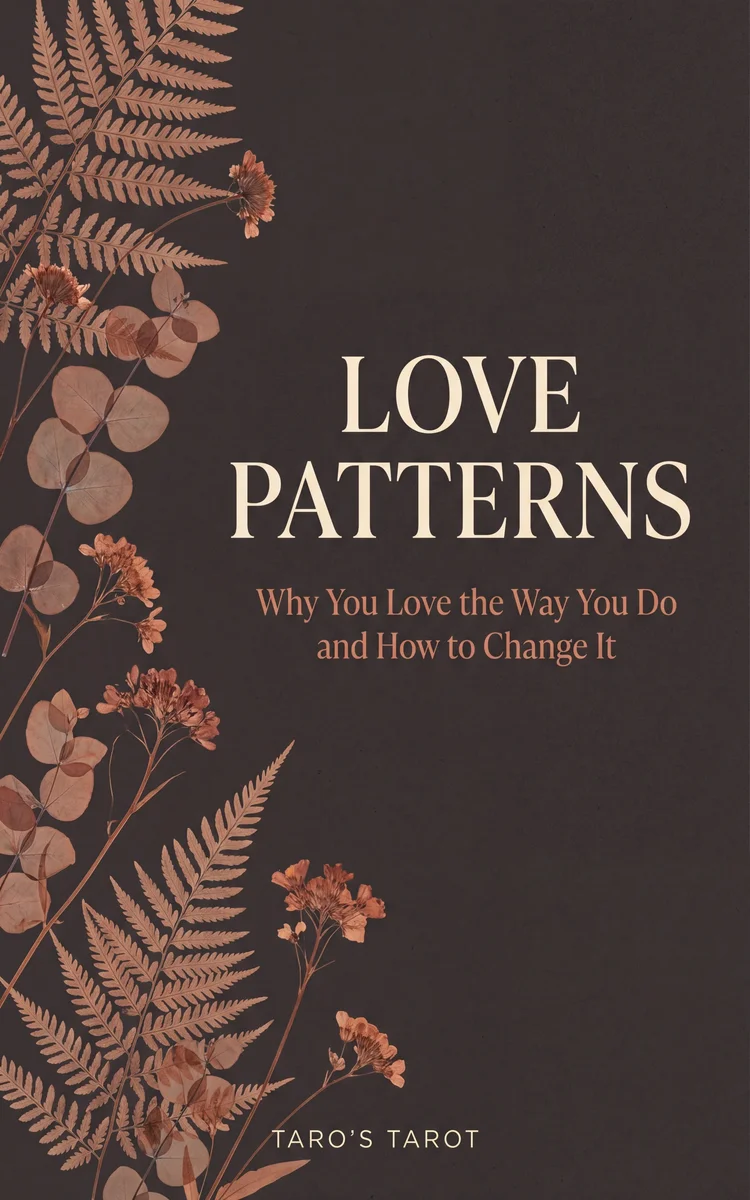
Book
Love Patterns
Why you keep choosing the same person in a different body. Attachment theory, trauma bonding, limerence, and earned security.
Get the Book — $14.99Try Our Free Spiritual Calculators
Get deeper insights with our interactive tools
When The Pattern Will Not Break
Knowing the dynamic is only half the work — the harder question is what to do with it. Pull a reading on whether to let him go if the cycle has outlasted its usefulness, or whether he is stringing you along if the avoidance is looking more like strategy.
Explore More Tarot Readings
Discover different ways to gain insight and guidance through our free tarot card readings