THE WAY YOU CONNECT
Am I Emotionally Unavailable?
When someone you care about is having a hard time, how do you respond?
Choose the answer that feels most like you.
Inside the report: Your Defense System
Why do you love the way you do?
The Moon in the Mask position reveals something quietly devastating: the face you show the world when love gets close isn't cold — it's careful. You've learned to pre-empt abandonment by never fully arriving. The distance you create isn't indifference. It's a finely tuned survival mechanism built in a home where presence was punished...
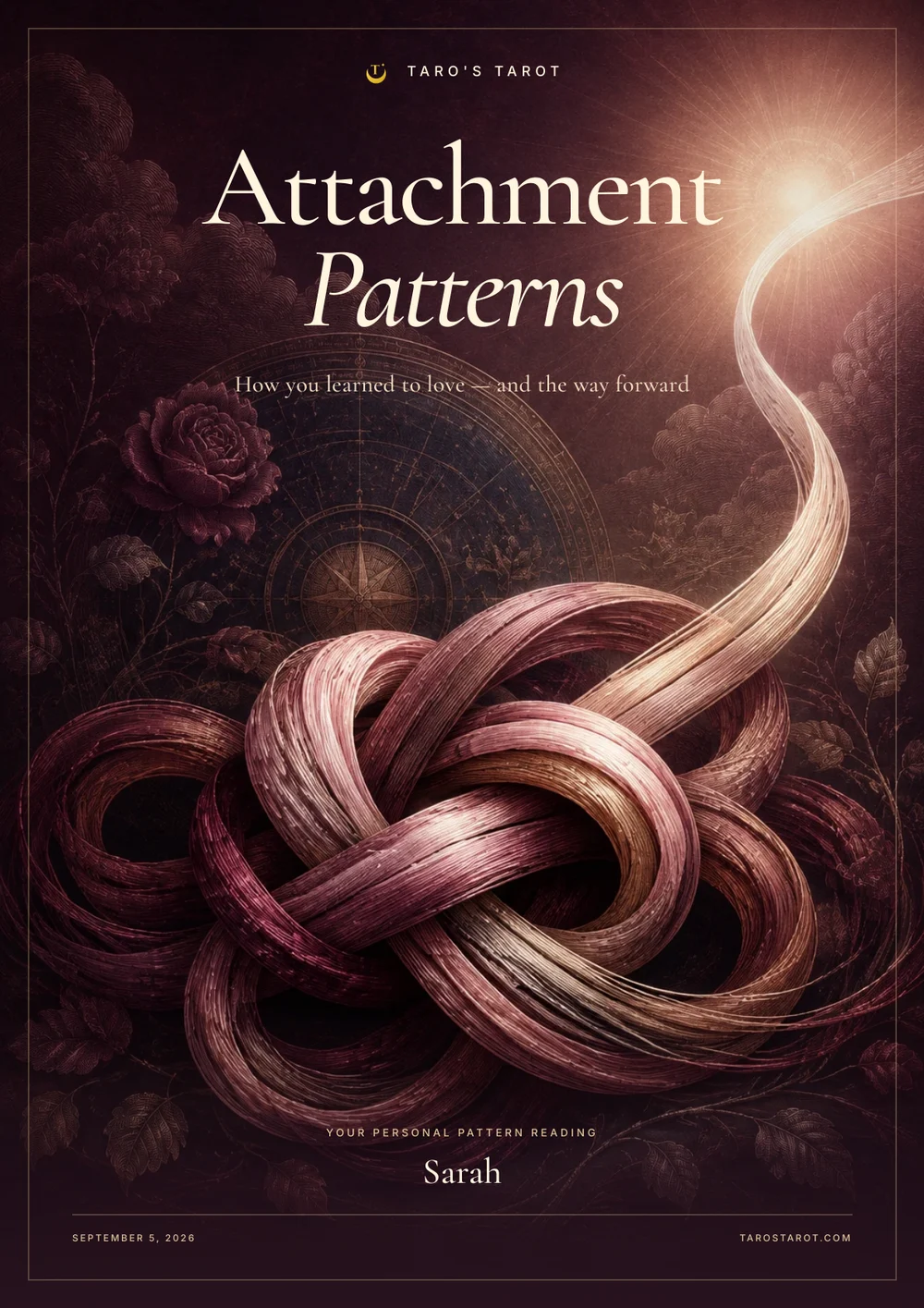
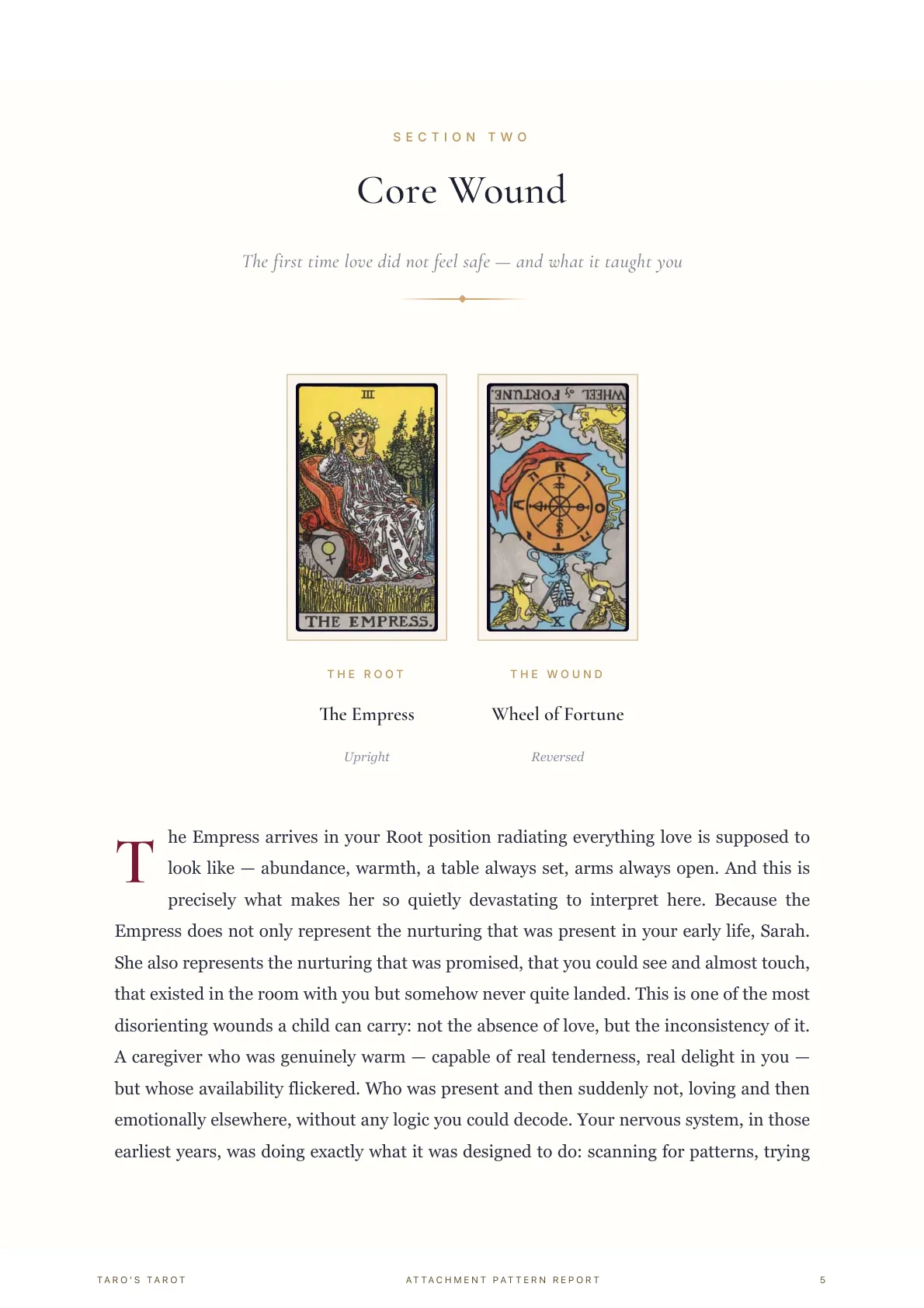
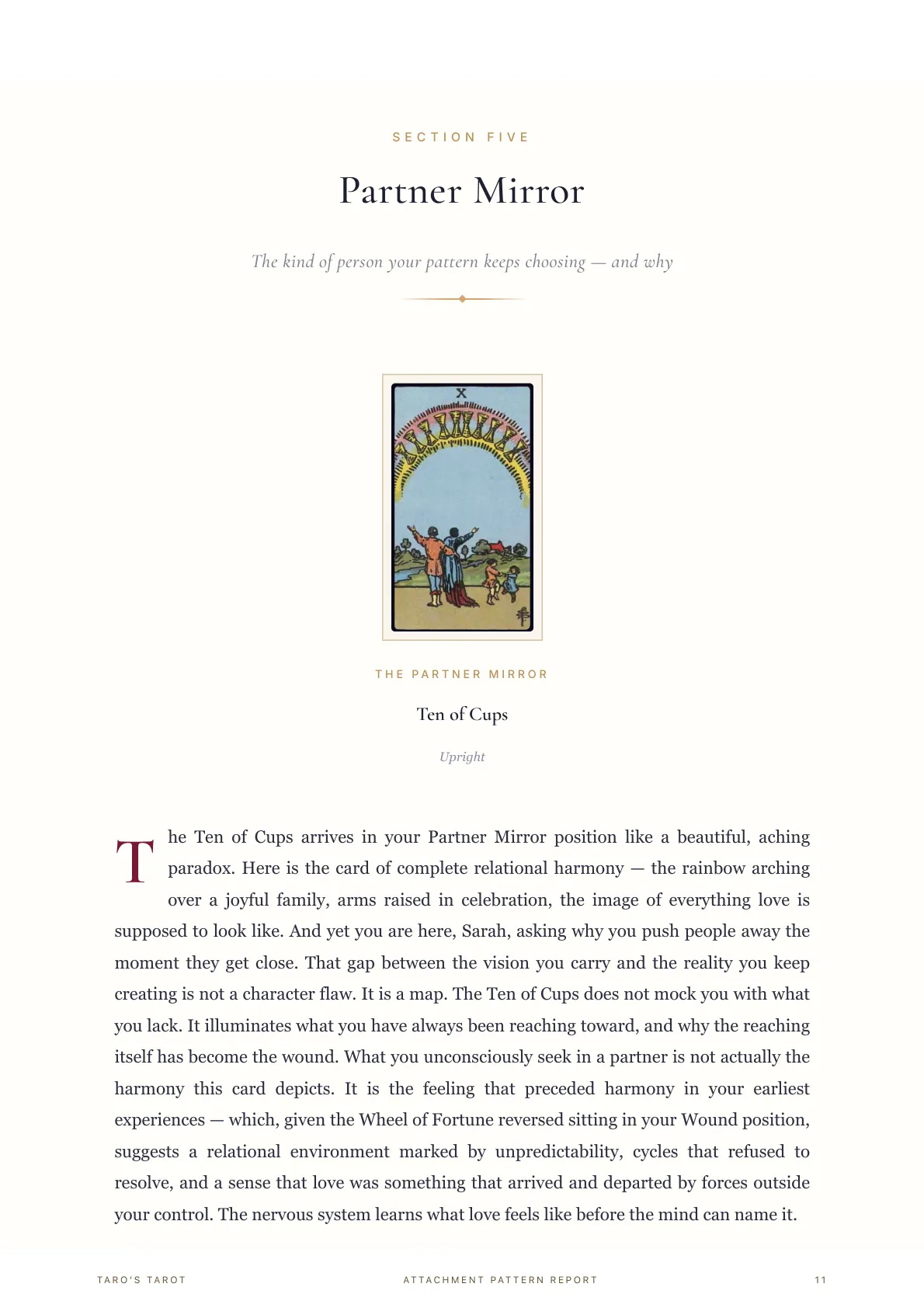
Sample pages from a real generated report — yours is written for you
$14.9930-day money-back guarantee — if your report doesn't feel genuinely specific to you, full refund, no questions asked.
Understanding Emotional Availability
Emotional availability is your capacity to be genuinely present in relationships — to give and receive vulnerability, to tolerate closeness without running, and to show up consistently even when it's uncomfortable. It's not about being emotional; it's about being accessible.
Most emotionally unavailable people aren't cold or heartless — they're protected. At some point, being emotionally open cost them something painful, and they adapted by building walls. The walls worked: they prevented further pain. But walls that keep hurt out also keep love out. The question isn't whether you have walls — it's whether you're ready to install a door.
7 Signs of Emotional Unavailability
Emotional unavailability rarely looks like outright coldness. More often, it shows up as a pattern of small distancing moves — the ways you manage closeness without ever admitting that's what you're doing. If several of these signs feel familiar, that's data, not damnation.
1. You struggle with vulnerability
Sharing feelings — especially the uncomfortable ones — feels like handing someone a weapon. You default to humour, intellect, or “I'm fine” when a direct emotional answer would land harder.
2. You pull back when things get serious
The moment a relationship crosses from “fun” into real, you feel the urge to create distance. You find flaws, pick fights, go quiet, or become suddenly busy. Closeness itself is the trigger.
3. You're drawn to people who can't fully commit
Available partners feel boring or flat. The chemistry you call “love” is often the nervous system excitement of an unavailable person — because that's familiar, and familiar reads as home.
4. You keep conversations surface-level
You can talk for hours about work, ideas, logistics, other people — but questions about what you feel or need hit a wall. You may genuinely not know the answer, or you do know and refuse to say it out loud.
5. You intellectualize your emotions
You can analyse your feelings with impressive precision — name the attachment style, map the trigger, spot the pattern. But feeling the feeling in your body, and letting another person see it, is a different language you haven't learned.
6. You struggle to sustain consistent intimacy
You can show up powerfully for a weekend, a big conversation, a crisis. The harder part is the Wednesday-night ordinary — being chosen, and choosing back, over and over in small ways. Consistency feels suffocating.
7. You feel safer alone than deeply connected
Solitude doesn't just refuel you; it feels like coming home. Deep connection feels like a loss of self. The walls worked so well that being behind them is now the only place you can breathe.
“Emotional unavailability isn't coldness — it's protection. At some point, being open cost you something painful, and your system decided that walls were safer than doors. The question is whether you're still in danger, or just still defending.”
Frequently Asked Questions
What does it mean to be emotionally unavailable?
Emotional unavailability means having difficulty forming deep emotional connections, being vulnerable, and consistently showing up for intimate relationships. It's not about being cold or uncaring — most emotionally unavailable people want connection but have built protective walls (often unconsciously) that prevent genuine intimacy. These walls typically formed as adaptive responses to early experiences where emotional openness led to pain.
Can emotional unavailability be changed?
Yes. Emotional unavailability is a learned pattern, not a permanent trait. Change requires awareness (recognizing the pattern), willingness (wanting to do the uncomfortable work), and practice (gradually allowing more vulnerability in safe relationships). Attachment-focused therapy is particularly effective because it addresses the underlying experiences that created the pattern.
Why do I keep attracting emotionally unavailable partners?
Often, the people we're drawn to mirror our own attachment patterns. If you consistently attract unavailable partners, it may be worth exploring your own availability. Sometimes "I keep attracting unavailable people" is actually "available people don't trigger the chemistry I associate with love." Familiar patterns feel like home, even when the pattern is painful — this is why awareness of your own tendencies matters more than vetting partners.
Is emotional unavailability the same as avoidant attachment?
They overlap significantly but aren't identical. Avoidant attachment is a specific attachment style that often manifests as emotional unavailability. However, emotional unavailability can also stem from depression, grief, burnout, fear of intimacy, or current life circumstances. Someone with secure attachment can become temporarily unavailable due to stress or loss.
Is this quiz for assessing myself or my partner?
This quiz is designed for self-assessment. While you can take it with your partner in mind, the most powerful use is honest self-reflection. Understanding your own availability patterns is the first step toward changing them. If you suspect your partner is emotionally unavailable, your own awareness is still the most leverage you have — you can only change your side of the relationship.
This quiz is for self-reflection purposes only. It is not a clinical diagnosis or substitute for professional help.

Book
Twin Flames: The Honest Guide
The 8 stages, attachment theory, false twins, trauma bonds, and shadow work. Both frameworks, no fluff.
Get the Book — $14.99Explore More Quizzes
Discover more ways to explore your spiritual journey
Looking for more spiritual guidance?