Secular, psychology-based tarot
Tarot for Skeptics: A Secular Approach to the Cards
No woo, no prophecy, no universe-has-a-plan. A practical case for tarot as a projective journaling tool — the way therapists, scientists, and the burnt-by-wellness-culture crowd actually use it.
Last updated: April 24, 2026
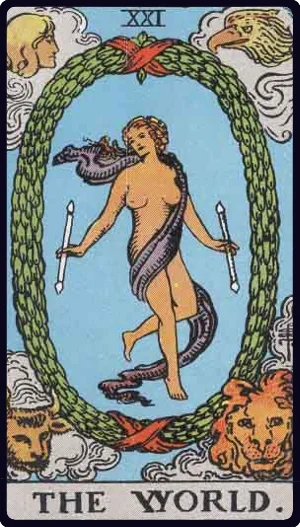
What secular tarot actually is
Secular tarot is the practice of using a deck of 78 illustrated cards as a structured prompt for self-reflection — without the supernatural claims usually bundled in. No prophecy, no messages from the universe, no suggestion that the deck knows something you don't. Just a visual constraint on your thinking and a pretext to write for twenty minutes.
If you've ever used a journaling prompt, a therapy exercise, or even a particularly good essay question, you've used the same underlying tool. Tarot's contribution is that it offers a larger, richer, and more visually ambiguous stimulus set than almost any other prompt format you could buy for £15.
It is also, for the record, centuries older than the occultism now associated with it. The cards were playing cards first. The divinatory overlay arrived in the eighteenth century. The psychological reading is arguably the most recent interpretation — and, to people who think like this page does, the most accurate one.
Is tarot real? (The honest answer)
The honest answer has two parts.
No, in the sense most critics mean: the deck has no causal connection to future events, no access to information outside your own head, and no agency. If you expect tarot to tell you whether your ex will text back, it will not, because no physical mechanism exists by which it could.
Yes, in the sense the practice actually operates in: the cards reliably surface material you already hold, in a way that lets you examine it. The mechanism is projection — the best-evidenced finding in the clinical history of psychological assessment — and it works whether or not you believe in it.
People who conflate the two questions end up either dismissing tarot as nonsense or defending claims it doesn't actually need to make. Secular tarot refuses both positions. The cards are real. The mechanism is real. The fortune-telling was never the point.
How tarot actually works (projection, not prophecy)
Three mechanisms, all well-documented in the clinical and cognitive literature. None supernatural.
Projection
Shown an ambiguous image, you'll attribute to it whatever unconscious material is most active. This is the Rorschach principle. The card isn't sending a message — it's giving your interior life a surface to land on.
Constraint
Infinite thinking goes nowhere. A single card forces you to think inside one frame for a set period. This is why the practice works like a meditation aid: not because the card is special, but because it narrows you.
Externalisation
Narrative therapy's central insight: putting material outside your head, where you can look at it, is different from thinking about it internally. The card is a prompt that forces externalisation before reflection.
“The card does not speak. It listens. The speaking is yours — it's only that the card, by saying nothing, gives your speech somewhere to land.”
Who this is for
This page — and the secular practice it describes — is for readers who tend to fit one or more of the following:
- ·Atheists and agnostics who value introspection and journaling but reject supernatural framings.
- ·Therapy-literate people comfortable with terms like projection, cognitive distortion, and narrative therapy — who recognise tarot as operating in adjacent territory.
- ·Anyone burnt by wellness culture — the crystals, the manifestation, the scripted abundance affirmations — who still wants a reflective practice and suspects the cards might be the one piece of the tradition that survives scrutiny.
- ·Rationalists and scientists who read the projection literature and find tarot more defensible than they expected.
- ·Writers, strategists, and decision-makers who need a structured way to interrupt their own thinking without leaving their kitchen table.
If none of that sounds like you, a more conventional introduction to the practice lives at how to read tarot cards.
How to start without believing anything (three steps)
1
Pull one card. Write for ten minutes.
Pick any card — physical deck, digital reading, doesn't matter. Look at it. Write continuously for ten minutes about whatever it surfaces. Don't consult the meaning first; that's noise. A one-card reading is the lowest-friction entry point.
2
Use decision spreads when you're stuck.
For forks in the road, a three-card comparison forces you to articulate trade-offs you've been avoiding. The clarity spread is the most useful one — explicit, structured, no mysticism required.
3
Keep a journal. Review monthly.
The practice compounds only if you can look backwards. Dates, cards, what you wrote, what actually happened. Patterns emerge after a few weeks — not prophetic ones, self-descriptive ones. See the tarot journaling guide for templates.
What to skip (mystical framings, woo vocabulary)
A surprising amount of mainstream tarot content is pitched at a reader who doesn't exist: someone fluent in astrology, chakras, and the language of divine timing. If that isn't you, strip the following out and the practice survives intact:
Skip
- · Predictive readings (“what will happen”)
- · “The universe is telling you”
- · Energy, vibrations, frequencies
- · Divine timing, manifestation
- · The cards “know” or “want”
- · Scripted affirmations as reading output
Keep
- · Daily card as journaling prompt
- · Decision spreads (explicit trade-offs)
- · Archetypes as symbolic vocabulary
- · The Jungian / shadow-work reading
- · Writing first, interpreting second
- · Monthly pattern review
How to introduce tarot to a skeptic in your life
If you read tarot and someone you love thinks it's nonsense, the instinct to defend the practice usually backfires — they hear “you need to believe what I believe,” which isn't the case you're trying to make. Skeptics tend to come around to tarot faster when nobody asks them to come around to anything.
Don't pitch it as belief — pitch it as a journaling prompt
The framing “I do this thing with cards that helps me journal” lands with most skeptics. The framing “you should be open to what the universe is telling you” will close the conversation in under a minute. The first is true; the second is the version of tarot they're right to be skeptical of.
Send them this page (not a reading)
Most skeptics need the argument before they need the practice. A link to this page, or to the psychology guide, does the work of explaining the mechanism without anyone having to perform a reading first. Once they've read the case for the practice on intellectual grounds, the practice is a smaller ask.
Offer the four-week stress test
The most skeptic-friendly way to engage someone is to suggest they run the empirical version themselves. The four-week protocol gives them a structured way to test the practice on their own terms. Most skeptics respect the offer because it doesn't require them to take anyone's word for anything.
A deck makes a better gift than a reading
Reading for a skeptic puts them on the spot. Giving a skeptic a deck gives them privacy to be curious without performing conversion. The Rider-Waite-Smith deck is the standard starting point — recognisable imagery, every guidebook on the planet refers back to it.
The honest truth: most skeptics don't come around at all, and that is fine. Tarot doesn't need universal endorsement to be useful to you. The aim of these conversations isn't conversion — it's making sure the skeptic in your life isn't arguing against a version of the practice you also reject.
Where to go next
The psychology case
Rorschach, Jung, narrative therapy — the full mechanism explained.
Tarot vs journaling vs therapy
A comparison of three reflective practices — and how they stack.
Which approach fits you?
A 10-question quiz to place you on the skeptic / ritualist / intuitive / traditional map.
Tarot for anxiety
Why structured card work helps anxious minds — and which spreads to avoid.
Shadow work tarot
The Jungian tradition: the cards as surface for your denied material.
The clarity spread
A decision-framework spread designed to force trade-offs into the open.
Tarot for Skeptics — FAQ
The questions rationalists actually want answered
Is tarot real?
Not in the way most critics assume it claims to be. Tarot does not deliver information from a source outside your own mind. What it does — reliably, and in a way supported by decades of clinical research on projection — is provide an ambiguous visual prompt that surfaces material your unconscious has already been working on. That mechanism is real. Fortune-telling is not the mechanism.
Does tarot work if you don't believe in it?
Yes, and arguably better. Belief is not the active ingredient — projection is. You do not need to believe a Rorschach inkblot has meaning for it to surface meaningful psychological material, and you do not need to believe in tarot for the cards to function as a structured journaling prompt. What matters is willingness to sit with an ambiguous image and write honestly about what comes up.
How does tarot actually work, without the mysticism?
Three mechanisms, all clinical: projection (you see what your unconscious is ready to show you), constraint (the card forces you to think about one frame instead of wandering), and narrative externalisation (putting the image outside your head creates distance from your usual story). These are the same mechanisms at work in therapy, journaling, and talk-based interventions — just self-administered.
Isn't tarot just confirmation bias?
Partly, and that's the feature, not the bug. Confirmation bias is a problem when you're trying to reach objective truth. Tarot isn't doing that. It's helping you surface what is already true for you — what you believe, fear, want, or avoid. Seeing yourself reflected back is exactly the point.
Who is secular tarot for?
People who find value in structured self-reflection but can't stomach the spiritual framing. Atheists, agnostics, scientists, therapists, engineers, and anyone who has been burnt by wellness culture. You don't need to believe in anything other than the utility of writing things down after looking at an image.
Can you do tarot without the spiritual language?
Yes. Drop "the universe," "energy," "divine timing," and "the cards are telling you." Replace with: "this image prompts me to think about," "this card is a frame for," or "what does this surface for me today." The practice survives the vocabulary change entirely intact.
What's the difference between tarot and a Rorschach test?
Mechanism: almost identical. Both use ambiguous visual stimuli to surface unconscious material. Differences: Rorschach has to be administered by a trained clinician and interpreted through a standardised scoring system; tarot is self-administered, uses culturally-coded archetypal imagery rather than deliberate abstraction, and produces material the reader interprets themselves. Same principle, different delivery.
Is tarot compatible with therapy?
Many therapists now use tarot or similar projective techniques as journaling prompts, and some explicitly recommend it to clients. Tarot is not a replacement for therapy — it can't diagnose, treat, or hold you through crisis — but it stacks well alongside cognitive behavioural therapy, narrative therapy, or any modality that involves structured reflection. Treat it as a between-sessions journaling aid.
What should I skip as a skeptic getting started?
Skip: predictive readings, horoscope-style "what will happen in your love life," cards described as sending you messages, and anything that frames the deck as an agent with intent. Keep: single-card daily pulls as journal prompts, decision spreads that force you to write about trade-offs, and the historical-archetype view of the major arcana.
Can I take tarot seriously without taking it literally?
That's the entire project of this page. The cards are symbols, and symbols are serious — they are the register in which the unconscious negotiates with the conscious. Taking them seriously means treating them as prompts worth writing about. Taking them literally means believing the Three of Swords knows something about your week that you don't. The first is psychology. The second is a category error.
Still have questions? We're here to help!
Contact Support →Explore More Tarot Readings
Discover different ways to gain insight and guidance through our free tarot card readings