A LITTLE MORE UNDERSTANDING
Am I Trauma Bonded?
What keeps you attached to this person?
Choose the answer that feels most like you.

Inside the report: His True Feelings vs What He Shows
What isn't he telling you?
The Knight of Cups in the True Feelings position paired with the Seven of Swords in the Facade position reveals a painful disconnect: he does feel something real — but what he's showing you is a carefully edited version of it. This isn't indifference. It's strategy. The question isn't whether he cares. It's why he's decided you can't see it...
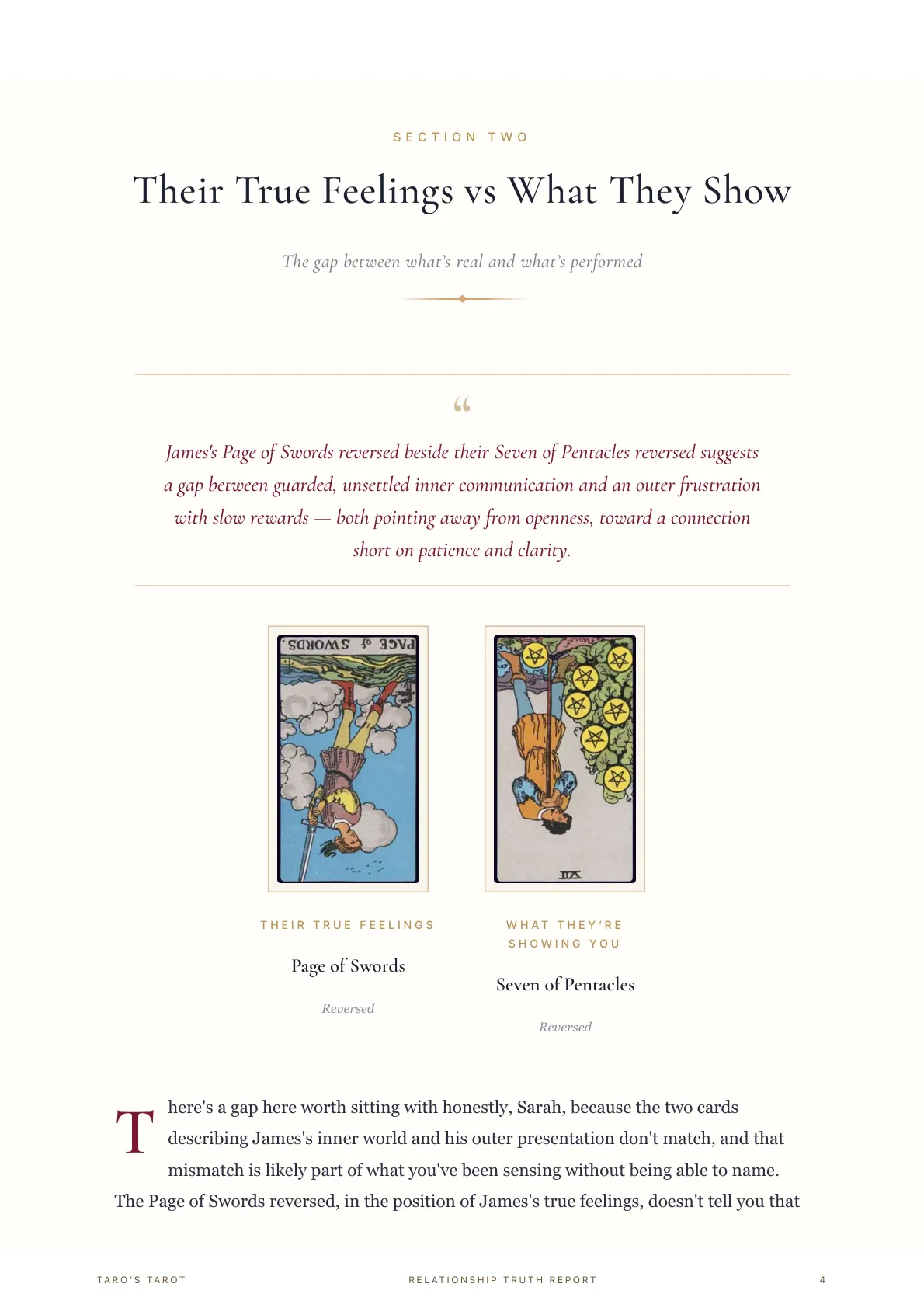
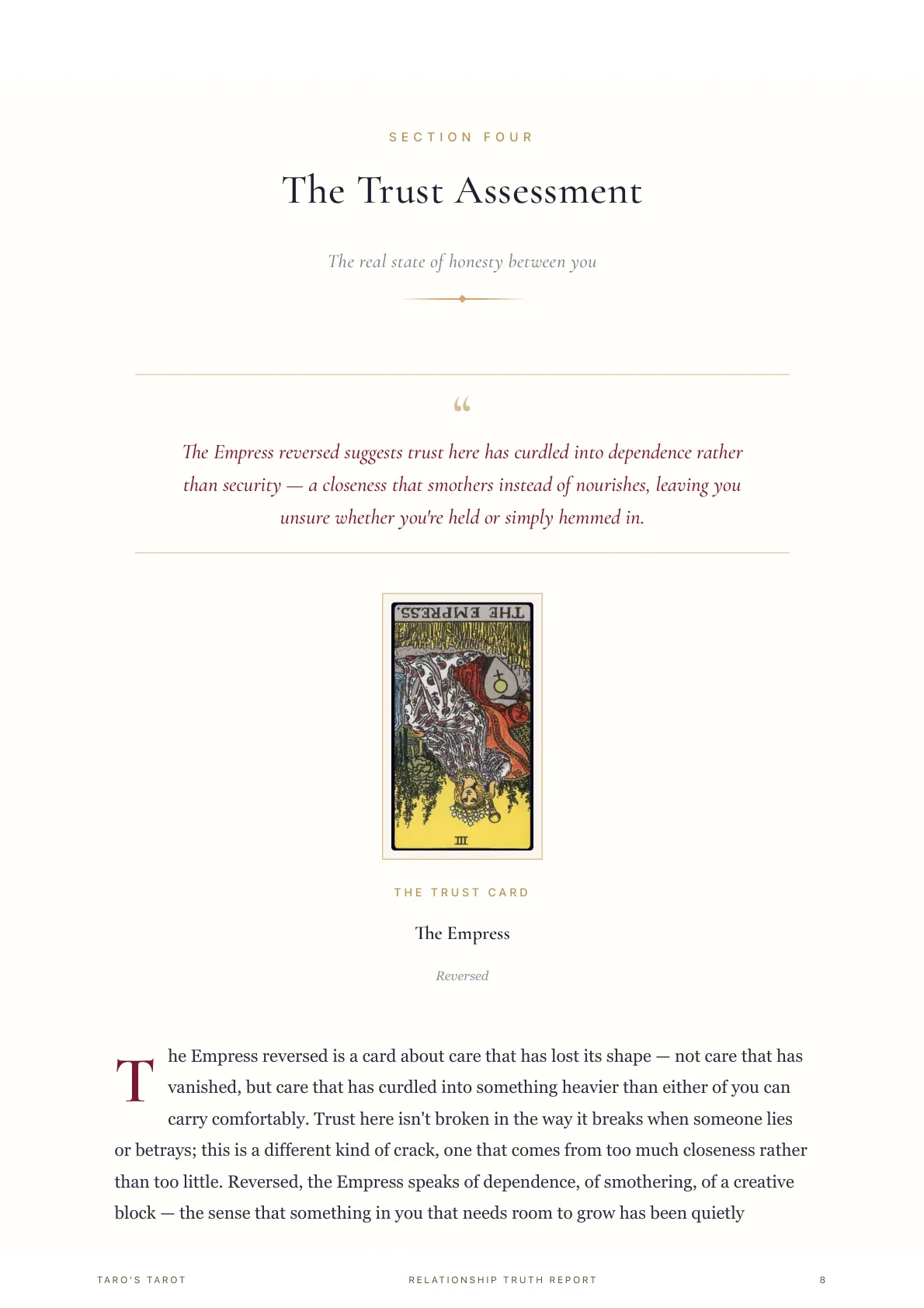
Sample pages from a real generated report — yours is written for you
$14.9930-day money-back guarantee — if your report doesn't feel genuinely specific to you, full refund, no questions asked.

Book
Twin Flames: The Honest Guide
The 8 stages, attachment theory, false twins, trauma bonds, and shadow work. Both frameworks, no fluff.
Get the Book — $14.99If You Need Support
If you're in a relationship involving abuse, help is available 24/7:
- National Domestic Violence Hotline: 1-800-799-7233
- Crisis Text Line: Text HOME to 741741
- Emergency: Call 911
Understanding Trauma Bonds
Trauma bonding was first described by Patrick Carnes as the "betrayal bond" — an attachment that forms not despite the pain, but because of it. The cycle of abuse followed by intense affection creates a neurochemical pattern identical to addiction: the relief of the "good phase" produces a dopamine surge that is more powerful precisely because it follows pain.
This is why leaving a trauma bond feels physically impossible, even when you logically understand that the relationship is harmful. Your brain has been conditioned to associate this specific person with both the deepest pain and the most intense relief you've ever experienced. Breaking free requires addressing the neurological addiction, not just the emotional attachment.
“A trauma bond doesn't feel like abuse — it feels like the most intense love you've ever known. That's exactly what makes it so dangerous. Real love doesn't need a cycle of pain to feel real.”
Frequently Asked Questions
Is a trauma bond the same as love?
No. A trauma bond feels like the most intense love you've ever experienced, but the intensity comes from the cycle of pain and relief, not from genuine connection. Love brings peace; a trauma bond brings adrenaline. Love is consistent; a trauma bond oscillates between extremes. The confusion between the two is one of the most painful aspects of recovery.
Can a trauma bond form in non-romantic relationships?
Yes. Trauma bonds can form with parents, friends, bosses, cult leaders, or anyone who uses intermittent reinforcement as a control mechanism. The dynamic is the same: unpredictable alternation between cruelty and kindness that creates powerful emotional dependency.
This quiz is for self-reflection purposes only. It is not a clinical diagnosis or substitute for professional help. If you are in danger, please contact emergency services or the National Domestic Violence Hotline at 1-800-799-7233.
Explore More Quizzes
Discover more ways to explore your spiritual journey
Looking for more spiritual guidance?