A LITTLE MORE UNDERSTANDING
Inner Child Quiz
When someone cancels plans at the last minute, your first reaction is:
Choose the answer that feels most like you.
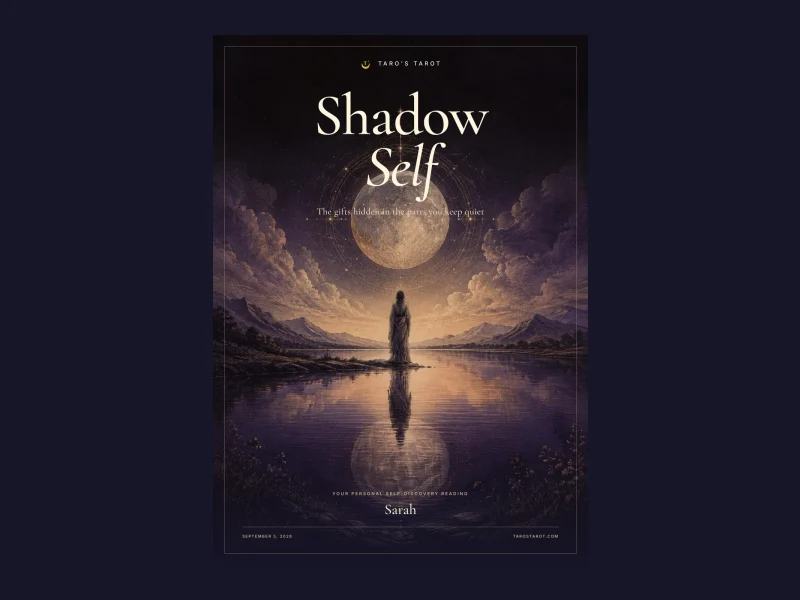
Inside the report: Core Wound Patterns
What are you hiding from yourself?
The Moon reversed in the Core Wound position speaks to a pattern of emotional suppression that began long before you had words for it. Somewhere in childhood, you learned that your feelings were too much — too intense, too inconvenient, too real for the people around you...
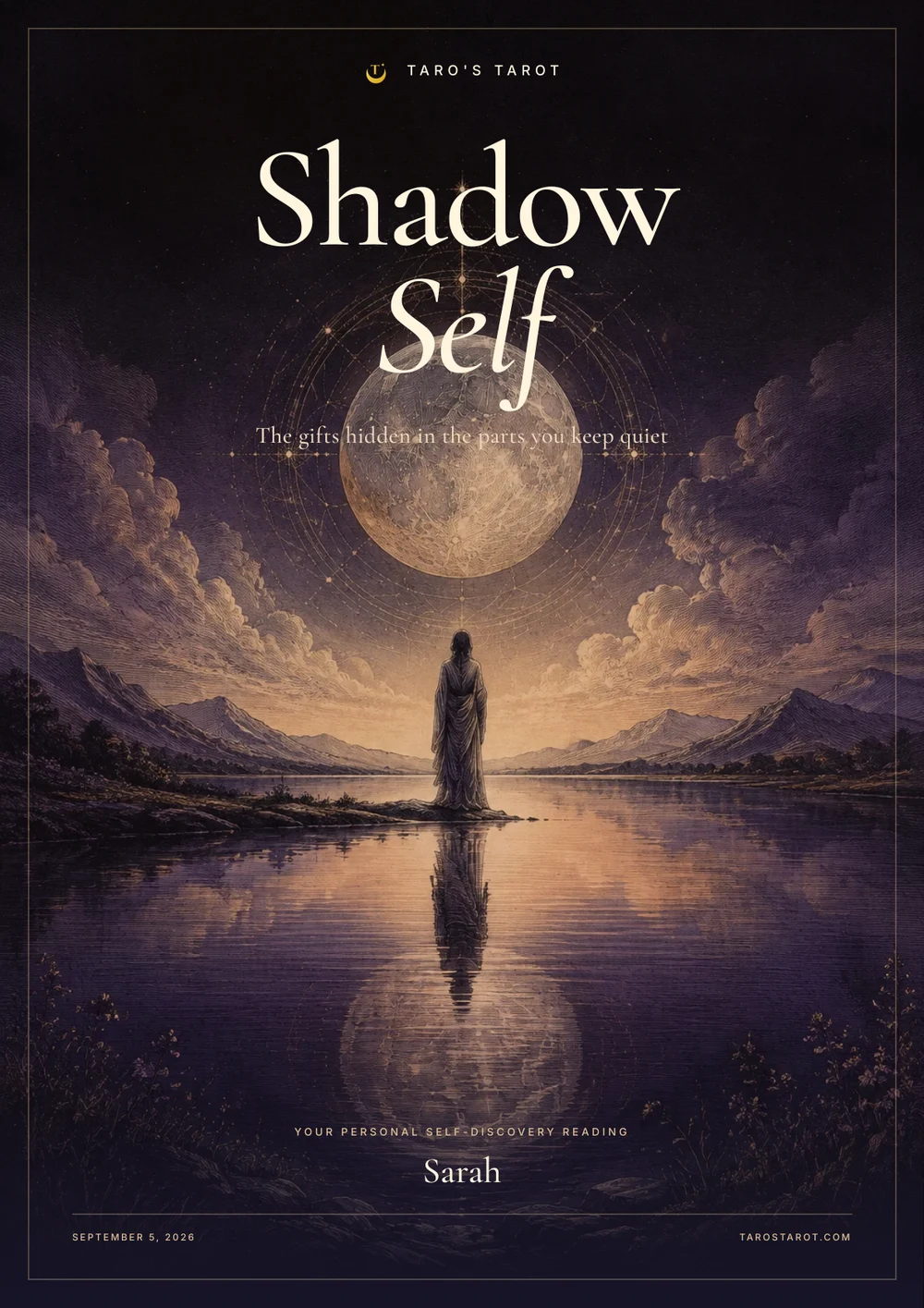
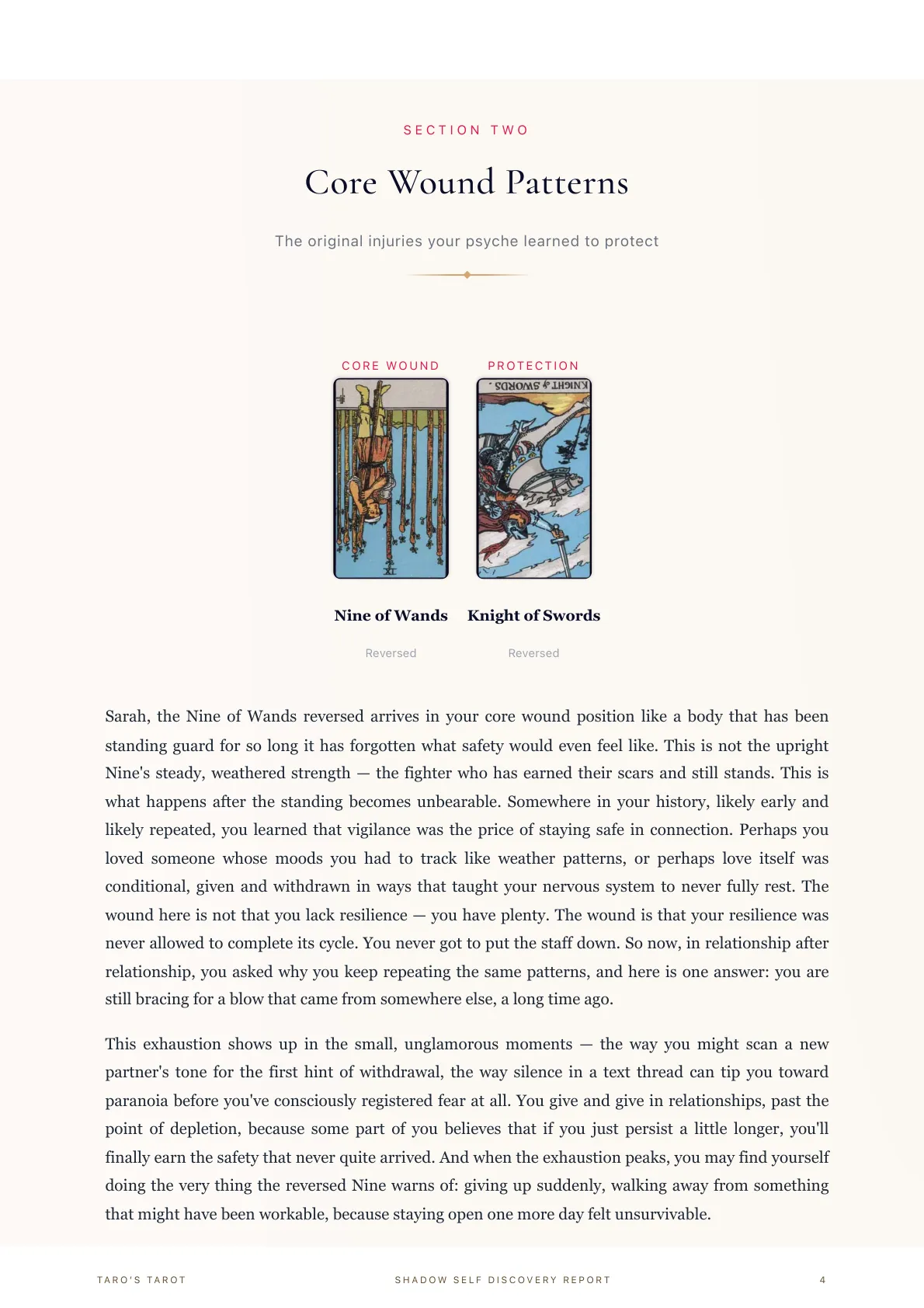
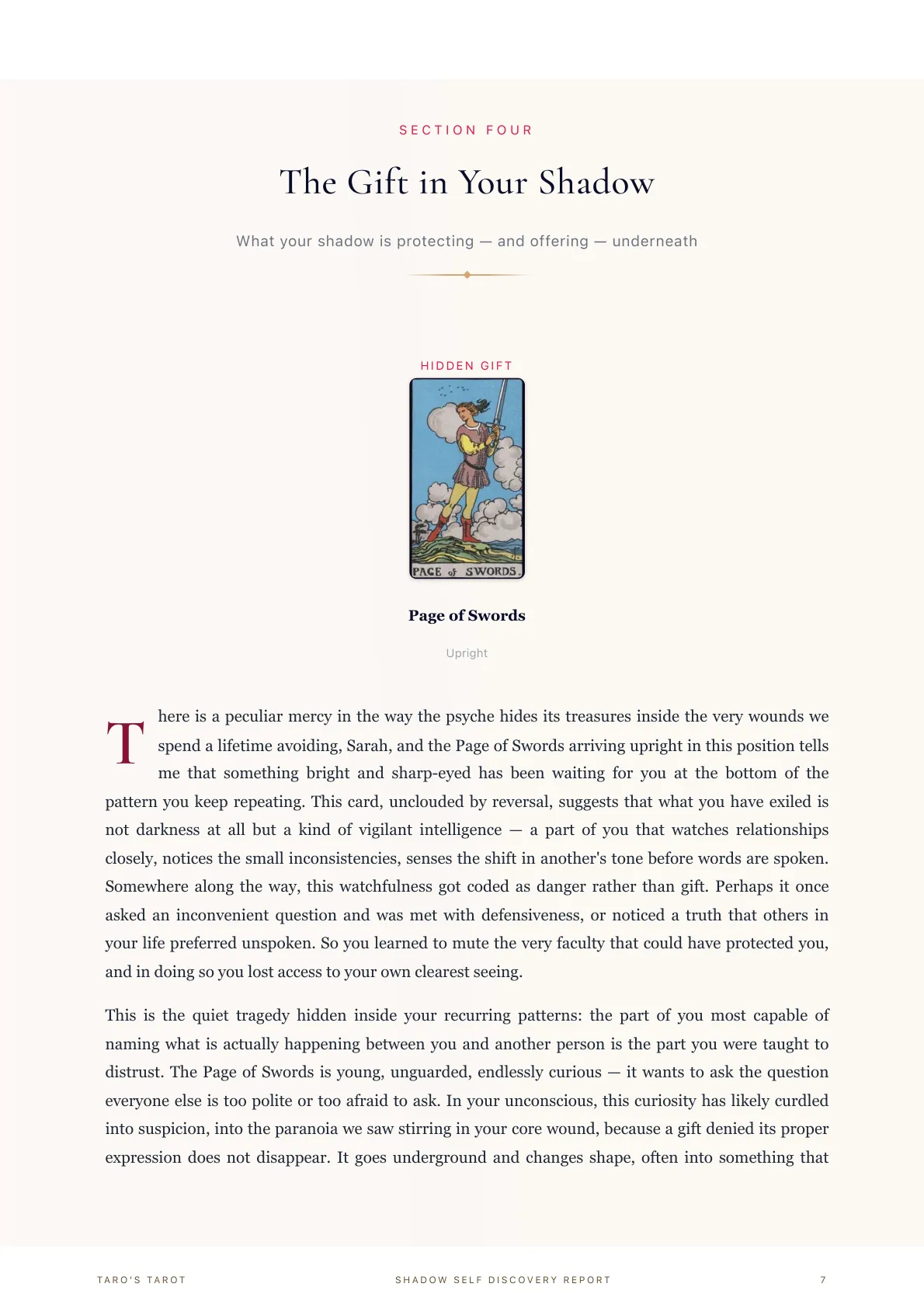
Sample pages from a real generated report — yours is written for you
$14.9930-day money-back guarantee — if your report doesn't feel genuinely specific to you, full refund, no questions asked.
What Is the Inner Child?
The inner child is a psychological concept representing the childlike part of your psyche — the part that still carries the emotions, unmet needs, and coping strategies you developed before you had the language or power to process what was happening to you. Psychologists John Bradshaw, Alice Miller, and Bessel van der Kolk have shown that these early patterns don't simply disappear. They run quietly in the background, shaping your adult relationships, triggers, and self-image.
Inner child work isn't about blaming your parents or dwelling in the past. It's about understanding why you react the way you do, and giving yourself the compassion and reparenting you may have missed the first time around.
The 5 Inner Child Archetypes
💧 The Abandoned Child
Fear of being left. Clingy patterns, hypervigilance for signs of rejection. Five of Cups.
🧣 The Neglected Child
Learned to need nothing. Emotional shutdown, fierce independence. Four of Pentacles Reversed.
⚔️ The Shamed Child
Internalised "not enough." People-pleasing, performing, making yourself invisible. Eight of Swords.
🌿 The Parentified Child
Became the adult too early. Over-responsible, caretaking, chronic over-functioning. Reversed Empress.
☀️ The Free Child
Playfulness intact, healthy foundation. Curiosity, trust, and resilience. The Sun.
Inner Child Healing and Tarot
Tarot provides a symbolic mirror for inner child work. Cards like The Sun (the free child), The Moon (hidden fears), The Star (hope and healing), and the Five of Cups (grief and loss) directly speak to childhood wound themes.
Each result in this quiz maps to a tarot card that illuminates your inner child pattern. Use it as a starting point for journaling, meditation, or deeper exploration with a therapist who understands inner child work.
“Healing your inner child isn't about rewriting the past. It's about finally giving that small, scared part of you the words it needed to hear back then: you are safe, you are enough, and none of it was your fault.”
Frequently Asked Questions
Can I have more than one inner child wound?
Yes. Most people carry a primary wound with elements of others. You might be predominantly a Parentified Child with Shamed Child tendencies. This quiz shows your primary and secondary patterns.
How do I start inner child healing?
Start with awareness — this quiz is a good first step. From there, journaling (writing letters to your inner child), meditation (inner child visualisations), and therapy (especially IFS/Internal Family Systems or somatic work) are all effective approaches.
Is the Free Child result "better" than the others?
The Free Child represents intact playfulness, but no childhood is perfect. Every wound also carries gifts — the Abandoned Child develops profound empathy, the Parentified Child becomes deeply reliable. The goal isn't to become the Free Child but to heal the wounds that limit you while keeping the strengths they gave you.
Shadow Work Quiz
Where does this wound show up in your shadow?
Attachment Style Quiz
How your inner child affects relationships.
People Pleaser Quiz
Is people-pleasing your coping strategy?
Explore More Quizzes
Discover more ways to explore your spiritual journey
Looking for more spiritual guidance?