A LITTLE MORE UNDERSTANDING
People Pleaser Quiz
Someone close to you is clearly upset with you. What's your first instinct?
Choose the answer that feels most like you.

Inside the report: Their Energy
What aren't they telling you?
There's a clear pattern in how they hold back emotionally — not because they don't care, but because past experiences have taught them to guard their vulnerability. There's a deep well of feeling here, buried under layers of self-protection...

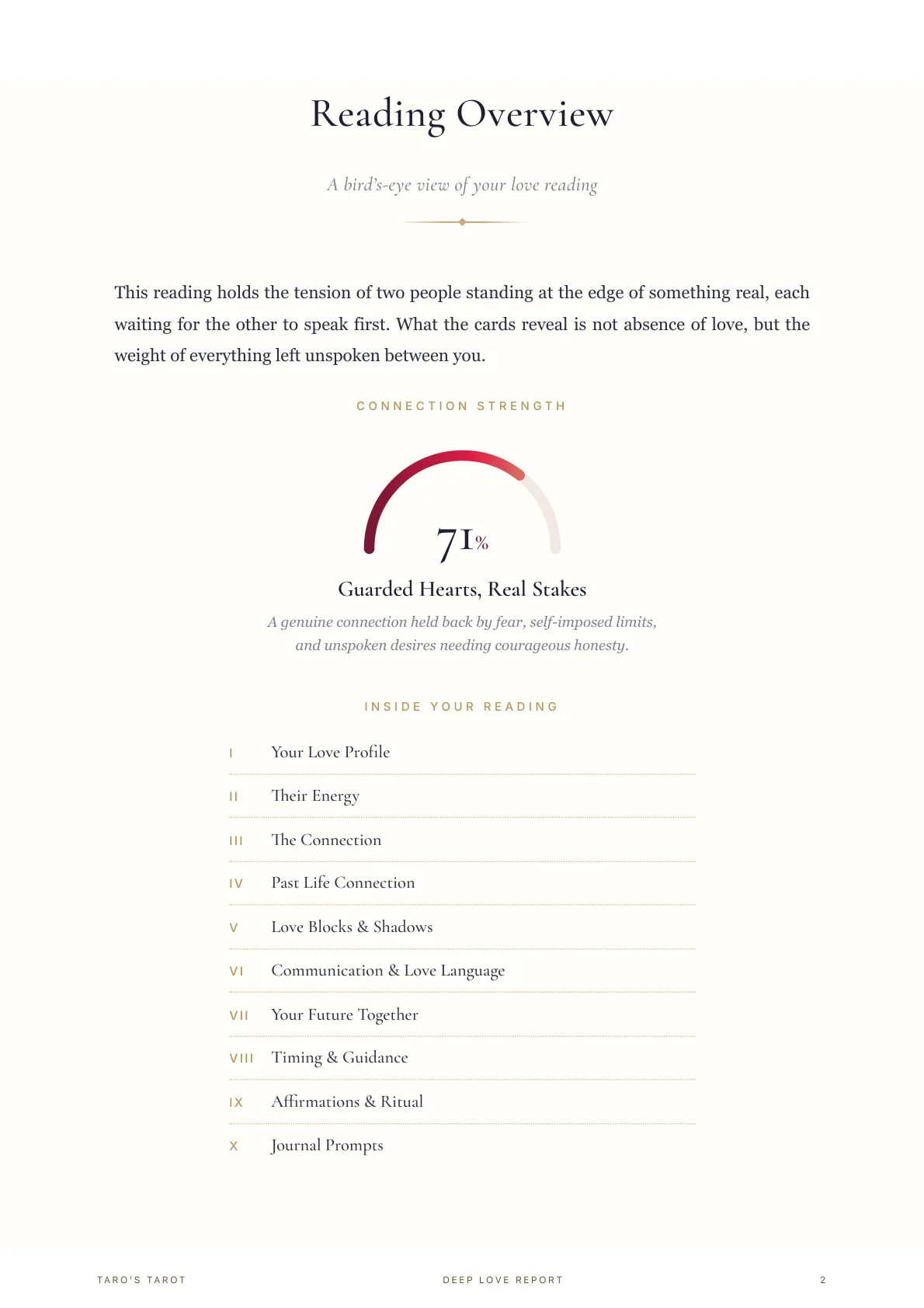
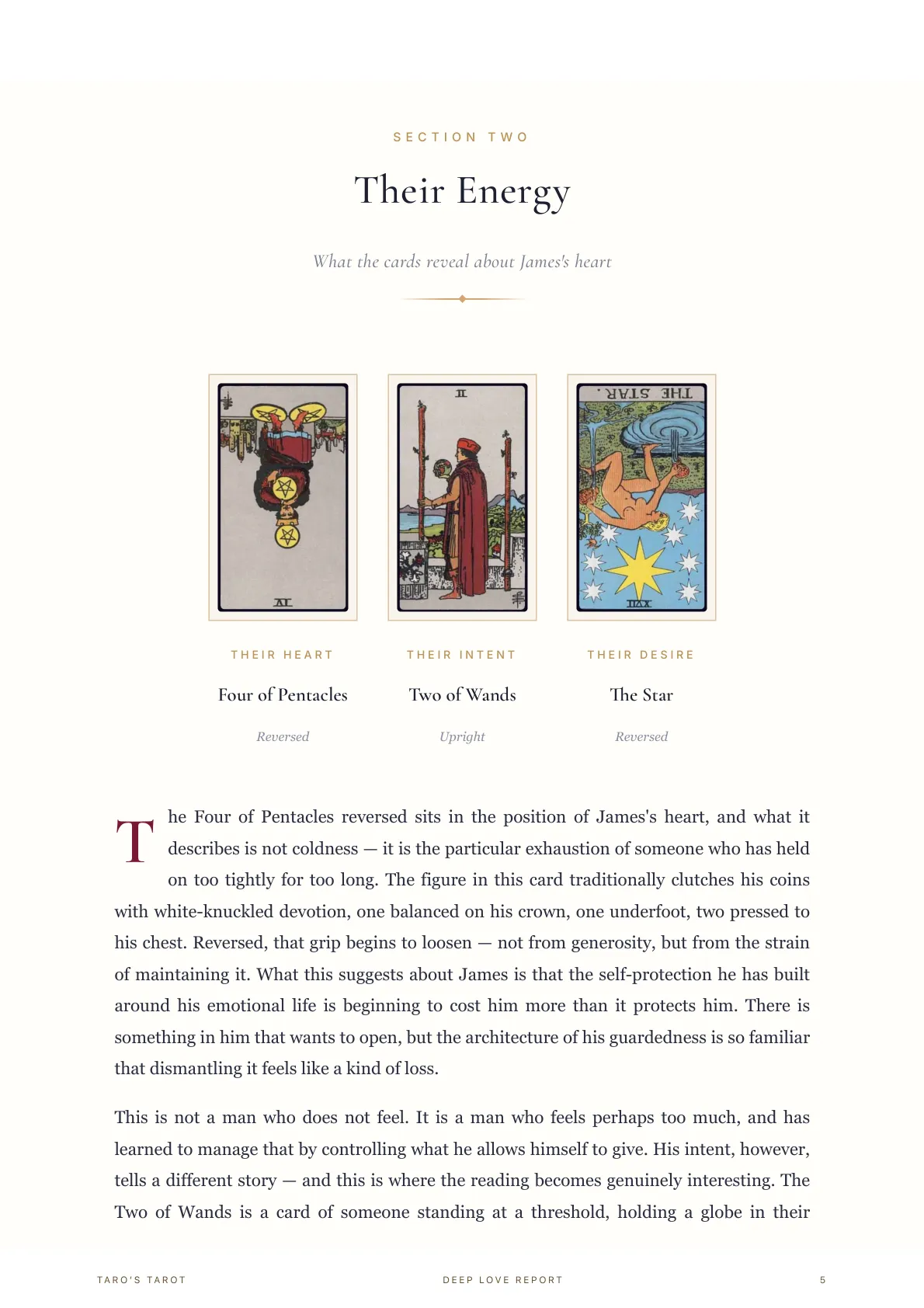
Sample pages from a real generated report — yours is written for you
$14.9930-day money-back guarantee — if your report doesn't feel genuinely specific to you, full refund, no questions asked.
The Four Trauma Responses
Everyone has heard of fight-or-flight — but therapist Pete Walker identified two additional survival strategies that are just as common: freeze and fawn. These four responses are your nervous system's automatic reactions to perceived threat, shaped primarily by your early experiences.
Fawn
People-pleasing, self-abandonment, conflict avoidance. "If I make everyone happy, I'll be safe."
Fight
Confrontation, control, taking charge. "If I stay in control, nothing can hurt me."
Flight
Escape, busyness, avoidance. "If I keep moving, I don't have to feel."
Freeze
Shutdown, numbness, paralysis. "If I become very still, the threat will pass."
“People-pleasing isn't generosity — it's a nervous system strategy. You learned that the safest way to exist was to make everyone else comfortable, even at the cost of your own needs.”
Frequently Asked Questions
What is the fawn trauma response?
The fawn response is a survival strategy where a person manages other people's emotions to keep themselves safe. This manifests as chronic people-pleasing, difficulty saying no, suppressing your own needs, and becoming whatever others need you to be. Coined by therapist Pete Walker, it's considered the fourth trauma response alongside fight, flight, and freeze.
What are the 4 trauma responses?
The four trauma responses are Fight (confrontation, control, aggression), Flight (escape, avoidance, busyness), Freeze (shutdown, numbness, paralysis), and Fawn (people-pleasing, self-abandonment, conflict avoidance). Most people have a primary response with elements of others.
Is people-pleasing a trauma response?
Yes. People-pleasing is the behavioral expression of the fawn trauma response. It develops when a child learns that the safest way to navigate an unpredictable or threatening environment is to anticipate and meet others' needs. While it's often seen as a personality trait ("being nice"), it's actually a survival strategy that can lead to chronic self-abandonment.
Can you change your trauma response?
Yes. With awareness and practice, you can develop a more balanced stress response. This typically involves recognizing when you're triggered, building body awareness (noticing physical sensations), practicing new responses in low-stakes situations, and working with a therapist who understands somatic or attachment-based approaches.
Can I have more than one trauma response?
Yes. Most people have a primary response but access others depending on context. For example, you might fawn at work but fight with your partner. The quiz identifies your dominant pattern, but you may recognize yourself in multiple results.
Does having a trauma response mean I have trauma?
Not necessarily in the way most people think of trauma. These responses can develop from subtle, chronic stress (emotional neglect, unpredictable parenting) as well as acute events. If your nervous system learned that certain behaviors kept you safe, it will keep running that program until you consciously rewire it.
This quiz is for self-reflection purposes only. It is not a clinical diagnosis or substitute for professional help.
Inner Child Quiz
Discover the childhood wound driving your people-pleasing.
Shadow Work Quiz
Meet the shadow archetype behind your fawn response.
Codependency Quiz
Is people-pleasing part of a codependent pattern?
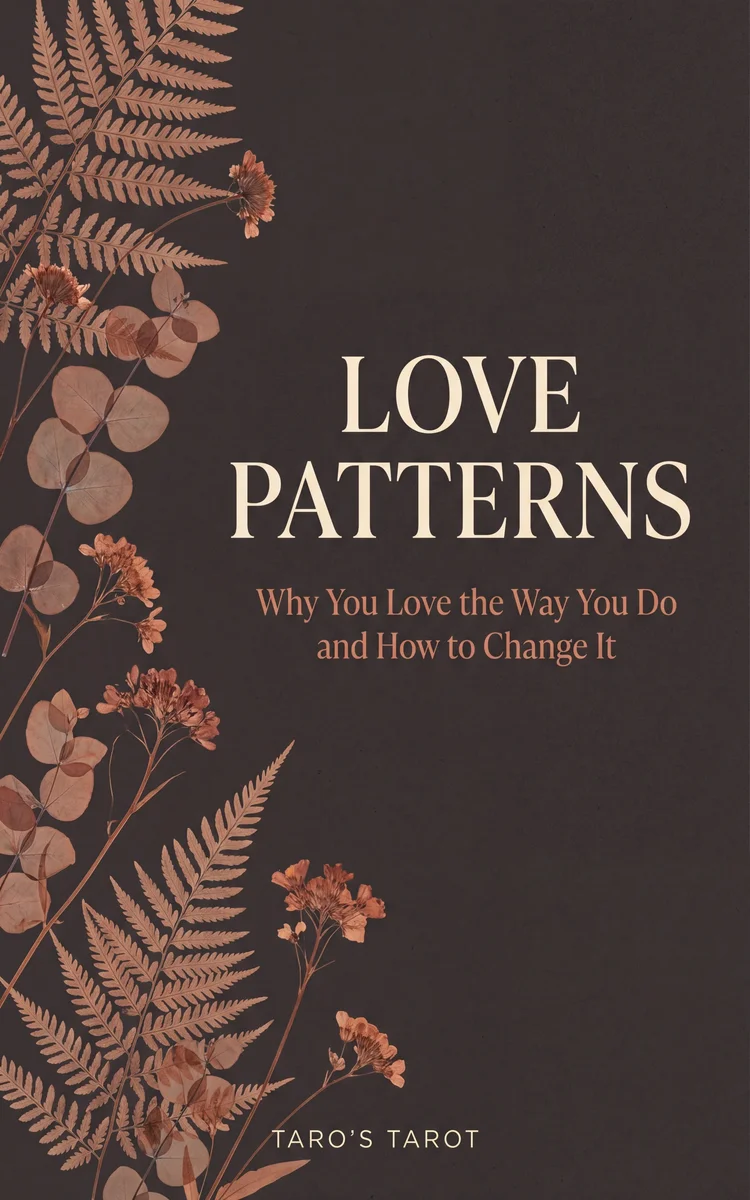
Book
Love Patterns
Why you keep choosing the same person in a different body. Attachment theory, trauma bonding, limerence, and earned security.
Get the Book — $14.99Explore More Quizzes
Discover more ways to explore your spiritual journey
Looking for more spiritual guidance?