You keep asking if they'll come back. Here's the honest answer.
Not "play it right and they'll return." Not "just move on." The real reconciliation numbers, the neuroscience of why you can't stop waiting, and the slow work of getting your life back whether they come back or not. Psychology, not platitudes. 17 chapters that respect your intelligence.

$14.99 once · 116 pages · yours to keep, re-read and print.
Instant PDF download. Pay by card via Stripe — no account needed.
Not sure yet? Read a page first ↓From Chapter 1 — Still Waiting
It is twenty past one in the morning and you are awake again. You did the sensible things. You went to bed at a reasonable hour. The phone stayed face down on the far side of the room, which held until about half eleven. Now it is in your hand, the screen too bright, and you are back in the message thread. Their name at the top. Underneath it, the last thing either of you said, which you have read so many times the words have stopped meaning anything and started meaning everything.
You open a new message and type something. You don't decide to; your thumbs do it on their own, the way they have a hundred times now. I know I said I wouldn't, but. Or, Can we talk. Or just their name and nothing after it, because what comes after it is the whole problem. You read it back, delete it one letter at a time, and watch the sentence vanish into the place all the others went.
You will not send it. You know that. Some small part of you is also not completely sure, and the not-being-sure is exactly why you are holding a phone at this hour instead of sleeping.
From Chapter 6 — Do They Actually Come Back?
You have asked almost everyone by now. You have asked the friends who love you, and got back the answer love gives, the one meant to help rather than the one that happens to be true. You have asked the silence after a message, which answers in its own way and never in the way you want. There is one set of people you have not asked. A small number of researchers have spent whole careers doing little else but counting this exact thing.
Who is this for?
What's inside
Part 1: Why You Can't Let Go
- Still Waiting
- Heartbreak Is Withdrawal
- The Stories That Keep You Hooked
- Why It Hurts More Than It Should
Part 2: Will They Come Back? (The Honest Read)
- The Question You're Really Asking
- Do They Actually Come Back?
- Should You Even Want Them To?
- The No-Contact Decision
Part 3: The Things That Keep You Stuck
- The On-Again/Off-Again Trap
- When They've Moved On
- The Life You Have to Bury
Part 4: Letting Go
- Grieving a Real Loss
- The Body Keeps the Breakup
- Breaking the Waiting
- Who You Are Without Them
Part 5: After
- If They Come Back
- Loving Again Without Bracing
Where you'll be when you close it
- The actual reconciliation numbers, from the researchers who count them — kinder and more brutal than any answer you've been given so far.
- Proof the craving is a circuit, not a character flaw — Helen Fisher's scans of the recently rejected brain, and why willpower was never the problem.
- Catch the highlight reel in the act: how memory kept the best frames of the relationship and quietly cut the rest.
- Stop running no contact as a summons — see what silence is actually for, and why that reframe is the one that finally lets you rest.
- Tell missing the person apart from missing the habit — the litmus that decides whether a reunion would be a relationship or a relapse.
- Get the days back: the plans not made, the held breath, the life that went provisional while you waited for one person's decision.
Also included: Bowlby's protest behaviour, the self-concept research on why you don't know who you are without them, grief for someone who is still alive, what to do in the first 72 hours of silence, the chapter for if they actually do come back, and named researchers throughout.
Get the honest answer. Get your life back.
116 pages. The real numbers, the neuroscience of the craving, the no-contact reframe, the recovery. Written for whoever is awake at 2 a.m.
Instant PDF download. Secure payment via Stripe.
Read the Chapter 1 sample above before you pay. If it doesn't sound honest, don't buy it.
At checkout you can add a personalised reading for $9.99 instead of the usual $14.99 — skip it if you just want the book.
Common questions
Is this a "get them back" book?
No, and it isn't a "just move on" lecture either. Those are the two answers you've already been given, and the book opens with why both fail you. It gives you the honest odds — some exes do come back, and the research on when and how is in here — and then it treats your life as the thing worth recovering, whether they return or not.
Who wrote this, and why should I trust it?
Taro's Tarot — the same people behind the breakup recovery quiz you may have just taken. The stance here is the one we hold everywhere we publish: psychology first; every claim attributed to the researcher who actually made it, from Helen Fisher to René Dailey; and your safety over any framework, including ours. Where the honest answer is that a book isn't enough and you should see a clinician, that's exactly what it says.
Is this a physical book or digital?
Digital PDF. You can read it on any device or print it at home. Instant download after purchase.
They ended it. Is this still for me?
Yes. The book doesn't care who said the words — it's written for whoever is lying awake. Whether you were left, you left and regret it, or it collapsed with no clean ending, the waiting works the same way, and so does the way out.
How is this different from your Limerence book?
Limerence is about obsession with someone you mostly imagined — a crush, a situationship, a fantasy that never got to be real. This book is for the opposite case: you had the real thing, a mutual relationship with keys and routines and a named future, and it ended. Grieving someone you had is a different problem from waking up from someone you invented.
Does this replace therapy?
No. The book is explicit about when to seek professional help and includes crisis resources. Grief that stops you functioning for months needs a clinician alongside the reading.
Will the statistics just tell me what I want to hear?
The numbers cut both ways, and the book refuses to round them in either direction. Roughly 44% of daters report reconciling with an ex at least once — but the same research shows on-off cycles tend to get worse with each renewal, not better. Chapter 6 gives you the full count; Chapter 7 asks the harder question of whether you should even want it.
If what you lost was never quite real
This book is for grieving a real, mutual relationship. If what you can't stop thinking about is a crush, a situationship, or someone you mostly imagined, that's a different problem with a different book — same author, same psychology-first frame.
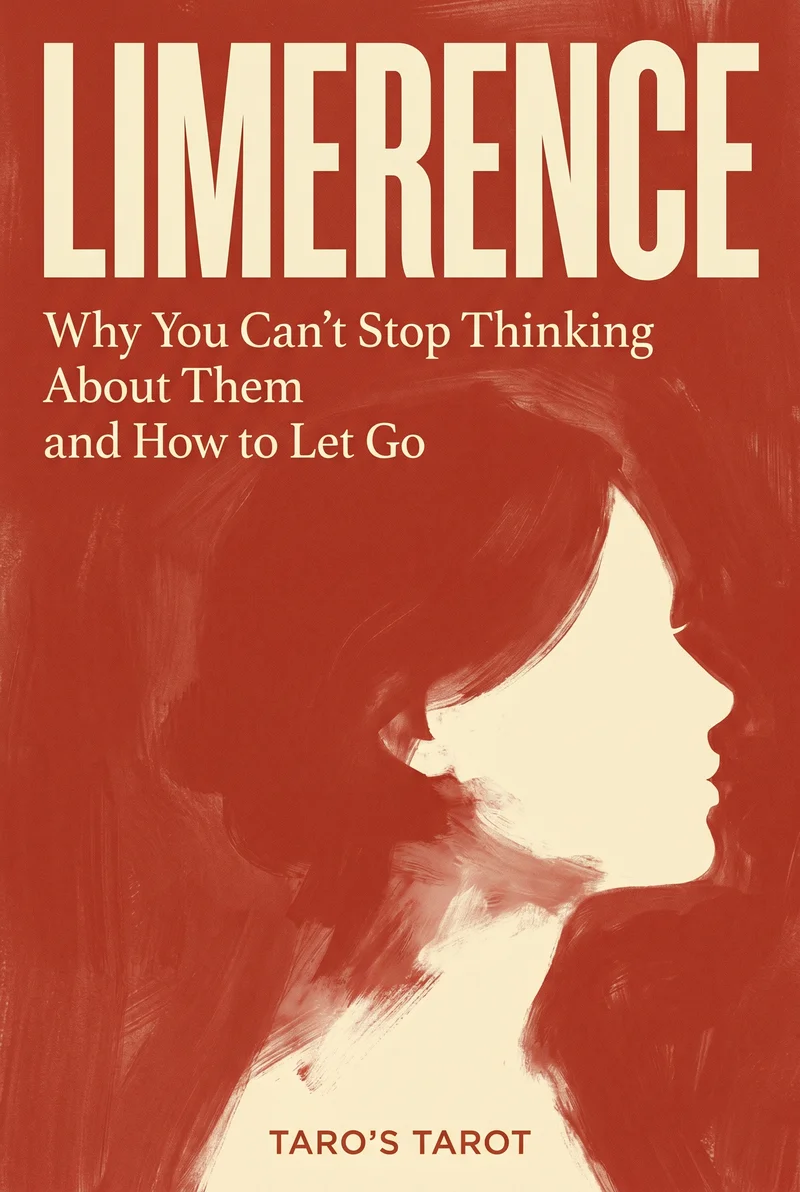
Book
Limerence
Why you can't stop thinking about them. Tennov's research, situationships, the recovery sequence. The book the quiz can't do in five minutes.
Get the Book — $14.99Not sure where you are in the recovery? Take the free quiz