You can't stop thinking about them. There's a name for it.
Limerence is the obsessive cognition that feels like love but runs on uncertainty, dopamine, and intermittent reinforcement. This book names the trap, explains the science, and walks you through the slow work of starving the loop. Psychology, not platitudes. 17 chapters that respect your intelligence.
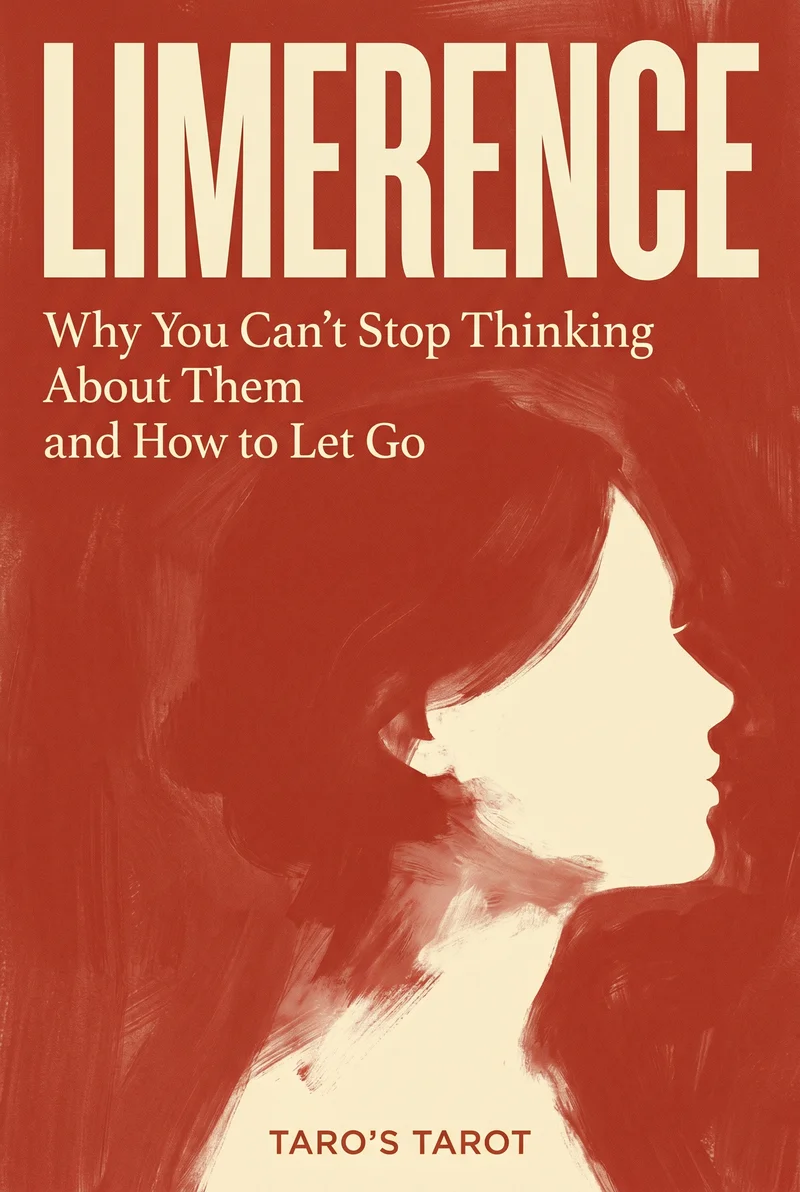
$14.99 once · 126 pages · yours to keep, re-read and print.
Instant PDF download. Pay by card via Stripe — no account needed.
Not sure yet? Read a page first ↓From Chapter 1 — The Thing With No Name
The clock says 2:14. You have been awake since one, and you were not properly asleep before that either. You are not lying awake over work, or money. You are lying awake over a person. More precisely, you are lying awake over a message that person sent you four days ago. You are turning it over, holding it up to the light, testing whether the word they chose at the end was warm or only polite. You have examined this message perhaps two hundred times. It has told you everything it is ever going to tell you. You examine it again.
This is not who you are to the people who know you. To them you are competent. You hold down a job; you are the friend who remembers the birthday, who sends the follow-up text. And here you are at 2 a.m., running one sentence through your mind the way a tongue keeps finding a chipped tooth, unable to make yourself stop.
If you have a name for what this is, the name is almost certainly a cruel one. You have called yourself obsessive. You have called yourself needy. Pathetic. You are about to be handed the word.
From Chapter 9 — Situationships and Avoidant Partners
To anyone who asks, you keep it light. You call him the person you are seeing. You shrug when a friend asks where it is going, as if the question were slightly gauche, as if you of all people had not put it to yourself two hundred times. The lightness you perform in public is the exact measure of the weight you carry in private.
Who is this for?
What's inside
Part 1: What Limerence Is
- The Thing With No Name
- What Dorothy Tennov Found
- The Uncertainty Engine
- Crystallisation
Part 2: Why You
- Who Limerence Chooses
- The Limerent Object
- Hope Is the Fuel
Part 3: Inside an Episode
- A Day in Limerence
- Situationships and Avoidant Partners
- Limerence While Partnered
- When It's an Ex
- When Limerence Becomes Addiction
Part 4: Breaking Free
- The Decision
- Starving the Loop
- The Grief Underneath
Part 5: After
- What Real Love Feels Like
- If It Comes Back
Where you'll be when you close it
- A name for what you've been calling obsessive, needy, pathetic — and the proof it's wiring, not a character flaw.
- See why the inconsistency is the pull, not the price you pay for it — so you stop mistaking a slot machine for chemistry.
- Catch crystallisation in the act: how your mind quietly edited a real, ordinary person into a perfect one.
- Stop running the evidence machine on "is he avoidant, or just not interested" once you see why the answer changes nothing you do.
- Know what actually starves the loop — and why "just one message" resets a clock you paid, at real cost, to advance.
- Tell an ordinary limerent episode apart from the kind that needs a clinician — with the lines drawn plainly and crisis resources named.
Also included: Dorothy Tennov's original research, the dopamine and intermittent-reinforcement science, the while-partnered and ex chapters in full, the grief underneath, what real love feels like by comparison, and named researchers throughout.
Name the trap. Starve the loop.
126 pages. Tennov, the neurochemistry, the modern situationship, the recovery sequence. Written for the woman at 2 a.m.
Instant PDF download. Secure payment via Stripe.
Read the Chapter 1 sample above before you pay. If it doesn't sound honest, don't buy it.
At checkout you can add a personalised reading for $9.99 instead of the usual $14.99 — skip it if you just want the book.
Common questions
Who wrote this, and why should I trust it?
Taro's Tarot — the same people behind the free limerence quiz you may have just taken. The stance here is the one we hold everywhere we publish: psychology first, not "manifest your divine masculine"; every claim attributed to the researcher who actually made it, from Dorothy Tennov to Helen Fisher; and your safety over any framework, including ours. Where a chapter's honest answer is that a book isn't enough and you should see a clinician, that's exactly what it says. If that's not what you came for, this isn't your book.
Is this a physical book or digital?
Digital PDF. You can read it on any device or print it at home. Instant download after purchase.
I already took the quiz. Will this still help?
The quiz tells you whether you're in limerence. This book is what the quiz can't do in five minutes: the science of why it's happening, the situations it lives in (situationships, ex obsession, while partnered), and the slow, specific work of starving the loop. If the quiz named it, the book is the next step.
Is this the same as the Love Patterns chapter on limerence?
No. Love Patterns has one chapter on limerence. This book is 126 pages, 17 chapters, and goes far deeper, with Tennov's original research, the neurochemistry, the modern situationship and avoidant contexts, and the recovery sequence.
Does this replace therapy?
No. The book is explicit about when to seek professional help, especially for the addiction chapter, and includes crisis resources. Limerence severe enough to disrupt your life often needs a clinician alongside the reading.
I'm in limerence with someone I'm not even dating. Is this for me?
Yes, that's most of the readership. Chapter 9 (situationships and avoidant partners) and Chapter 11 (when it's an ex) are the two situations modern limerence lives in most often. The book treats them as the centre, not the exception.
I'm a man reading this. Is it for me?
The book is written female-first, because that's where the readership is and where the existing literature has been thinnest. But limerence isn't gendered, and the science applies. Many of the framings will land regardless.
If you want the wider pattern
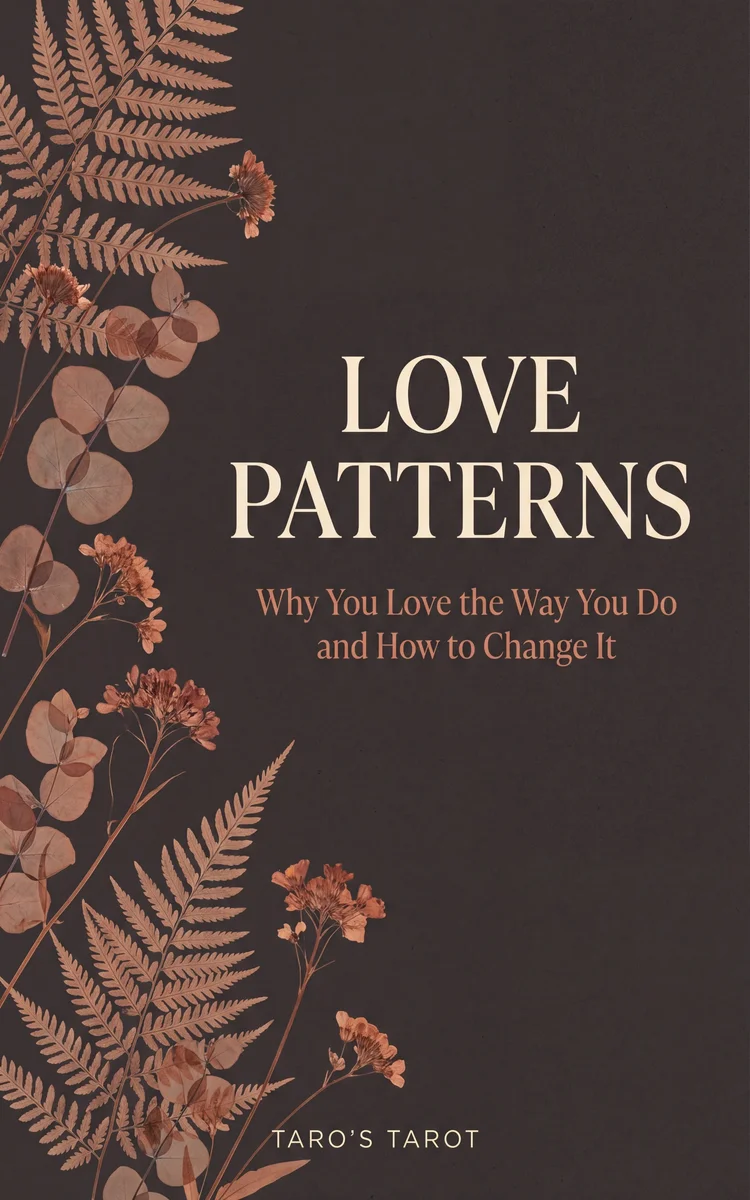
Limerence is one chapter of the wider story. Love Patterns is the same author, same psychology-first frame, on what your nervous system has been doing across every relationship — not just this one.
Book
Love Patterns
Why you keep choosing the same person in a different body. Attachment theory, trauma bonding, limerence, and earned security.
Get the Book — $14.99If what you lost was real
Limerence is about someone you mostly imagined. If you had the real, mutual relationship and it ended — and you can't make it feel over — that's a different problem with a different book.

Book
Will They Come Back?
The honest psychology of letting go when someone leaves. The real reconciliation numbers, heartbreak as withdrawal, and what no contact is actually for.
Get the Book — $14.99Not sure if what you're in is limerence? Take the free quiz