Relationship Psychology
Codependent Relationship Signs
When Caring Becomes Self-Erasure
Codependency isn't about loving too much - it's about losing yourself in someone else's problems. Learn to recognise the pattern, understand where it comes from, and build healthy interdependence instead.
Published: February 8, 2026
What Is Codependency?
Codependency is a relational pattern where one person's identity, mood, and self-worth become entirely dependent on another person - typically a partner who is addicted, emotionally immature, or otherwise in crisis. The codependent partner organises their entire life around fixing, rescuing, or managing the other person's problems, often at severe cost to their own wellbeing.
The term was popularised by Melody Beattie in her 1986 book Codependent No More, originally describing partners of people with addiction. Modern clinical understanding has expanded the definition: codependency is now viewed as a series of learned behavioursrather than an illness - patterns of relating that develop in response to childhood environments where the child's needs were consistently subordinated to a parent's dysfunction.
The core belief underlying codependency: "If I just love them enough, fix their problems, and sacrifice enough of myself, they will love me back and everything will be okay."This belief is compelling because it worked - or seemed to work - in childhood, where managing a parent's emotions was the only route to safety.
Signs of a Codependent Relationship
Codependency is a spectrum. You don't need to recognise every sign - but if several feel uncomfortably familiar, it's worth exploring further.
1. Your mood depends entirely on your partner's mood
When they're happy, you're happy. When they're upset, you're devastated - and convinced it's your job to fix it. Your emotional state isn't your own; it's a mirror of theirs.
2. You can't say "no" without guilt
Setting a boundary feels like betrayal. Even small acts of self-care - seeing a friend, spending time alone - trigger anxiety that you're being selfish or that they'll feel abandoned.
3. You neglect your own needs
Your health, friendships, career, and hobbies have been quietly abandoned. When asked what you want, you draw a blank - because you've been focused on what they want for so long you've lost touch with yourself.
4. You feel responsible for their problems
Their addiction, their anger, their failures - you believe that if you tried harder, loved better, or sacrificed more, you could fix them. This belief keeps you trapped in a rescue cycle that never ends.
5. You stay in unhealthy situations because leaving feels impossible
Despite knowing the relationship is harmful, you can't leave. The thought of them struggling without you feels unbearable - as if their survival depends on your presence.
6. You need their approval to feel okay
Your self-worth is entirely externally sourced. A compliment from them makes your day; a criticism sends you spiralling. Without their validation, you feel empty and worthless.
7. You've lost touch with your own identity
You struggle to identify your own opinions, preferences, and values. If someone asks "What do you want?", you instinctively think about what your partner wants. Your identity has merged with theirs.
8. You make excuses for their behaviour
"They didn't mean it." "They're under a lot of stress." "If I hadn't said that, they wouldn't have reacted that way." You rationalise their harmful behaviour and blame yourself for their actions.
9. You fear abandonment more than mistreatment
Being alone feels worse than being in an unhealthy relationship. The fear of abandonment overrides your survival instincts, keeping you in situations that damage you.
10. You attract or are attracted to people who need "saving"
You're drawn to partners who are broken, struggling, or in crisis - because fixing someone is the only way you know how to feel valuable. Healthy, stable partners feel "boring."
Where Codependency Comes From
Codependency is almost always rooted in childhood experiences where the child's emotional needs were consistently ignored, and their role was to manage a parent's dysfunction.
Parentification
The child becomes the parent - managing the household, soothing a parent's emotions, mediating conflicts, or caring for younger siblings. They learn that their value lies in what they provide, not in who they are. In adulthood, this translates to relationships where they compulsively caretake.
Enmeshment
Boundaries between the child's emotions and the parent's emotions are blurred or non-existent. The child absorbs the parent's feelings as their own and learns that having separate needs or opinions is a form of disloyalty. In adulthood, they struggle to distinguish their feelings from their partner's.
The Fawn Response
Unlike fight, flight, or freeze, the fawn response is a trauma survival strategy where the person seeks safety by immediately prioritising others' needs. Growing up with a volatile or unpredictable caregiver teaches the child that the only way to stay safe is to keep that person happy - no matter the cost. In adulthood, this becomes automatic people-pleasing.
Growing Up with Addiction
The original context where codependency was identified. Children of addicted parents learn to organise their life around the parent's substance use - hiding bottles, covering up absences, managing the household. They develop hyper-vigilance for other people's emotional states and a compulsive need to control outcomes.
Codependency vs Interdependence
Healthy relationships involve mutual reliance - interdependence. The difference from codependency isn't about how much you care; it's about whether you maintain your own identity in the process.
| Feature | Codependency | Interdependence |
|---|---|---|
| Boundaries | Porous or non-existent; self is defined by the other | Clear and flexible; both maintain their own identity |
| Problem-solving | Obsessive focus on fixing the partner's problems | Supportive but allows partner to handle their own challenges |
| Motivation | Fear of abandonment or rejection | Mutual affection and shared values |
| Saying "no" | Feels like betrayal - triggers guilt and anxiety | Normal and respected by both partners |
| Self-worth | Entirely dependent on partner's approval | Internal - supported by the relationship, not dependent on it |
| When apart | Anxiety, emptiness, loss of identity | Comfortable - each person has their own life and interests |
💕
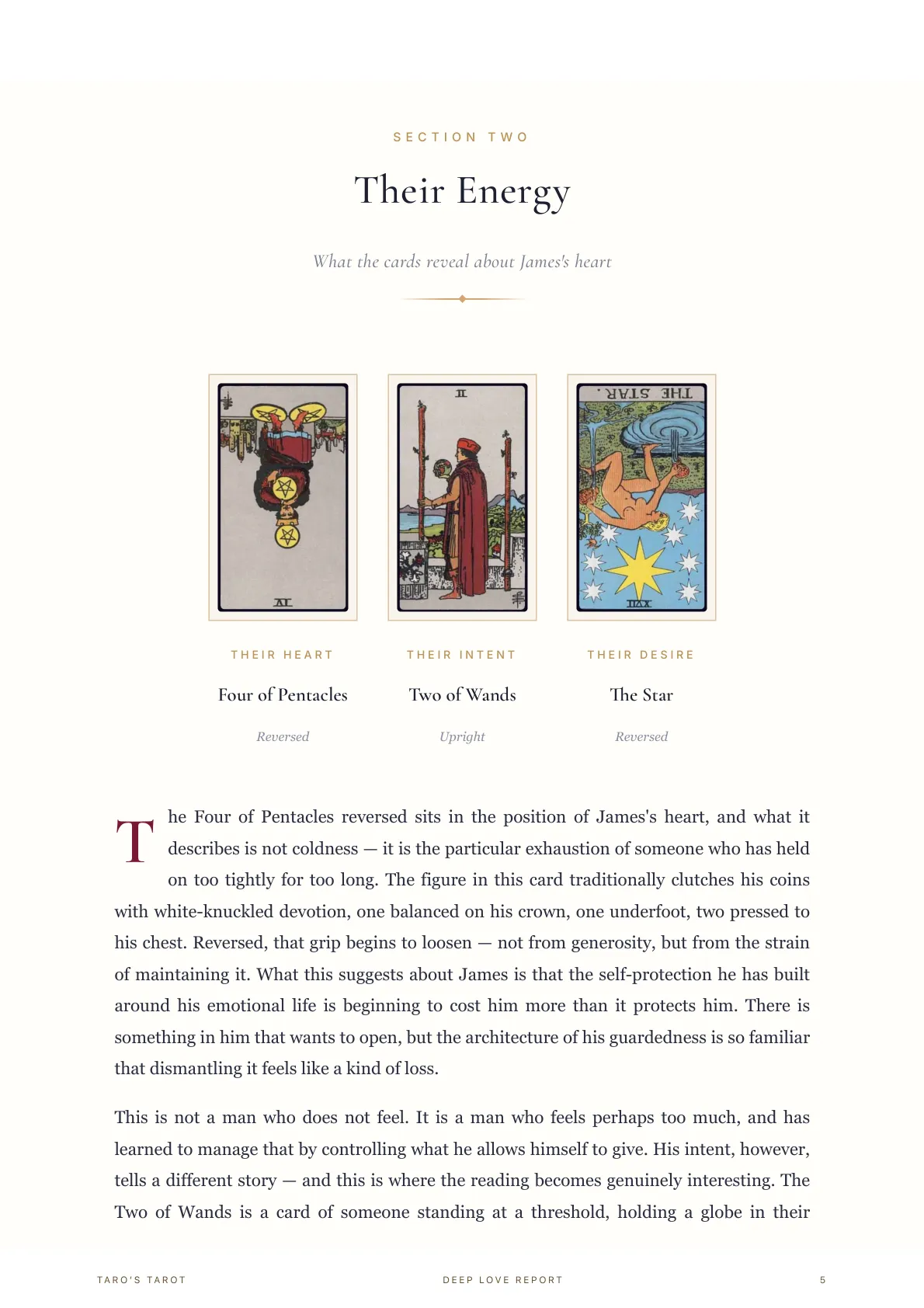
A Weekly Card for Your Love Life
One card each Sunday — a quiet read on your heart and the week ahead.


Codependency and Attachment Styles
Codependency overlaps heavily with anxious attachment. Both involve a preoccupation with the partner, a fear of abandonment, and difficulty feeling whole without the relationship. But codependency adds a specific ingredient: compulsive caretaking.
The anxiously attached person asks: "Do you still love me? Are you going to leave?"
The codependent person asks: "What can I do to make you love me? What do I need to sacrifice so you won't leave?"
Codependents are often drawn to avoidant or narcissistic partners - because these partners are perpetually "in need" of emotional management, which gives the codependent a role and a purpose. The anxious-avoidant trap is often codependency in disguise: one partner pursues, fixes, and sacrifices while the other withdraws, creating an endless cycle.
Understanding your attachment style is a powerful first step in recognising these patterns.
Codependency and Narcissism: The Toxic Pairing
Codependents and narcissists are magnetically drawn to each other because each fills the other's core need: the narcissist needs someone to provide constant admiration and emotional management; the codependent needs someone to rescue and fix.
The narcissist's initial love bombingfeels to the codependent like the love they've been waiting for all their life. The intensity validates their belief that their capacity for selfless love is finally being recognised and rewarded.
When the narcissist shifts to devaluation, the codependent doesn't leave - they try harder. They believe that if they love more, sacrifice more, and tolerate more, the "real" person from the beginning will come back. This keeps them trapped in a cycle that mirrors the childhood dynamic they're unconsciously trying to resolve.
If you recognise this pattern, see our guide on emotionally unavailable partners and consider whether love bombing played a role in how the relationship began.
How to Stop Being Codependent
1
Recognise the pattern
The hardest step. Codependent behaviour feels like "love" because it's all you've known. Naming it - "I am organising my life around someone else's problems at the expense of my own needs" - is the beginning of change.
2
Start setting small boundaries
You don't need to overhaul your life overnight. Start with one small "no" per week. "I can't talk tonight, I have plans." Tolerate the discomfort. Notice that the world doesn't end.
3
Rebuild your identity
What did you enjoy before this relationship? What are your opinions? What do you want? These questions may feel impossible at first. That's a sign of how far the enmeshment goes - and why the recovery matters.
4
Learn to sit with discomfort
When your partner is upset and you feel the compulsion to fix it - pause. Their emotions are not your responsibility. This will feel physically uncomfortable. That discomfort is the feeling of a new neural pathway forming.
5
Get professional support
Schema therapy and inner child work are particularly effective for codependency because they address the childhood roots directly. Codependents Anonymous (CoDA) provides free peer support and a structured recovery framework.
6
Practice self-care without guilt
Self-care isn't selfish - it's the foundation of any healthy relationship. You cannot give from an empty cup. Start treating your needs as equally important to your partner's - because they are.
The Goal: Healthy Interdependence
Recovery from codependency isn't about becoming independent to the point of isolation - that's avoidant attachment, which is just the other extreme. The goal is interdependence: two whole people choosing to share their lives while maintaining their individual identities, boundaries, and emotional autonomy.
In a healthy interdependent relationship:
- You can say "no" without guilt and hear "no" without panic
- You have your own friendships, hobbies, and opinions
- Your partner's bad day affects you empathically, but it doesn't destroy yours
- You support each other's growth rather than needing each other's dysfunction
- Conflict is about resolution, not about preventing abandonment
This is what attachment researchers call earned security- the ability to form healthy bonds even when your childhood didn't model them. It's achievable through self-awareness, therapy, and the deliberate practice of new relational patterns.
For more on building secure relationships, explore our guides on the Four Horsemen of Relationships(Gottman's communication framework) and signs he is pulling away (understanding withdrawal without spiralling).
“Codependency isn't loving too much - it's loving at the expense of your own existence. Recovery begins the moment you realise that your needs are not a burden, and that a relationship where you disappear is not a relationship at all.”
Frequently Asked Questions
Everything you need to know about our tarot readings
What is a codependent relationship?
A codependent relationship is one where one or both partners lose their sense of self in the process of caring for the other. The codependent partner's identity, mood, and self-worth become entirely dependent on the other person - their happiness is your happiness, their problems are your problems, and their approval is the only thing that makes you feel okay. It was originally identified in partners of people with addiction, but the pattern appears across all kinds of relationships.
What are the signs of codependency?
Key signs include: difficulty making decisions without your partner's approval; feeling responsible for their emotions and behaviour; neglecting your own needs to prioritise theirs; difficulty saying no or setting boundaries; fear of abandonment that drives people-pleasing; feeling anxious or guilty when you do something for yourself; staying in unhealthy relationships because leaving feels impossible; and losing touch with your own opinions, interests, and friendships.
What causes codependency?
Codependency typically originates in childhood - often from growing up with an addicted, emotionally immature, or chronically ill parent. The child learns that their needs don't matter and that their role is to manage the parent's emotions (parentification). This creates a belief that love must be earned through self-sacrifice. The "fawn" trauma response - seeking safety by prioritising others' needs - becomes the dominant relational strategy.
What is the difference between codependency and interdependence?
Interdependence is healthy mutual reliance where both partners maintain their own identity, boundaries, and emotional autonomy while supporting each other. Codependency is one-sided: one partner's sense of self dissolves into the other's needs. In interdependence, you can say "no" without guilt. In codependency, saying "no" feels like betrayal. Interdependence feels secure; codependency feels anxious.
Is codependency an attachment style?
Codependency isn't officially classified as an attachment style, but it overlaps significantly with anxious attachment. Both involve a preoccupation with the partner, fear of abandonment, and difficulty feeling whole without the relationship. The key difference is that codependency specifically involves compulsive caretaking - the need to fix, rescue, or manage the partner - which goes beyond anxious attachment's core feature of proximity-seeking.
Can both partners be codependent?
Yes. While the classic pattern pairs a codependent with an addict or narcissist, two codependent people can form a relationship characterised by mutual enmeshment - both losing their individual identities in the relationship. These relationships often feel intensely close but lack healthy boundaries, independent growth, or productive conflict resolution.
How do you stop being codependent?
Recovery involves: (1) Building self-awareness - recognising codependent patterns and their childhood origins. (2) Learning to set boundaries - starting small and tolerating the discomfort of saying "no." (3) Developing an independent identity - rediscovering your own interests, opinions, and friendships. (4) Therapy - particularly schema therapy or inner child work. (5) Support groups like Codependents Anonymous (CoDA). The goal isn't to stop caring; it's to care without losing yourself.
Is codependency the same as being a people-pleaser?
People-pleasing is a behaviour; codependency is a broader relational pattern. All codependents tend to people-please, but not all people-pleasers are codependent. Codependency involves a complete loss of self in the relationship - your identity, mood, and self-worth are fused with the other person. People-pleasing can exist without that level of enmeshment.
Can a codependent relationship be fixed?
Yes, but it requires both partners to change. The codependent partner must learn to prioritise their own needs and set boundaries. The other partner must respect those boundaries and stop relying on the codependent's self-sacrifice. Couples therapy can help, but individual therapy for the codependent is often more impactful - because the pattern predates the relationship and will follow them into the next one if unaddressed.
What is the "fawn" response in codependency?
The fawn response is a trauma survival strategy where the person seeks safety by immediately prioritising the needs, desires, and emotions of others. Unlike fight, flight, or freeze, fawning involves becoming hyper-attuned to the other person's mood and adjusting your behaviour to keep them happy - at the expense of your own needs. It's extremely common in codependency and often originates from growing up with an unpredictable or volatile caregiver.
Still have questions? We're here to help!
Contact Support →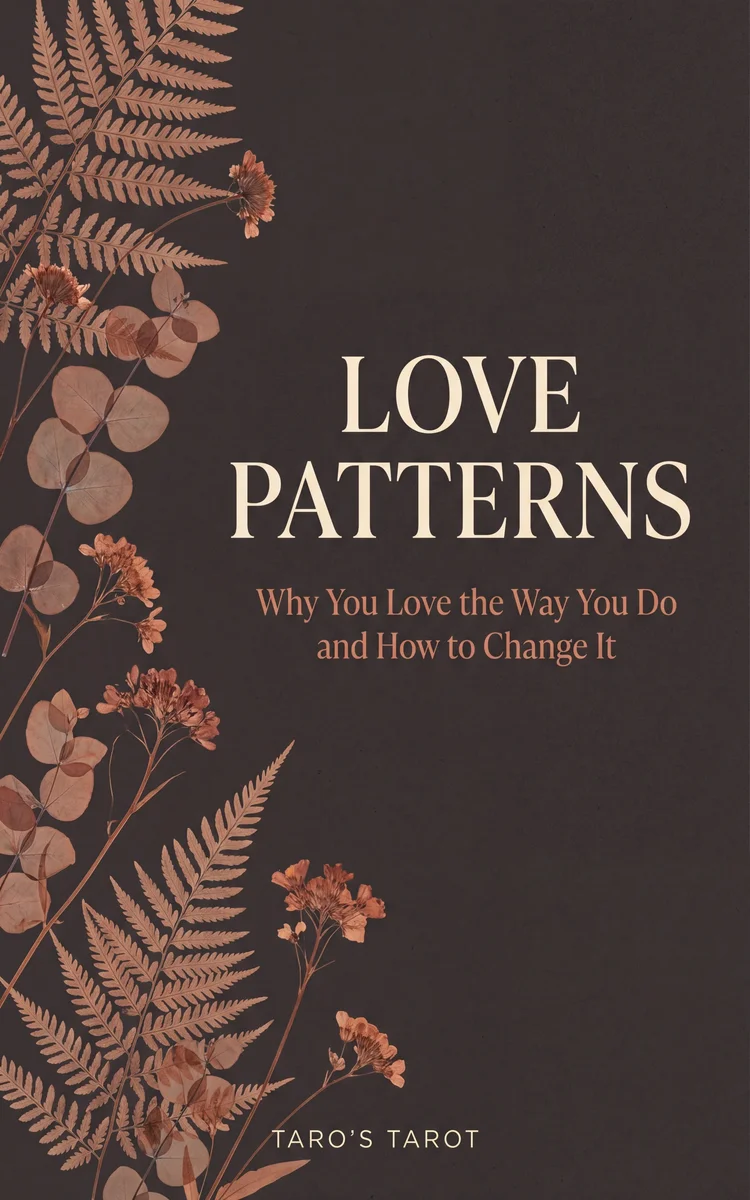
Book
Love Patterns
Why you keep choosing the same person in a different body. Attachment theory, trauma bonding, limerence, and earned security.
Get the Book — $14.99Try Our Free Spiritual Calculators
Get deeper insights with our interactive tools
Understand Your Relationship Patterns
Codependency is rooted in attachment wounds from childhood. Understanding your attachment style is the first step to building relationships where you don't lose yourself.
Explore More Tarot Readings
Discover different ways to gain insight and guidance through our free tarot card readings