A LITTLE MORE UNDERSTANDING
Fight, Flight, Freeze, or Fawn?
Someone criticizes you unexpectedly. What is your gut reaction?
Choose the answer that feels most like you.
Understanding Trauma Responses
When your brain perceives danger — real or perceived — it activates one of four survival responses. These are not conscious choices. They are automatic nervous system reactions that developed to keep you safe, often rooted in early life experiences where they were genuinely necessary.
Psychotherapist Pete Walker expanded the traditional fight-or-flight model to include freeze and fawn, recognising that many trauma survivors default to shutdown or people-pleasing rather than aggression or escape. Your dominant response is not a personality flaw — it is evidence that your system learned to survive.
The Four Trauma Responses
Fight
Move toward the threat. Assert control, push back, confront. Strengths: decisiveness, boundaries. Shadow: aggression, dominance.
Flight
Move away from the threat. Stay busy, avoid, escape. Strengths: productivity, adaptability. Shadow: burnout, emotional avoidance.
Freeze
Shut down completely. Go numb, dissociate, collapse. Strengths: endurance, reflection. Shadow: paralysis, disconnection.
Fawn
Appease the threat. Please, comply, merge. Strengths: empathy, de-escalation. Shadow: self-erasure, codependency.
“Your trauma response was never a flaw — it was proof that your nervous system knew how to keep you alive. The work now is teaching it that survival and living are not the same thing.”
Frequently Asked Questions
What triggers a trauma response?
Trauma responses are triggered by perceived threats — which may not match actual danger. A raised voice, a certain tone, conflict, criticism, or even intimacy can activate your survival response if your nervous system associates it with past harm. The trigger is often unconscious and faster than thought.
Is a trauma response the same as PTSD?
Not exactly. Everyone has trauma responses — they are normal survival mechanisms. PTSD is a clinical condition where these responses become chronic, severe, and significantly impair daily functioning. Having a dominant trauma response does not mean you have PTSD, but persistent activation may warrant professional support.
Can trauma responses change over time?
Yes. With awareness, therapy, and nervous system regulation practices, you can develop a wider range of responses rather than defaulting to one. The goal is not to eliminate your survival response but to make it a choice rather than an automatic reaction.
This quiz is for self-reflection purposes only. It is not a clinical diagnosis or substitute for professional help. If you are experiencing trauma-related distress, please consult a qualified mental health professional.

Inside the report: Core Wound Patterns
What are you hiding from yourself?
The Moon reversed in the Core Wound position speaks to a pattern of emotional suppression that began long before you had words for it. Somewhere in childhood, you learned that your feelings were too much — too intense, too inconvenient, too real for the people around you...

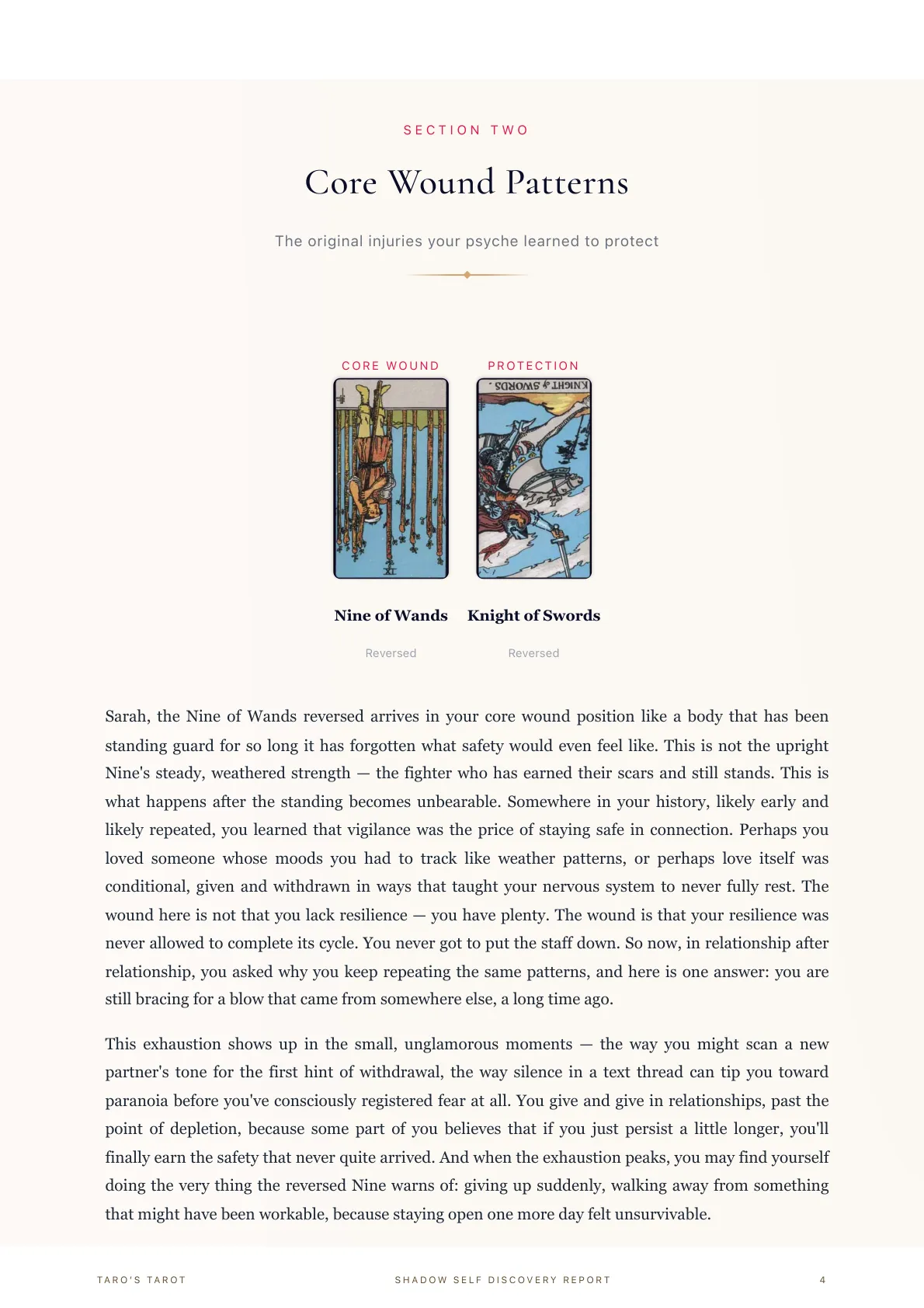

Sample pages from a real generated report — yours is written for you
$14.9930-day money-back guarantee — if your report doesn't feel genuinely specific to you, full refund, no questions asked.
Shadow Work Quiz
What shadow pattern runs your survival mode?
Burnout Quiz
Is your nervous system running on empty?
People Pleaser Quiz
Is fawning driving your relationships?

Book
Love Patterns
Why you keep choosing the same person in a different body. Attachment theory, trauma bonding, limerence, and earned security.
Get the Book — $14.99Explore More Quizzes
Discover more ways to explore your spiritual journey
Looking for more spiritual guidance?