AI Tarot Reading, Free and Honest
A genuinely random 78-card draw, interpreted against your actual situation. No psychic claims, no hidden fees - and a straight answer below on how accurate it really is.
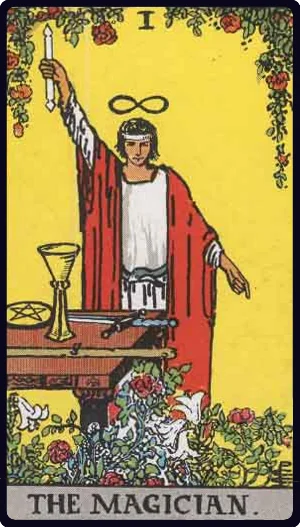
What Is an AI Tarot Reading?
An AI tarot reading draws cards at random from a full 78-card deck, then uses a language model to interpret those cards against the situation you described. The draw is real randomisation, not a script. The interpretation applies traditional tarot meanings to your specific question. What it does not do is predict fixed future events - no tarot reading does that.
Pick a Card
Choose the card that pulls at you - then see what the full draw says
How AI Tarot Actually Works
The order of operations matters more than most sites admit
Ask Your Real Question
Describe the actual situation, not a tidied-up version. Specific context produces a specific reading.
The Deck Is Shuffled
A random number generator draws from all 78 cards, upright or reversed, before any interpretation begins.
The Cards Are Interpreted
Traditional card meanings are applied to your situation and synthesised into one coherent reading.
You Decide What To Do
The reading gives you a frame for the decision. The decision stays yours.
Why the order matters: the cards are locked in before a single word of interpretation is written. That is the difference between a tarot reading and a chatbot writing something tarot-flavoured. If a tool cannot tell you which cards it drew and which way up they landed, it did not draw any.
Is AI Tarot Accurate?
The honest version, split into the parts that are and are not
What AI Does Well
- Draws genuinely at random - no bias toward pleasant cards
- Knows all 78 cards, upright and reversed, without gaps
- Synthesises a ten-card spread into one coherent thread
- Applies the cards to the exact situation you described
- Never rushes you, never judges the question
- Available at 3am, when most of these questions get asked
- Consistent - the same care on question fifty as question one
What AI Cannot Do
- -Predict fixed future events - nothing can, cards included
- -See you hesitate, or notice what you left out
- -Change direction mid-reading based on your face
- -Know anything about you beyond what you type
- -Sit with you if the reading opens something painful
- -Replace a therapist, a doctor, or a lawyer
- -Claim psychic perception - and we do not claim it
Tarot works as a projective technique: the cards give you a structured set of images to react to, and your reaction is the useful part. That mechanism does not require anything supernatural, and it does not stop working because a machine dealt the cards. Read more in our approach.
Cards named and shown. No payment details asked for.
Get Weekly Tarot Guidance
One card to guide your week — tarot wisdom in your inbox every Sunday.
ChatGPT Tarot vs a Purpose-Built Reader
Which AI is best for tarot? The real split is not which model - it is whether there is a deck behind it
A General Chatbot
ChatGPT, Gemini, Claude and the rest can discuss tarot fluently - they have read every tarot book there is.
But they have no deck. When you ask one for a reading, it invents which cards "came up", and that invention is shaped by how you phrased the question. Ask hopefully and hopeful cards appear. That is not a draw, it is autocomplete wearing a tarot hat.
A Purpose-Built Tarot Tool
The deck is shuffled by a random number generator first. The cards are fixed before interpretation starts.
The Tower turns up when The Tower turns up, no matter how you worded things. The AI then does what it is genuinely good at - reading those specific cards against your specific situation. That is the setup we use.
Where to Start
Different questions want different spreads. Weighing us against other sites? See our comparison of free tarot reading sites.
“The question is not whether a machine can be psychic. It cannot, and neither can a deck of cards. The question is whether a random image and an honest interpretation can get you to say the thing you already knew. That part works regardless of who deals.”
AI Tarot Reading FAQs
The questions people actually ask before they try one
Is AI tarot accurate?
How does AI tarot work?
Can AI actually interpret tarot cards?
Are AI tarot readings real readings?
Which AI is best for tarot readings?
Is AI tarot legit, or is it a gimmick?
Can AI replace a human tarot reader?
Is the AI tarot reading free?
Can I ask an AI tarot reader a yes or no question?
Does AI tarot store what I ask about?
Still have questions? We're here to help!
Contact Support →Explore More Tarot Readings
Discover different ways to gain insight and guidance through our free tarot card readings