Attachment Styles Guide
Understanding your attachment style is one of the most powerful things you can do for your relationships. Explore the 4 styles and discover how they shape the way you love.
Secure
The Anchor
Secure attachment is the foundation of healthy relating. It represents an internal sense of safety, an ability to balanc...
Anxious
The Wave
Anxious attachment is characterized by a deep capacity for love paired with a persistent fear that it could disappear at...
Avoidant
The Mountain
Avoidant attachment is a sophisticated survival mechanism, not a character flaw. It develops when self-reliance becomes ...
Fearful-Avoidant
The Moon
Fearful-avoidant attachment — also known as disorganized attachment — lives at the intersection of wanting love desperat...
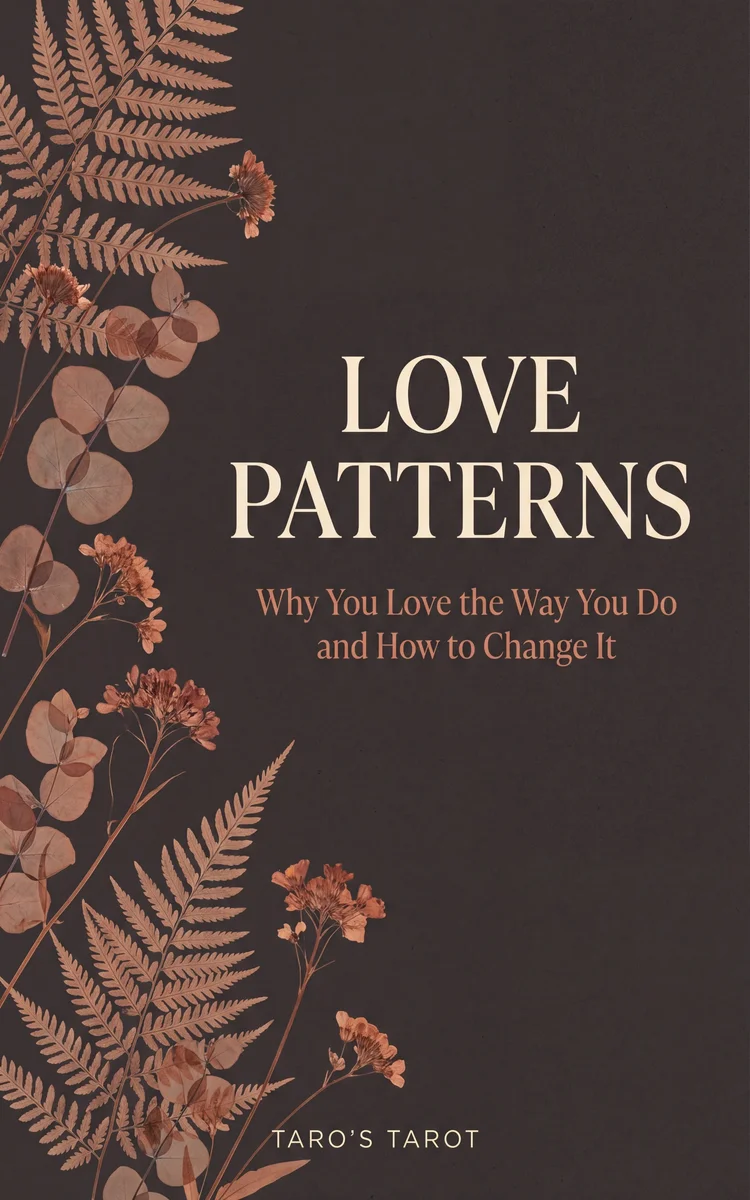
Book
Love Patterns
Why you keep choosing the same person in a different body. Attachment theory, trauma bonding, limerence, and earned security.
Get the Book — $14.99
Inside the report: Core Wound Patterns
What are you hiding from yourself?
The Moon reversed in the Core Wound position speaks to a pattern of emotional suppression that began long before you had words for it. Somewhere in childhood, you learned that your feelings were too much — too intense, too inconvenient, too real for the people around you...

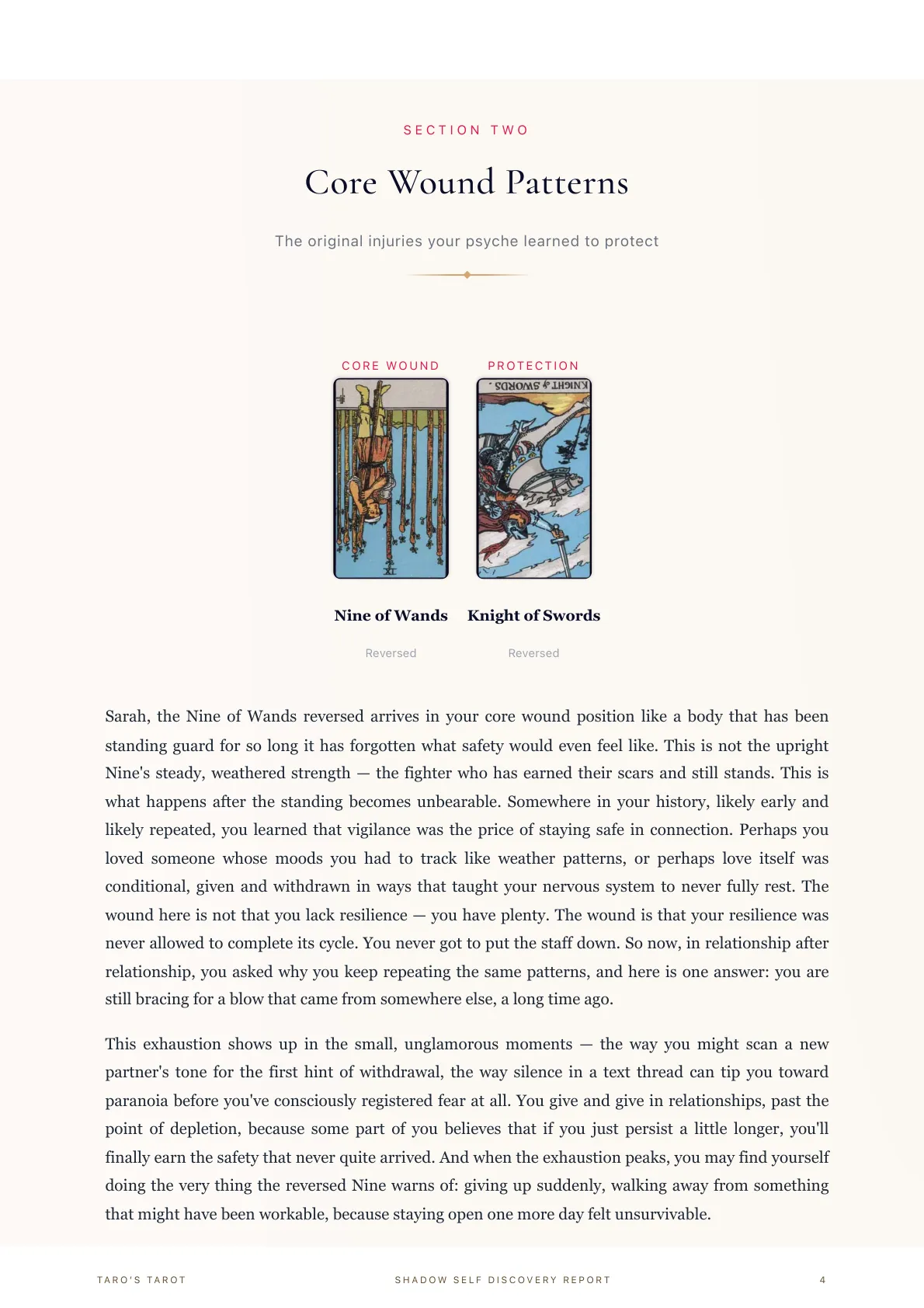
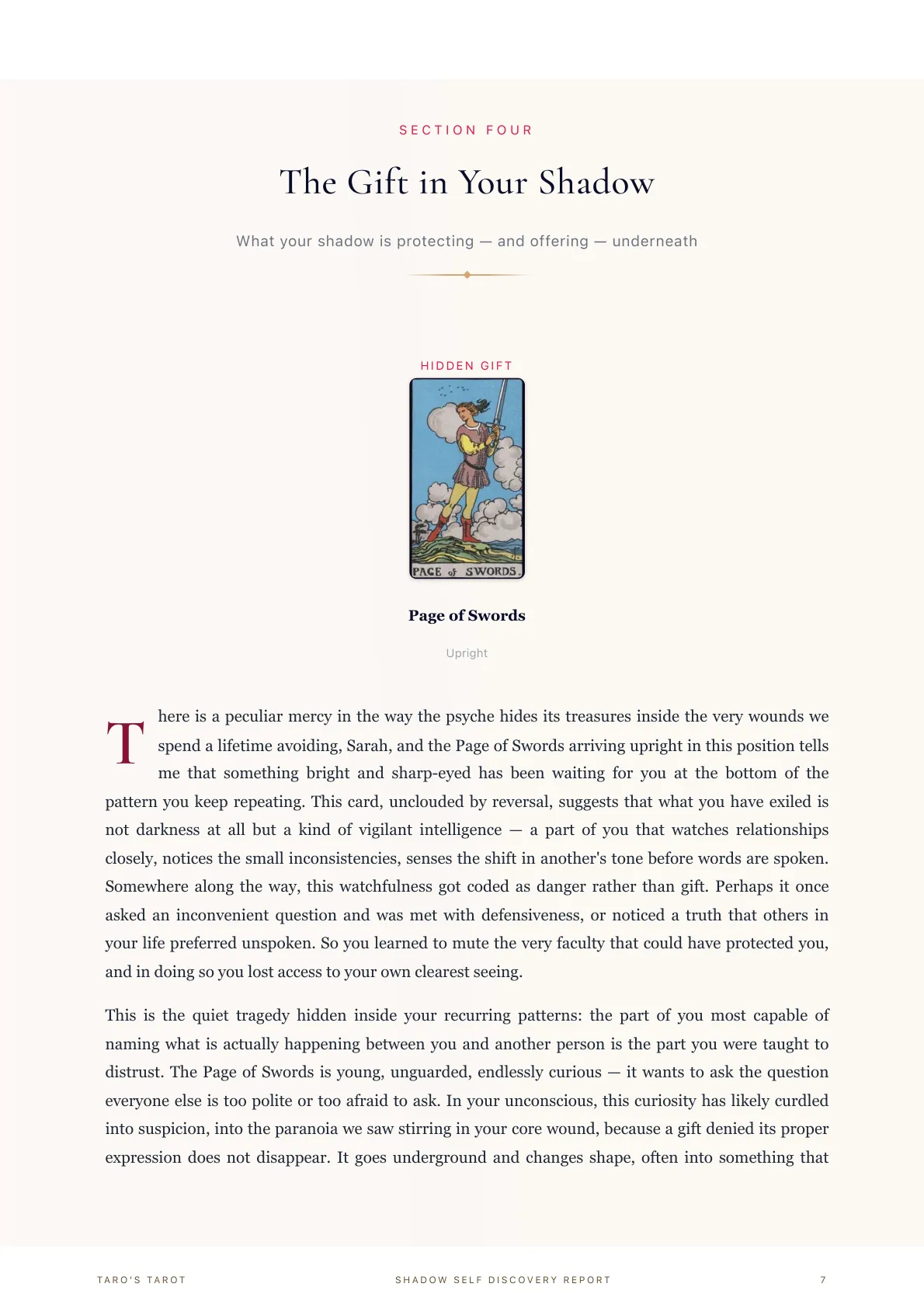
Sample pages from a real generated report — yours is written for you
$14.9930-day money-back guarantee — if your report doesn't feel genuinely specific to you, full refund, no questions asked.
What Are Attachment Styles?
Attachment theory, developed by John Bowlby and expanded by Mary Ainsworth, describes the deep emotional bonds that form between infants and their primary caregivers. These early bonds create “internal working models” — unconscious blueprints that shape how you perceive yourself, others, and relationships throughout your life.
Your attachment style sits on two dimensions: anxiety (how much you worry about being abandoned or rejected) and avoidance (how uncomfortable you are with emotional closeness and dependency). Low anxiety and low avoidance produces secure attachment. High anxiety produces the anxious style. High avoidance produces the avoidant style. High in both produces the fearful-avoidant pattern.
While roughly 50-60% of adults have a secure attachment style, the remaining 40-50% fall into one of the three insecure categories. Understanding where you sit — and why — is the first step toward healthier, more fulfilling relationships.
The Anxious-Avoidant Dynamic
The most common insecure relationship pairing is the anxious individual with an avoidant individual. This pairing is often called the “pursuit-withdrawal cycle” because each partner's coping mechanism triggers the other's deepest fears, creating a self-reinforcing loop.
This cycle is often mistaken for “passion” because the reconciliations are emotionally charged. In reality, it's an intermittent reinforcement pattern that keeps both partners in chronic stress. Breaking the cycle requires both partners to understand their roles and develop secure communication strategies.
Can Your Attachment Style Change?
Yes — and this is one of the most important findings in modern attachment research. Attachment styles are not fixed personality traits; they are adaptive strategies that can be neurologically updated through a process called earned security.
The brain's neuroplasticity means that new relational experiences — whether in therapy, a romantic relationship, or close friendships — literally create new neural pathways. Research shows that approximately 30% of individuals experience a shift in their attachment style over a four-year period, and the shift toward security is the most common direction.
Earned security is predicted by several factors: the ability to describe negative childhood experiences coherently and without overwhelm, forming bonds with secure partners or therapists who provide a new relational template, and the capacity to make meaning from significant life events rather than being defined by them.
“Your attachment style is not your identity — it is your nervous system's learned strategy for staying safe in relationships. The moment you see it clearly, you gain the power to choose differently.”
Frequently Asked Questions
What are the 4 attachment styles?
The four attachment styles are: Secure (comfortable with intimacy and independence), Anxious (fears abandonment, seeks reassurance), Avoidant (values independence, distances from emotional closeness), and Fearful-Avoidant/Disorganized (oscillates between wanting closeness and fearing it). These styles develop in early childhood based on the quality of caregiving received.
Which attachment style is most common?
Secure attachment is the most common, found in 50-60% of the general adult population. Among insecure styles, anxious and avoidant attachment each account for roughly 20-25% of adults, while fearful-avoidant is the rarest at approximately 5-7%.
Can two insecure people have a healthy relationship?
Yes. Two individuals with insecure attachment styles can build a secure relationship by adopting what researchers call a “secure-functioning” agreement — prioritizing mutual care, transparency, and immediate repair after conflict. This creates a “couple bubble” that serves as a therapeutic environment for both to earn security over time.
What's Your Attachment Style?
Take our free quiz to discover your attachment style and get personalized insights for healthier relationships.
Explore Your Relationship Patterns
Explore More Quizzes
Discover more ways to explore your spiritual journey