Anxious Attachment Style
Anxious attachment is characterized by a deep capacity for love paired with a persistent fear that it could disappear at any moment. You feel emotions intensely and crave closeness, often becoming hyper-attuned to your partner's moods, tone, and micro-expressions. This isn't a flaw — it's a highly sensitive attachment system running on high alert, constantly scanning for signs that the connection is safe.
Is This Your Attachment Style?
Take our free quiz to discover your attachment style and get personalized insights.
How It Develops
Anxious attachment develops in childhood environments where caregiving was inconsistent rather than absent. Your caregiver wasn't always cold or rejecting — sometimes they were warm, attentive, and present. Other times, they were distracted, emotionally unavailable, or intrusive. This unpredictability taught your nervous system a critical lesson: love is available, but you can never be sure when. The only strategy that increased the chances of receiving attention was to amplify your distress signals — cry louder, cling harder, stay hyper-focused on the caregiver's every mood shift. Researchers call this a "resistant" strategy: your distress is simultaneously a plea for connection and a protest against inconsistency.
Signs of Anxious Attachment
Anxious attachment often hides behind behaviors that feel perfectly logical in the moment. These are the patterns to notice:
- You over-analyze texts, reading deep meaning into punctuation, emojis, and response times
- You feel physically calm only when your partner is present and physically anxious when they're away
- You frequently ask "Are we okay?" or "Are you mad at me?" even without evidence of a problem
- You can sense micro-shifts in your partner's mood before they're consciously aware of them
- When your partner doesn't text back, your mind jumps to worst-case scenarios
- You tend to idealize new partners quickly, overlooking red flags in favor of connection potential
- You struggle to focus on work or hobbies when there's unresolved tension in your relationship
- Your self-worth rises and falls with how the relationship is going that day
- You sometimes create conflict or test your partner to get their full attention
- You find it difficult to maintain boundaries because you fear setting limits will push people away
Anxious Attachment in Relationships
In relationships, anxiously attached people bring extraordinary emotional depth and devotion. When you feel secure, you are one of the most loving, generous, and emotionally available partners imaginable. The challenge is that your attachment system operates on high alert, interpreting neutral signals as potential threats. A partner looking at their phone during dinner, a brief or distant text, or a weekend plan that doesn't include you can trigger a cascade of anxiety that feels completely disproportionate to the situation — but is completely proportionate to the childhood wound underneath it. The most painful dynamic is the anxious-avoidant trap: you are magnetically drawn to partners whose distance mirrors your caregiver's inconsistency, mistaking the familiar anxiety for deep chemistry.
Communication Patterns
Anxious attachment often leads to "indirect communication" — expressing needs through protest behaviors rather than direct requests. Instead of saying "I'm feeling lonely and would love to spend tonight together," you might pick a fight, become moody, or withdraw to test whether your partner will pursue you. This strategy makes perfect sense to the child-brain that learned amplification gets results, but in adult relationships it creates the opposite outcome: pushing your partner away instead of drawing them closer. The path forward is learning to translate protest into vulnerability — "I'm feeling anxious right now and could use some reassurance" is more likely to be met with warmth than "You never text me back!"
Strengths
- +Extraordinary emotional intelligence and empathy
- +Deeply devoted and willing to invest in relationships
- +Creates profound emotional bonds through openness and vulnerability
- +Highly attuned to others' emotional states and needs
- +Brings passion, warmth, and intensity to partnerships
Growth Areas
- !May interpret neutral situations as signs of rejection or abandonment
- !Tendency to lose personal identity by merging with the relationship
- !Can seek reassurance in ways that inadvertently push partners away
- !Struggles to self-soothe without external validation
- !May unconsciously choose partners who recreate childhood inconsistency
The Neuroscience
The anxious brain is characterized by a hyper-reactive amygdala — the brain's fear center fires faster and stronger in response to social and emotional stimuli. When a relational threat is detected (even something as minor as a partner glancing at their phone), the amygdala triggers a "fast-track" response that bypasses the rational prefrontal cortex entirely. This is called an "amygdala hijack," where the brain prioritizes survival over logic. The hypothalamic-pituitary-adrenal (HPA) axis floods the body with cortisol and adrenaline, creating the racing heart, shallow breathing, and sense of impending doom that anxiously attached people know so well. Critically, the connection between the prefrontal cortex and the amygdala is often weaker in anxious individuals, which is why knowing your partner is "just busy" doesn't calm the anxiety — the thinking brain can't override the feeling brain. Anxious attachment is also linked to lower oxytocin sensitivity, meaning small reassurances don't "stick" for long, creating a constant craving for the next validation.
Healing & Growth
Healing anxious attachment means moving from externalized regulation — where your peace depends on another person — to internalized security. This doesn't mean needing people less. It means building the capacity to soothe your own nervous system so that connection becomes a choice rather than a survival strategy.
Master the 90-second rule
The peak of a physiological stress response lasts approximately 90 seconds. When you feel the urge to send an anxious text or start a conflict, put the phone down and breathe through those 90 seconds. Box breathing (4 seconds inhale, 4 hold, 4 exhale, 4 hold) activates the parasympathetic nervous system and signals safety to the brain. If you can ride the wave without acting, the intensity will naturally begin to fade.
Practice emotional labeling
Research shows that naming the specific feeling ("I am experiencing a fear of abandonment right now") reduces amygdala activity and engages the prefrontal cortex. This creates a bridge between the feeling brain and the thinking brain. Don't just say "I'm anxious" — get specific: "I'm having the thought that this silence means they're losing interest." Naming it externalizes it and gives you a choice about how to respond.
Diversify your secure base
When your partner is your only source of emotional regulation, every interaction carries unbearable weight. Build a network of secure connections — close friends, family members, a therapist, a community — so that your partner is one of several anchors rather than the only one. This doesn't dilute your bond; it strengthens it by removing the suffocating pressure of being someone's everything.
Audit your relationship environment
If you repeatedly find yourself in anxious-avoidant dynamics, the pattern isn't random — it's your nervous system drawn to the familiar. Intentionally look for partners who demonstrate secure traits: consistency, responsiveness, directness, and follow-through. These relationships may initially feel "boring" compared to the intensity you're used to. That boredom is actually safety. Give it time.
Explore attachment-informed therapy
Emotionally Focused Therapy (EFT) helps you move away from reactive pursuit-withdrawal cycles toward secure communication. EMDR can reprocess childhood attachment injuries by removing the emotional charge from core memories of inconsistent caregiving, shifting internal beliefs from "I am unlovable" to "I am worthy of consistent love." Both approaches address the nervous system directly rather than relying on insight alone.
Guide for Partners
Being with an anxiously attached person can feel intense, but understanding what's happening beneath the surface transforms frustration into compassion. Their "clinginess" isn't about controlling you — it's a nervous system on high alert, seeking the safety that was intermittent in childhood.
Provide proactive reassurance
Don't wait for them to ask — offer affirmations of love and commitment before the anxiety spirals. A simple "thinking of you" text during the day, or "I love being with you" unprompted, can prevent hours of anxious rumination. Each proactive reassurance deposits trust into their nervous system's "bank account."
Give space with structure
If you need alone time, frame it clearly: "I'm feeling a bit overwhelmed and I'd like an hour to decompress. Everything is okay between us, and I'll be back for dinner at 7." The difference between "I need space" (triggering) and "I need an hour, here's when I'll be back" (calming) is enormous for an anxious nervous system. Space without structure reads as abandonment.
See protest behaviors as pleas for connection
When they "act out" with anger, clinginess, or testing behavior, look underneath the surface. What you're seeing is a frightened attachment system, not an unreasonable person. Responding with softness and physical touch ("I can see you're scared right now. I'm right here") regulates their nervous system more effectively than logical arguments or defensive reactions.
Be consistent and predictable
Consistency is the primary medicine for anxious attachment. Do what you say you'll do. Call when you said you would. If plans change, communicate proactively rather than letting them discover the change. For someone whose childhood was defined by unpredictability, your follow-through builds trust at the neurological level.
Don't punish vulnerability
When they share their fears directly — "I'm feeling insecure about us right now" — meet it with warmth, not irritation. This direct vulnerability is hard-won progress. If you respond with "Not this again" or eye-rolling, they'll revert to indirect protest behaviors that are harder for both of you. Reward the honesty even when the timing isn't perfect.
Connected to Your Other Results
Anxious attachment frequently correlates with Enneagram Types 2 (The Helper) and 6 (The Loyalist). Type 2s express their attachment anxiety through excessive giving and caretaking, while Type 6s manifest it as vigilant loyalty-testing and worst-case scenario thinking.
Anxiously attached individuals often gravitate toward Words of Affirmation and Physical Touch as their primary love languages, seeking the verbal and physical reassurance that calms their activated nervous system. Acts of Service can also rank highly, as concrete gestures serve as "proof" of commitment.
Frequently Asked Questions
Is anxious attachment a mental illness?
No. Anxious attachment is not a clinical mental illness or personality disorder. It's a learned behavioral pattern and a specific configuration of the nervous system designed to maximize safety in an unpredictable relational environment. However, if left unmanaged, the chronic stress of an activated attachment system can contribute to clinical anxiety, depression, or relationship dysfunction. The distinction matters: you're not "broken" — you're running a survival program that was perfectly adapted to childhood but may need updating for adulthood.
Can anxious attachment become secure?
Yes. This is called "earned security," and it's one of the most well-documented transitions in attachment research. It requires developing self-awareness about your triggers, learning physiological self-regulation (your body, not just your mind), and ideally engaging in therapy to process early attachment wounds. Being in a relationship with a secure partner significantly accelerates the process, as their consistency provides the corrective experience your nervous system needs.
Why am I always attracted to avoidant partners?
The anxious-avoidant dynamic is the most common insecure pairing, and it's not coincidence. The avoidant partner's emotional distance mirrors the inconsistency of your childhood caregiver. Your nervous system recognizes this pattern and misinterprets the familiarity as "chemistry" or "spark." Additionally, there may be an unconscious belief that if you can finally win over the emotionally distant person, you'll heal the childhood wound of not being "enough." Understanding this pattern is the first step toward breaking it.
How do I stop spiraling when my partner doesn't text back?
The key is interrupting the HPA axis activation before it becomes a full spiral. Use the 90-second rule: put the phone in another room, engage in 90 seconds of slow, deep breathing, and label the feeling specifically ("I am having the thought that silence means rejection"). Once the physiological peak passes, you can choose a secure response rather than reacting from panic. Over time, these micro-practices literally rewire the neural pathway between trigger and response.
Take the Attachment Style Quiz
Discover your attachment style and get personalized guidance for healthier relationships.
Explore Other Attachment Styles
Understanding all four styles helps you navigate every relationship in your life.
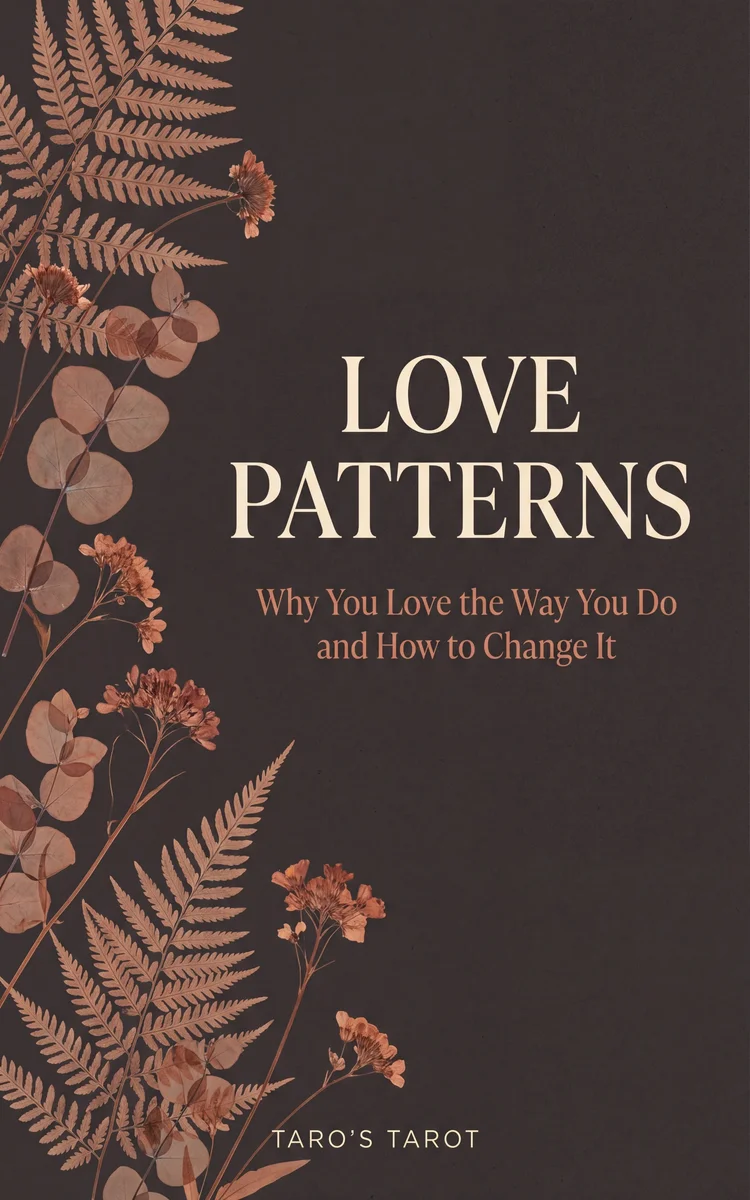
Book
Love Patterns
Why you keep choosing the same person in a different body. Attachment theory, trauma bonding, limerence, and earned security.
Get the Book — $14.99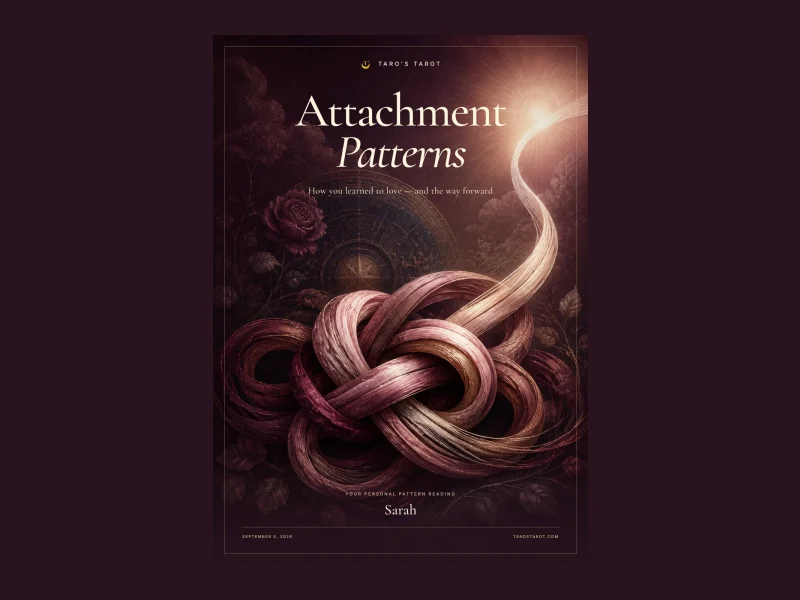
Inside the report: Your Defense System
Why do you love the way you do?
The Moon in the Mask position reveals something quietly devastating: the face you show the world when love gets close isn't cold — it's careful. You've learned to pre-empt abandonment by never fully arriving. The distance you create isn't indifference. It's a finely tuned survival mechanism built in a home where presence was punished...
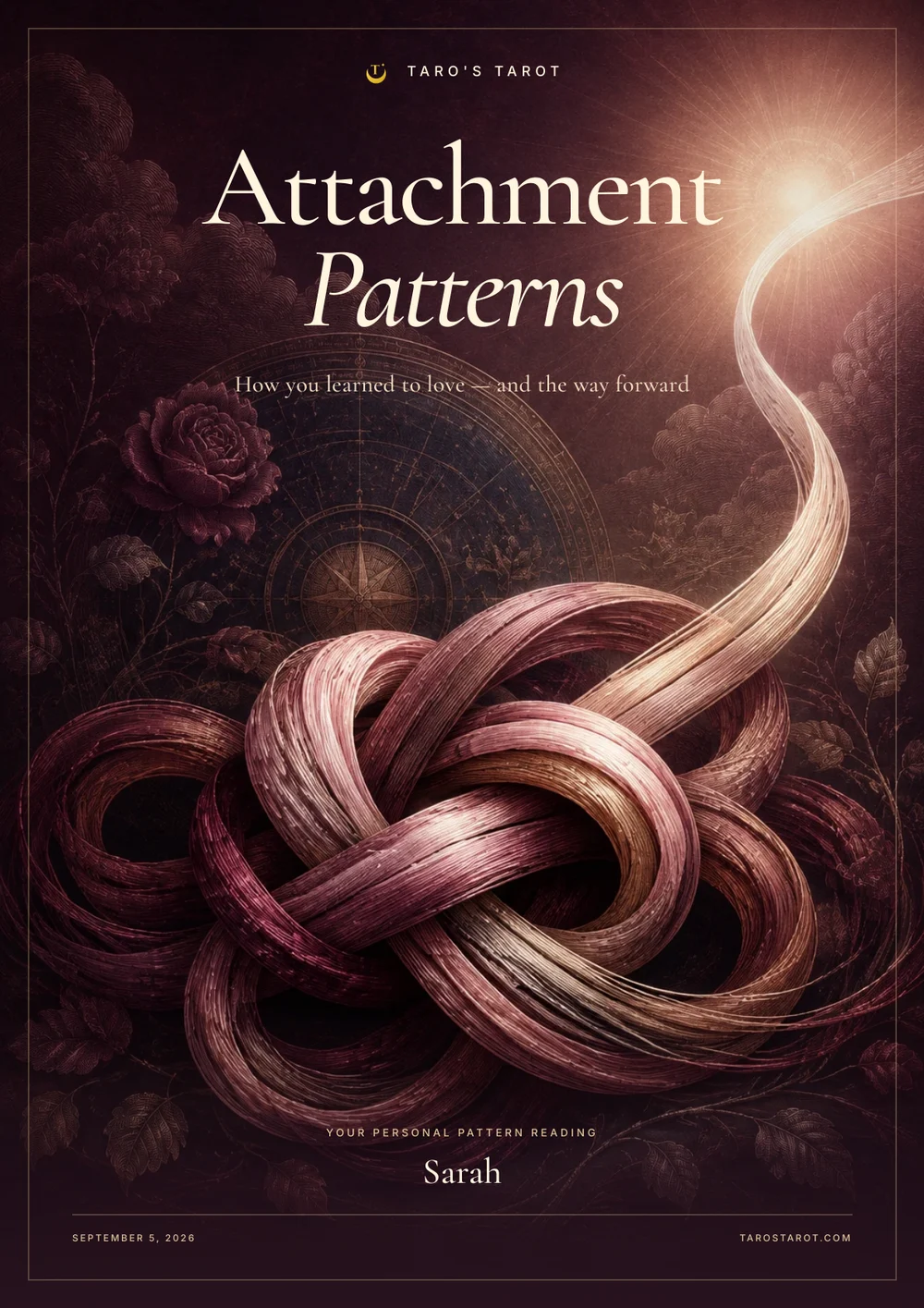
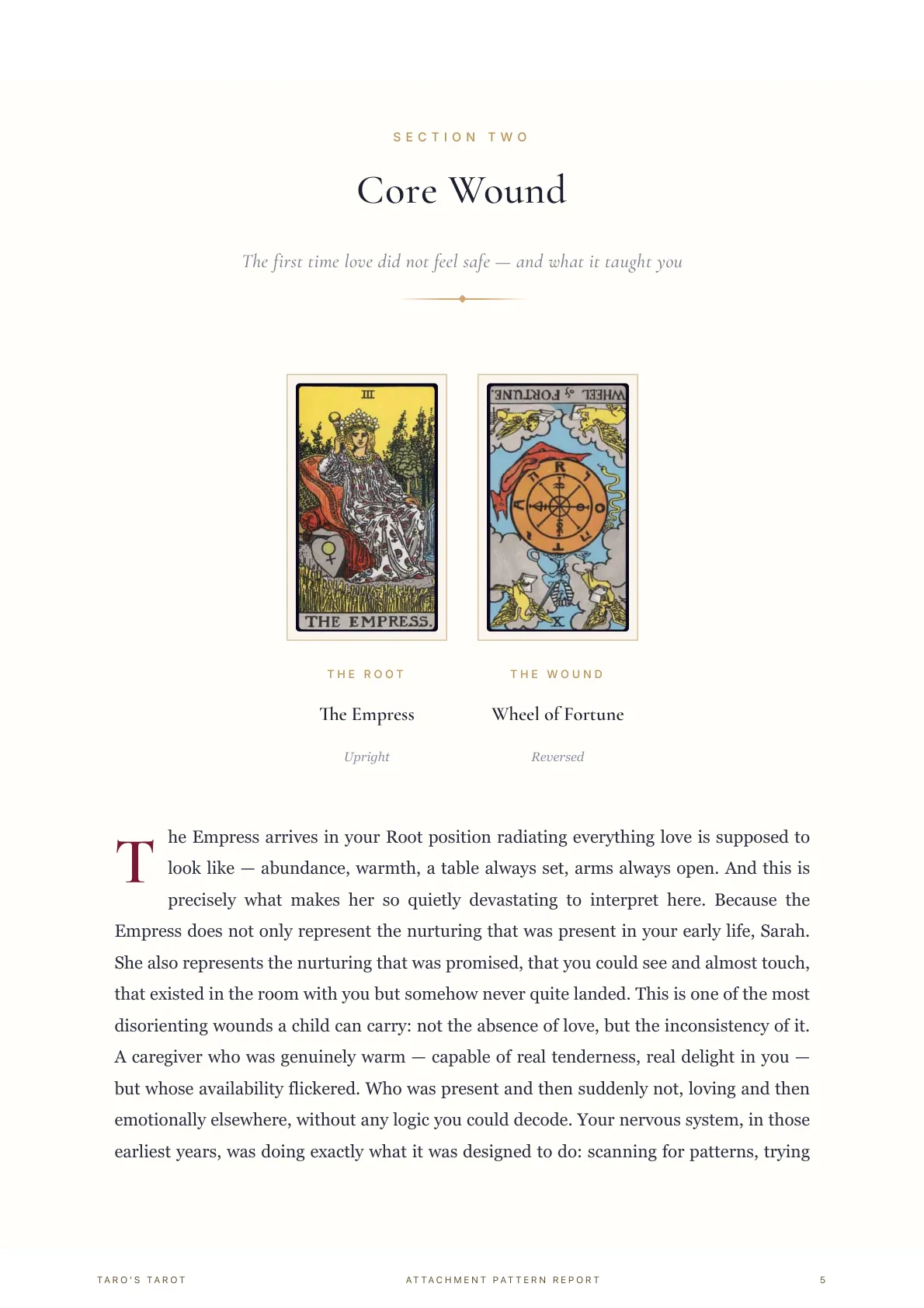

Sample pages from a real generated report — yours is written for you
$14.9930-day money-back guarantee — if your report doesn't feel genuinely specific to you, full refund, no questions asked.
Explore More Quizzes
Discover more ways to explore your spiritual journey