Secure Attachment Style
Secure attachment is the foundation of healthy relating. It represents an internal sense of safety, an ability to balance intimacy with autonomy, and a robust capacity for emotional regulation. Securely attached individuals feel comfortable depending on others and having others depend on them, without chronic anxiety about abandonment or a compulsive need for distance.
Is This Your Attachment Style?
Take our free quiz to discover your attachment style and get personalized insights.
How It Develops
Secure attachment develops through consistent, attuned caregiving in early childhood. When a primary caregiver provides predictable "serve and return" interactions — responding warmly to the infant's signals, mirroring their emotional states, and offering comfort during distress — the child develops what researchers call "felt security." This rhythmic attunement between caregiver and child, known as interactional synchrony, teaches the infant that their internal world can be recognized and regulated by another person. The result is a deep, neurologically encoded belief: "I am worthy of love, and others can be trusted to provide it."
Signs of Secure Attachment
Secure attachment shows up as a natural ease in relationships — a baseline of trust that doesn't require constant verification. Here are the hallmarks:
- You feel comfortable asking for help and offering it without keeping score
- Conflict feels manageable — you see it as a problem to solve together, not a threat to the relationship
- You can spend time apart from your partner without spiraling into worry or relief
- You express your needs directly rather than hinting, withdrawing, or testing
- You trust your partner's intentions even when their behavior is temporarily confusing
- You can hold space for your partner's emotions without feeling responsible for fixing them
- You don't chronically scan for signs of rejection or withdrawal
- You enter relationships at a natural pace — no love-bombing or excessive hesitation
- You maintain your own identity, friendships, and interests within a relationship
- When you make a mistake, you can apologize without shame spiraling or becoming defensive
Secure Attachment in Relationships
In relationships, securely attached people act as emotional stabilizers. They bring warmth and consistency without losing themselves in the process. During conflict, they focus on the issue rather than attacking their partner's character, and they prioritize repair over "winning." Their relationships are characterized by what Stan Tatkin calls a "couple bubble" — a mutual agreement to prioritize each other's safety and well-being. Secure partners follow through on small promises, communicate changes in plans proactively, and never weaponize the threat of leaving during arguments. This doesn't mean they're conflict-free; it means they have the neurological "brakes" to manage disagreements without escalating into destructive patterns.
Communication Patterns
Secure communicators practice what researchers call "mentalizing" — the ability to understand both their own mental state and their partner's simultaneously. They use direct "I" statements ("I felt lonely when you didn't call") rather than accusatory "you" statements. When overwhelmed, they request structured pauses ("I need 15 minutes to collect my thoughts — I'll be back at 7:00") rather than stonewalling. They validate their partner's experience even when they disagree with the conclusion, and they ask clarifying questions instead of assuming the worst. Their communication style is the gold standard that attachment-informed therapy aims to cultivate.
Strengths
- +Natural capacity for emotional regulation and self-soothing
- +Skilled at reading and responding to others' emotional needs
- +Maintains healthy boundaries without guilt or anxiety
- +Recovers quickly from relational ruptures through effective repair
- +Creates a safe environment that helps insecure partners heal
Growth Areas
- !May underestimate how difficult insecure patterns are for others to change
- !Can take emotional safety for granted and stop actively nurturing the bond
- !Sometimes struggles with empathy for partners who "can't just communicate"
- !May become complacent about personal growth within a stable relationship
- !Can be shaken into temporary insecurity by major life upheaval or trauma
The Neuroscience
The secure brain is characterized by high "vagal tone" — strong activity of the vagus nerve, which acts as a brake on the body's fight-or-flight response. When a relational stressor occurs (a delayed text, a tense conversation), the secure person's prefrontal cortex can effectively "talk down" the amygdala's alarm system, preventing emotional hijacking. Neuroimaging shows that securely attached individuals have robust reward-center activation (striatum and ventral tegmental area) in response to positive social cues, meaning closeness genuinely feels good rather than threatening. Their oxytocin receptors function optimally, allowing small reassurances to "stick" and build cumulative trust. This is why secure partners don't need constant validation — each positive interaction genuinely registers and compounds.
Healing & Growth
Even if you're already securely attached, intentional practices strengthen the foundation and prevent drift toward insecurity during stressful periods.
Practice active appreciation
Research from the Gottman Institute shows that stable relationships maintain a 5:1 ratio of positive to negative interactions. Securely attached people naturally tend toward this, but intentionally expressing gratitude — "I noticed you handled that situation so well" — keeps the ratio healthy during high-stress periods when negativity can creep in.
Stay curious about your partner
Long-term security can breed complacency. Regularly asking open-ended questions ("What's been on your mind lately?" or "Is there anything you need from me that you haven't asked for?") signals ongoing investment and prevents the slow erosion that can happen when partners assume they already know everything about each other.
Model vulnerability
Your emotional stability is a gift, but it can sometimes read as "bulletproof." Sharing your own fears, uncertainties, or struggles — not as a crisis but as honest disclosure — gives your partner permission to be imperfect and strengthens the bond through mutual vulnerability.
Maintain your secure base through transitions
Major life changes (job loss, parenthood, health crises) can temporarily shift anyone toward insecurity. During transitions, deliberately increase connection rituals: morning check-ins, nightly debriefs, or weekly date rituals. These predictable touchpoints give your nervous system the data it needs to stay regulated.
Be a bridge for insecure partners
If your partner has an anxious or avoidant style, your consistency is medicine for their nervous system. Provide proactive reassurance without waiting to be asked, respect their need for space without taking it personally, and name the dynamic when you see it: "I think your alarm system is going off right now. I'm right here."
Guide for Partners
Being with a securely attached person can feel unfamiliar if you're used to the intensity of insecure dynamics. Here's how to meet them where they are.
Trust the calm
If you're used to anxious-avoidant dynamics, secure love may feel "boring" at first. This isn't a lack of chemistry — it's the absence of chaos. The nervous system sometimes confuses adrenaline with attraction. Give yourself time to recalibrate and notice how good consistent safety actually feels.
Match their directness
Secure partners communicate openly and expect the same. If something is bothering you, say it directly rather than hinting or testing. They won't "figure it out" through your mood shifts — not because they don't care, but because they trust you to speak up when something matters.
Don't mistake their steadiness for indifference
When a secure partner doesn't panic during conflict, it doesn't mean they don't care. It means their nervous system can hold tension without escalating. This is a feature, not a bug. Their calm presence is actively creating safety for you.
Reciprocate repair
Secure partners are skilled at apologizing and making things right. They need you to meet them halfway. When you've contributed to a conflict, own your part clearly and specifically. "I'm sorry I snapped — I was stressed about work and I took it out on you" goes further than "Sorry you feel that way."
Appreciate out loud
Secure partners are generous with their emotional energy, but they're not bottomless wells. Expressing specific gratitude — "Thank you for checking in on me today, it really helped" — reinforces the behaviors that make the relationship work and reminds them that their efforts land.
Connected to Your Other Results
Secure attachment correlates most with Enneagram Types 2 (The Helper) and 9 (The Peacemaker), both of which prioritize harmony and connection. Type 2s express security through generous caregiving, while Type 9s express it through steady, accepting presence.
Securely attached individuals are typically fluent in multiple love languages and can adapt to their partner's primary language. They most commonly express through Quality Time and Words of Affirmation, using consistent presence and verbal reassurance to maintain the bond.
Frequently Asked Questions
Can I become securely attached if I wasn't raised that way?
Yes. This is called "earned security," and research shows it produces the same relational outcomes as continuous secure attachment. The process involves developing self-awareness, learning self-regulation skills, and engaging in consistently safe relationships — whether romantic, therapeutic, or platonic. The brain's neuroplasticity means new relational experiences literally rewire the attachment system. Studies show approximately 30% of people shift their attachment style over a four-year period, and the shift toward security is the most common direction.
Does being securely attached mean I'll never feel jealous or anxious?
Not at all. Securely attached people experience the full range of human emotions, including jealousy, fear, and insecurity. The difference is how they respond: they treat these feelings as data rather than emergencies, communicate them directly to their partner, and use self-soothing or support-seeking rather than acting out destructively. Security isn't the absence of difficult emotions — it's having the tools to navigate them without damaging the relationship.
Can a secure person become insecure?
Yes. Attachment styles are fluid throughout life. A major trauma, an abusive relationship, chronic stress, or unprocessed grief can shift a secure person toward anxiety or avoidance. However, because they have a previous "blueprint" for security, they often find it easier to return to a secure state through healing and support than someone who never experienced early security.
How can I tell if someone I'm dating is securely attached?
Look for pacing — secure individuals enter relationships without "love-bombing" or excessive hesitation. They follow through on small promises, communicate changes in plans, and don't play mind games. They're comfortable with your independence and don't perceive your "no" as a personal rejection. Most importantly, they handle early-stage uncertainty with grace rather than anxiety or withdrawal.
Is secure attachment the "best" attachment style?
Secure attachment is associated with the most positive outcomes in research — better emotional regulation, higher relationship satisfaction, and improved physical health. However, labeling it as "best" can inadvertently shame those with insecure styles. Every attachment style is an intelligent adaptation to early circumstances. The goal isn't to achieve a "grade" but to understand your patterns and move toward healthier relating at your own pace.
Take the Attachment Style Quiz
Discover your attachment style and get personalized guidance for healthier relationships.
Explore Other Attachment Styles
Understanding all four styles helps you navigate every relationship in your life.
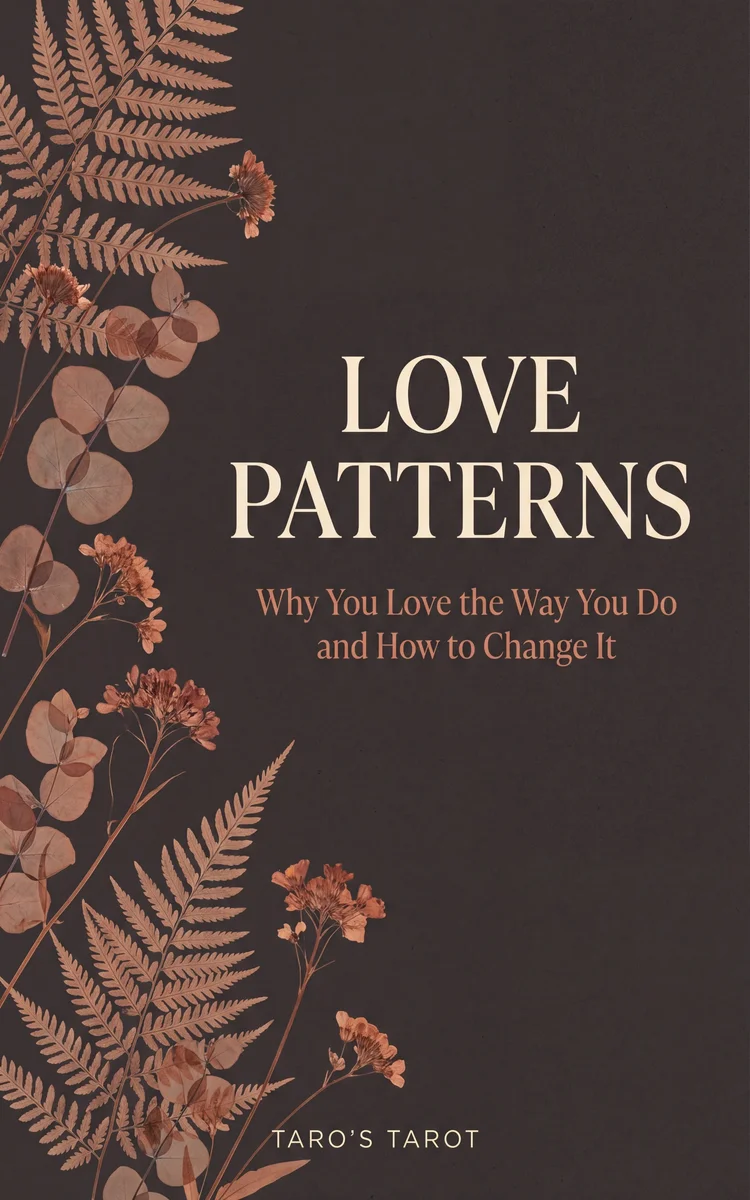
Book
Love Patterns
Why you keep choosing the same person in a different body. Attachment theory, trauma bonding, limerence, and earned security.
Get the Book — $14.99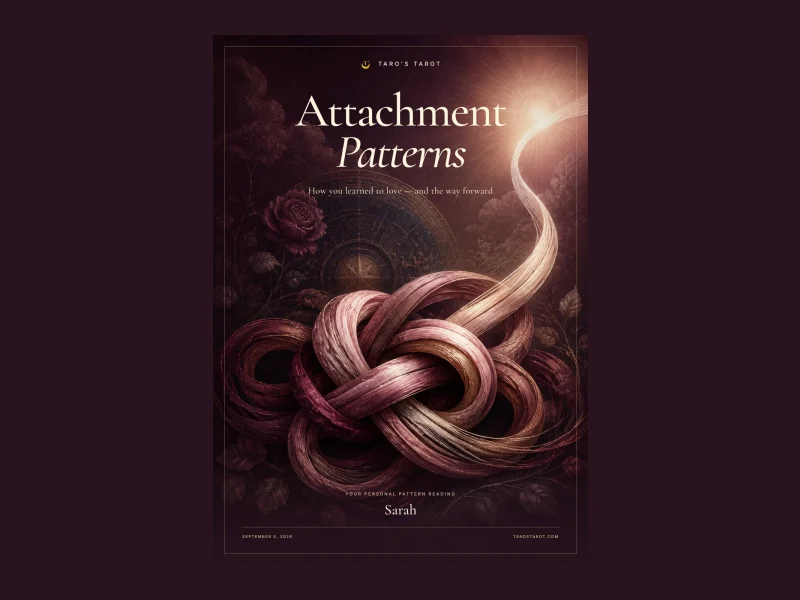
Inside the report: Your Defense System
Why do you love the way you do?
The Moon in the Mask position reveals something quietly devastating: the face you show the world when love gets close isn't cold — it's careful. You've learned to pre-empt abandonment by never fully arriving. The distance you create isn't indifference. It's a finely tuned survival mechanism built in a home where presence was punished...

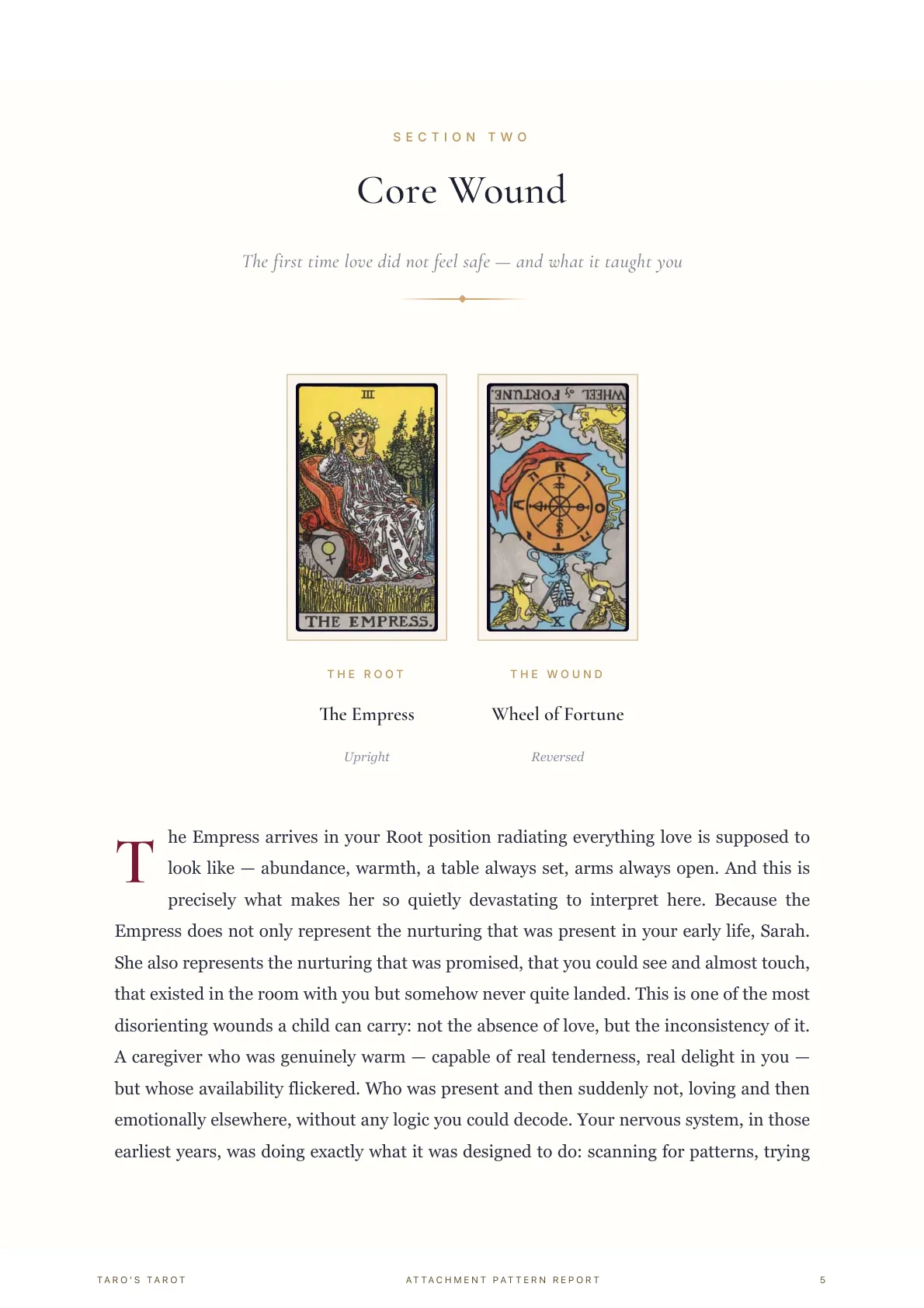

Sample pages from a real generated report — yours is written for you
$14.9930-day money-back guarantee — if your report doesn't feel genuinely specific to you, full refund, no questions asked.
Explore More Quizzes
Discover more ways to explore your spiritual journey