Bind Runes: Meanings, History & How to Create Your Own
Two runes, one stave, one intention — the Viking art of merging runes into a single sigil, from genuine runestone monograms to the combinations used today.
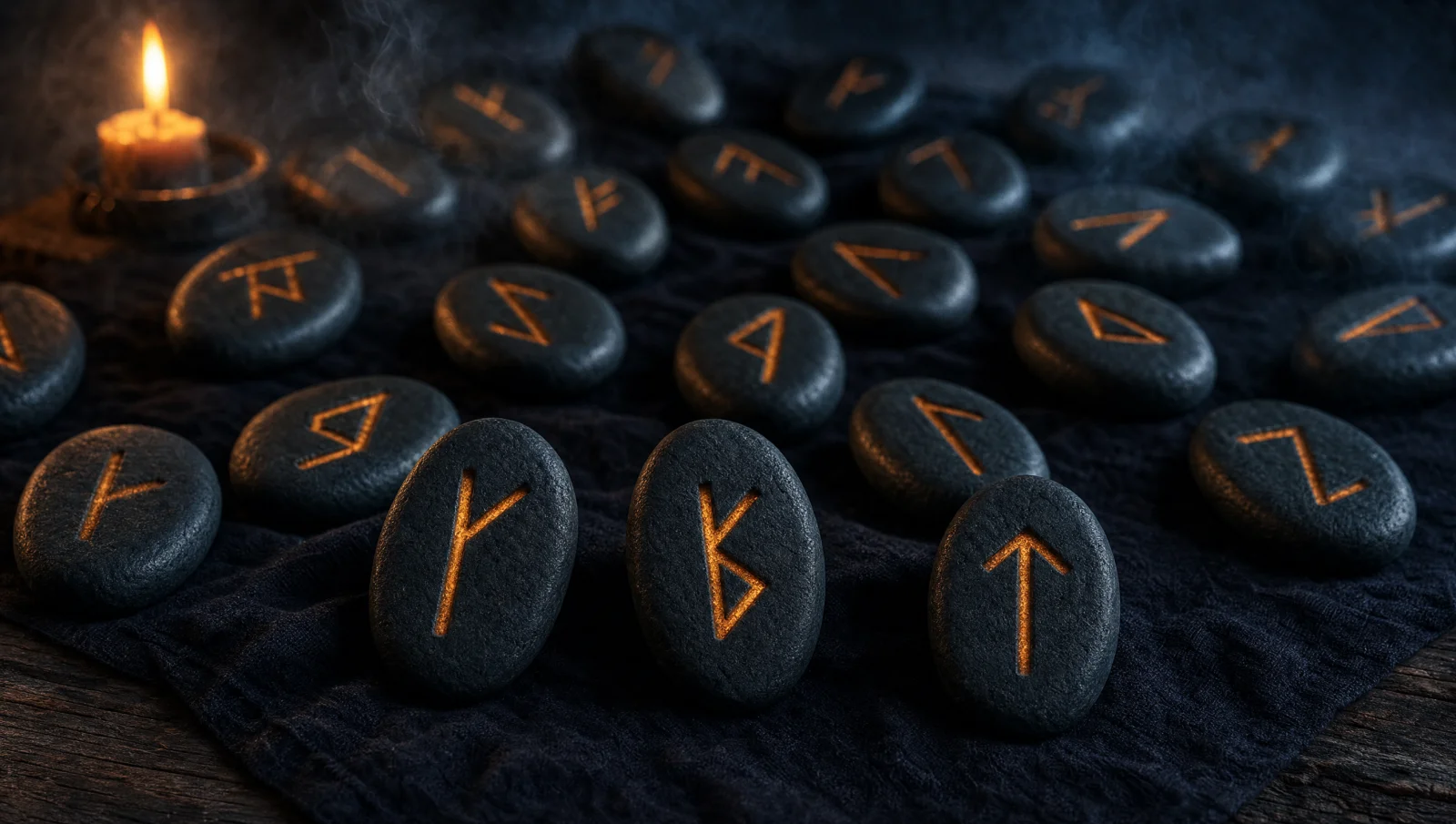
What Are Bind Runes?
A bind rune (Old Norse bindrúna) is two or more runes merged into one symbol, drawn over a single shared stave — the central vertical stroke most runes are built on. Because the runes of the Elder Futhark are angular and stave-based, they merge naturally: overlay Algiz on Thurisaz and the two become one clean sigil in which both runes remain visible.
You have almost certainly seen a bind rune today. The Bluetooth logo is one: it merges Hagalaz (ᚺ) and Berkano (ᛒ) — the initials of Harald “Bluetooth” Gormsson, the tenth-century Danish king the technology is named after. That is the bind rune in its oldest role: a monogram, two runes bound into a personal mark.
Modern rune practice adds a second role. Because each rune carries a meaning — Fehu is wealth, Algiz protection, Gebo the gift — combining runes combines meanings, and a bind rune becomes a composed intention: a small, dense symbol made for something. Both roles share the same craft, and the same rule of thumb: fewer runes bind better.
Viking & Norse Bind Runes: The Real History
Bind runes are genuinely ancient — they appear across the runic period, from Elder Futhark inscriptions through the Viking Age. Carvers bound runes for practical reasons as much as magical ones: to save space on a crowded stone, to make a name into a compact mark of ownership, or simply as an elegant flourish. Some inscriptions bind two letters of a word; a few bind whole words into towering single staves.
The famous later Icelandic magical staves — Vegvísir, the “runic compass,” and Ægishjálmur, the “helm of awe” — are often grouped with bind runes, but they are a different, much later tradition: elaborate symbols from early-modern Icelandic grimoires, not merged Futhark letters. A true bind rune is simpler and older — just runes, sharing a stave.
Honesty matters here, so we say it plainly: the technique of binding runes is historical; the intention recipes — this combination for protection, that one for love — are modern practice, built on each rune's traditional meaning. That does not make them empty; it makes them a living use of an old alphabet. But nobody should sell you a “genuine Viking love sigil,” and we won't.
Bind Runes List: The Classic Combinations
The ten combinations below are the ones most widely used in modern practice, each composed on a shared stave from authentic Elder Futhark forms. Every component rune links to its full meaning — worth reading before you adopt a bind, because each rune brings its whole character with it.
Protection Bind Runes
Protection
The shield and the thorn — defence layered on defence.
Algiz is the Futhark’s great guardian rune — the elk’s antlers, the raised arms, instinct awake. Thurisaz is the thorn: the sharp, active defence that meets a threat directly. Bound together they layer the watchful shield over the pointed deterrent — protection that notices early and answers firmly.
Love Bind Runes
Love & Partnership
The gift crossed with joy — love given, received, and enjoyed.
Gebo is the gift and the exchange in balance — the X of two lives crossing as equals. Wunjo is joy: harmony, belonging, the gladness of being among your own. Bound, they ask for love that is both fair and happy — neither duty without delight, nor delight without commitment.
Home & Family
The homestead, held together by what its people give each other.
Othala is the ancestral home — land, belonging, what is kept in the family line. Gebo is the exchange of gifts that binds people to one another. Bound together they describe a household in the oldest sense: a place that lasts because generosity keeps circulating inside it.
Bind Runes for Money & Abundance
Abundance & Money
Wealth that flows, meeting wealth that stays.
Fehu opens the Futhark with moving wealth — income, opportunity, resources in circulation. Othala closes it with rooted wealth — the homestead, the inheritance, what is kept and passed on. Bound together they hold the whole arc of prosperity: earn it, and give it ground to settle into.
Victory & Success
The arrow of will under the unconquered sun.
Tiwaz is the old victory rune, carved on weapons for a fair win — courage with honest cause. Sowilo is the sun: vitality, momentum, the light that always returns. Bound, they carry the north’s classic success formula — right effort, met by favourable light.
Bind Runes for Strength, Healing & New Beginnings
Strength & Courage
The wild ox aimed by the warrior’s arrow.
Uruz is raw vitality — the aurochs, strength older than fear. Tiwaz is directed will: courage with a cause, the arrow that points one way. Bound, they turn brute endurance into aimed force — strength that knows exactly what it is for.
Healing & Recovery
The body’s deep vitality, tended like new growth.
Uruz carries the wild recuperative force that mends without being asked — the old healing rune of the north. Berkano is the birch: gentle regrowth, the first green after cleared ground. Bound, they pair the body’s power to recover with the patience recovery actually needs.
New Beginnings
The dawn breaking over ground ready to grow.
Dagaz is daybreak — the threshold moment when night becomes day and a situation changes state for good. Berkano is the birch’s new growth rising from cleared ground. Bound together they bless a genuine fresh start: the decisive crossing, and the patient tending that makes it take root.
Wisdom & Clarity
The message, lit by the torch.
Ansuz is Odin’s rune of message and insight — truth arriving through words. Kenaz is the torch: the controlled flame that makes the hidden visible. Bound together they ask for understanding that is both received and seen — the answer, and the light to read it by.
Create Your Own Bind Rune
Compose any of these pairings — or design your own from all 24 runes — and download it as a high-resolution image. Free, instant, no signup.
How to Make a Bind Rune
Choose the intention first, then the runes. Name what the bind is for in one sentence, then pick the two or three runes whose meanings carry it. If you cannot say why a rune is in the bind, it should not be in the bind.
Draw over one shared stave. Start with the vertical stroke, then add each rune's remaining strokes onto it. Symmetry is welcome but not required — historical binds are often charmingly lopsided. Two runes give a clean sigil; three is the practical maximum before strokes crowd.
Then put it to work. Traditionally a bind rune is spoken over once — naming each rune and the intention — and placed where it belongs: a doorway for protection, a wallet for abundance, luggage for travel. Bind runes are also one of the most popular Norse tattoo motifs; if yours is going on skin, sit with each component rune's full meaning first, and take the design to an artist who has drawn runic linework. For choosing runes by feel rather than list, a free rune reading is a good way to meet the runes before you commit to one.
Frequently Asked Questions
What are bind runes?
A bind rune (Old Norse bindrúna) is two or more runes merged into a single symbol on a shared stave. The technique appears in genuine Viking Age and earlier inscriptions; in modern practice, bind runes are composed deliberately so each component rune contributes its meaning to a combined intention.
What is the bind rune for protection?
The classic protection bind joins Algiz — the guardian rune — with Thurisaz, the defending thorn. Algiz watches; Thurisaz answers. Some practitioners add Isa to freeze harm at the boundary, though the two-rune form binds more cleanly.
Are bind runes historically authentic?
The technique is — bind runes appear on runestones and artifacts from the Elder Futhark period onward, and the Bluetooth logo is a genuine bind of Hagalaz and Berkano, Harald Bluetooth's initials. Assigning combinations to intentions is modern practice built on each rune's traditional meaning.
How do you make a bind rune?
Choose two or three runes whose meanings carry your intention, then draw them over one shared vertical stave so the strokes merge into a single sigil. Fewer runes bind more cleanly. The free generator composes them the traditional way.
Do bind runes have a reversed meaning?
No. Unlike a cast rune, a bind rune is a made object, not a drawn lot — it has no upright or reversed. Each component rune contributes its full, upright meaning.
Prefer to build a symbol from the letters of your own intention? The illustrated sigil-making guide explains that separate drawing practice, with a worked example and a printable worksheet.
Get Weekly Tarot Guidance
One card to guide your week — tarot wisdom in your inbox every Sunday.