THE WAY YOU CONNECT
Love Style Quiz
What usually draws you to someone first?
Choose the answer that feels most like you.
Inside the report: Your Defense System
Why do you love the way you do?
The Moon in the Mask position reveals something quietly devastating: the face you show the world when love gets close isn't cold — it's careful. You've learned to pre-empt abandonment by never fully arriving. The distance you create isn't indifference. It's a finely tuned survival mechanism built in a home where presence was punished...
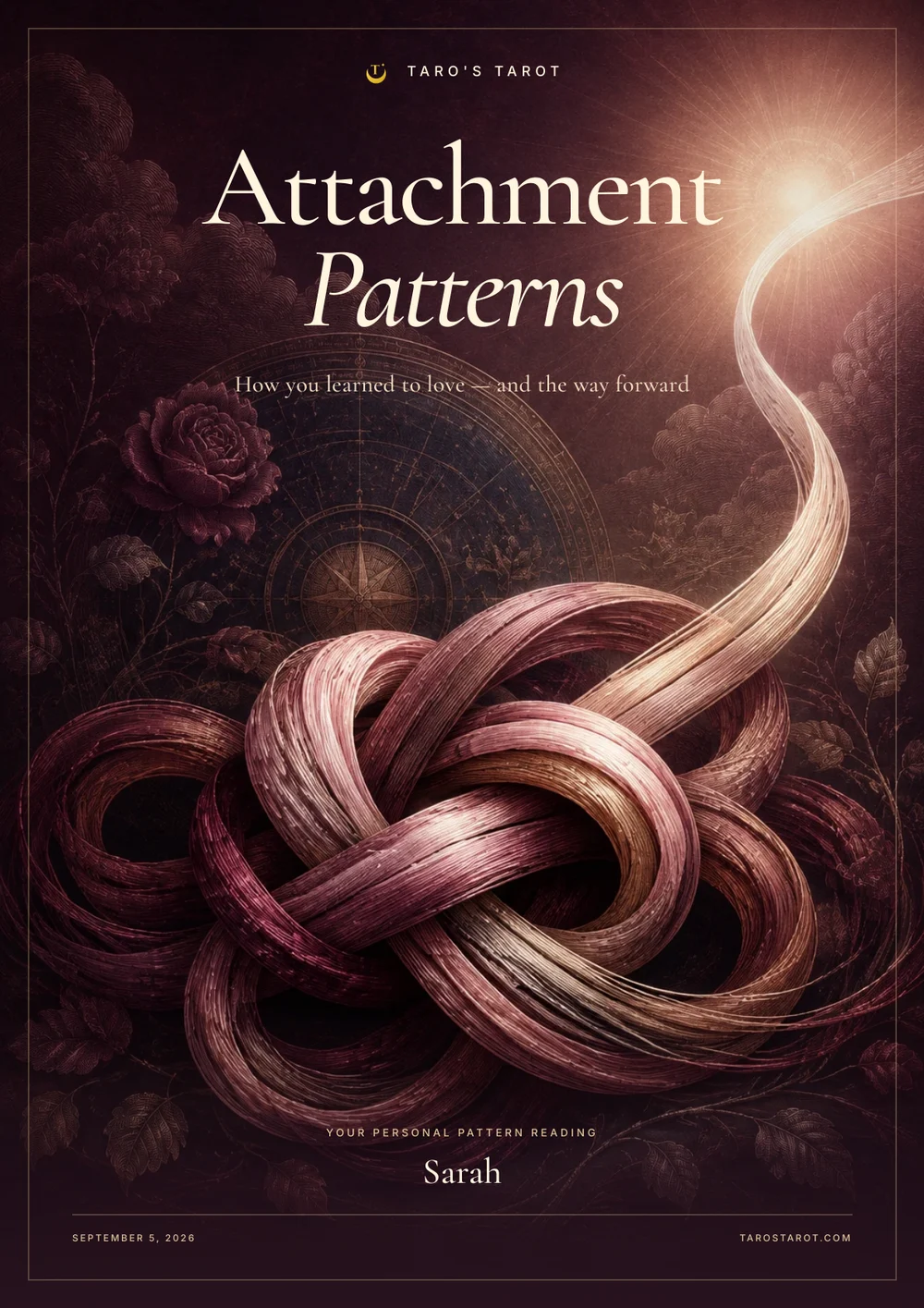
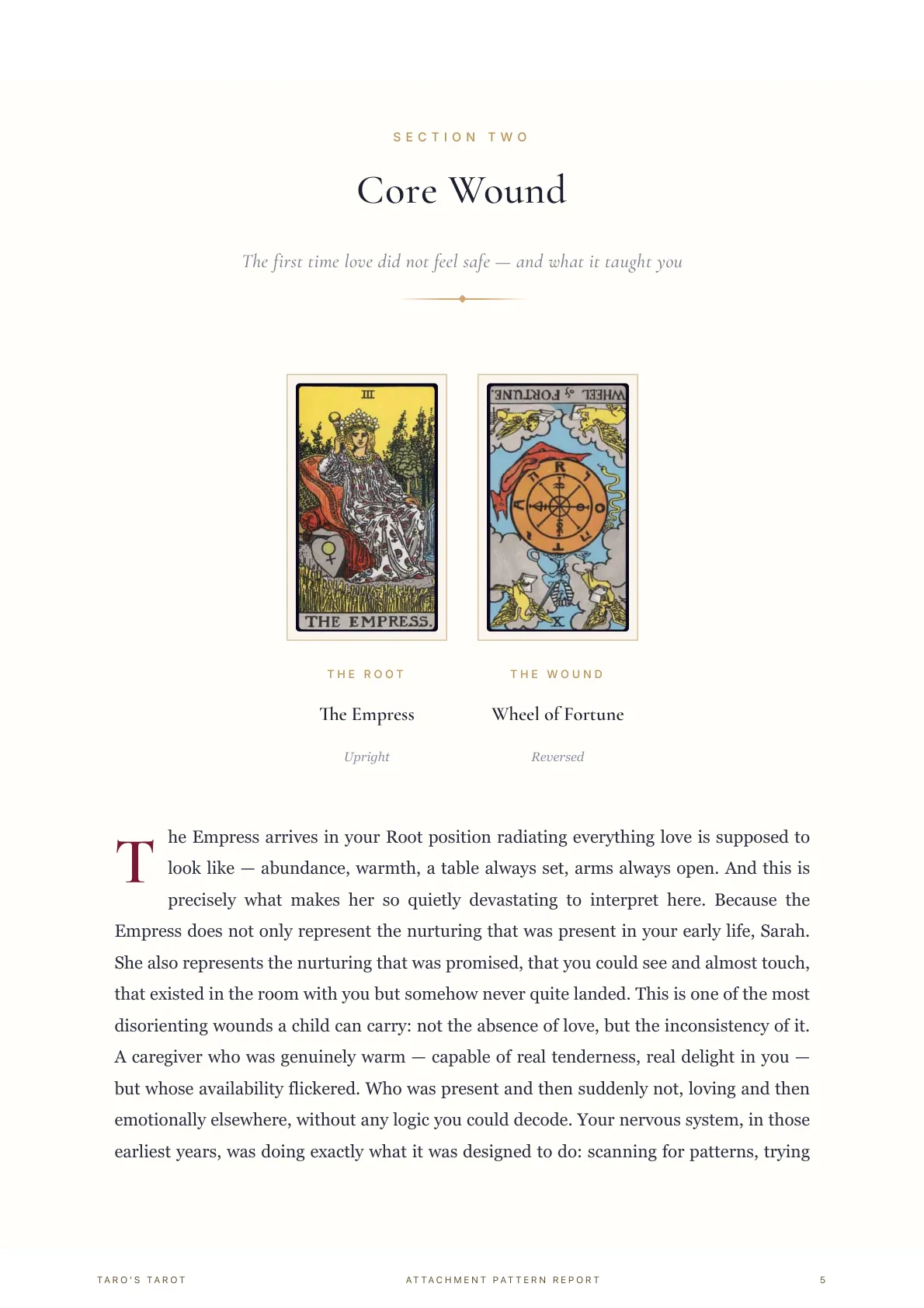
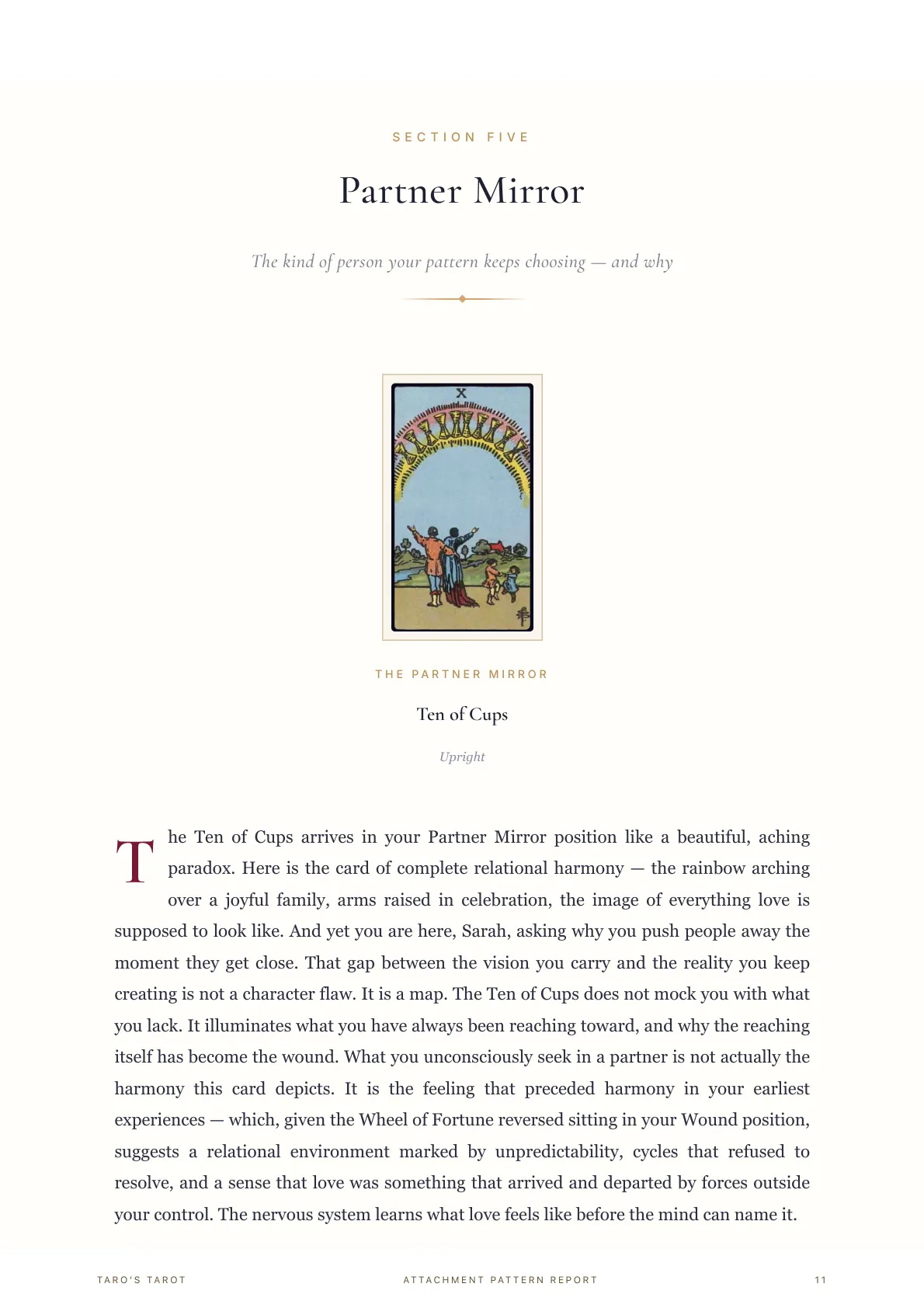
Sample pages from a real generated report — yours is written for you
$14.9930-day money-back guarantee — if your report doesn't feel genuinely specific to you, full refund, no questions asked.
“Your love style won't tell you who to love. It tells you what you expect love to feel like, and that explains a lot about who you have chosen so far.”
Jump to a Love Style
The Six Love Style Results
Each result below describes one of Lee's six love styles: how that style approaches romance, what it does well, where it tends to run into trouble, and what it needs from a partner. Most people recognize themselves in more than one, so read the styles close to yours as well.
Eros: The Passionate Lover
Eros is love that starts with strong attraction. You usually know early, sometimes on the first meeting, whether someone interests you, and when they do you want closeness quickly: long conversations, physical affection, and the sense that you both feel the same thing. For you, romance is not an extra. It is the evidence that love is there.
Eros is one of Lee's three primary styles. People high in eros tend to have a clear picture of who they find attractive, and they are willing to be open and emotionally exposed early on. Unlike mania, eros is usually confident: you want intensity, but you don't need constant proof of it. The risk is treating chemistry as the whole test. Attraction tells you that you want someone. It doesn't tell you whether you can build a life with them, and the early intensity always changes shape over time.
What Works in Your Favor
- You say what you feel early, which saves both of you a lot of guessing
- You keep affection and romance going long after many couples let them slide
- You know what attracts you and don't spend long on people who don't
- Partners feel wanted: you bring energy and warmth to a relationship
What to Watch For
- Strong chemistry can hide incompatibility; attraction says nothing about shared values or how someone handles conflict
- When the early intensity settles, you may read it as love fading rather than changing
- A fixed idea of your "type" can make you pass over people who grow on you slowly
- You may move fast, physically and emotionally, before trust has had time to form
Tarot Archetype
The Lovers. Two figures stand under an angel, drawn to each other, and the card is as much about choice as it is about attraction. It fits eros well: the pull is real, and the card asks you to choose with your values as well as your desire.
What You Need From a Partner
What you need from a partner: someone who is openly affectionate, enjoys physical closeness, and says what they feel instead of making you guess. You do best with a partner who also values romance and keeps making an effort with it years in. Who you pair well with: another eros lover, or an agape lover whose warmth and devotion match your intensity. Storge and pragma partners can work well if you accept that they show love more quietly than you do. A ludus partner may enjoy the spark but hold back the commitment you want.
Ludus: The Playful Lover
Ludus is love as play. You enjoy flirting, the early stages of getting to know someone, and a relationship that stays light and fun. You keep some independence, and you are wary of anything that feels like being tied down too early. Lee took the name from the Latin word for game or play. For you, love is something to enjoy, not a project or a test.
Ludus is the second of Lee's primary styles. Ludic lovers are usually good company: charming, easy to be around, and not given to jealousy or drama. You may date more than one person at a time, or keep things casual for longer than a partner would like, and that can be an honest preference for this stage of your life. The harder question is whether you keep things light by choice or to avoid being known. Studies that compared love styles with attachment have linked ludus with avoidant attachment, which suggests that for some people the playfulness is a way of keeping distance.
What Works in Your Favor
- You keep relationships fun and don't let routine flatten them
- You are rarely jealous or possessive, and you give partners room to have their own lives
- You recover from breakups faster than most and don't hold grudges
- You accept that not every good connection has to become a lifelong commitment
What to Watch For
- Partners who want commitment can get hurt if your intentions aren't clear from the start
- Keeping things light can mean nobody gets to know you well, including people you'd like to keep
- You may leave when a relationship turns serious, then wonder why none of them lasted
- Games such as slow replies on purpose or keeping someone guessing wear down trust
Tarot Archetype
The Knight of Wands. He rides fast, full of charm and enthusiasm, and is usually on his way somewhere else. The card is often read as an exciting lover who is hard to hold, which describes ludus well. Its lesson is to point that energy at something you choose to stay for.
What You Need From a Partner
What you need from a partner: freedom, a sense of humor, and someone who doesn't treat a quiet week as a crisis. You also need honesty about what each of you wants, so neither of you is guessing. Who you pair well with: another ludus lover, when you both know it's casual. For something longer, a secure storge or pragma partner can give you room without feeling threatened by it. Mania is the hardest match: your need for space and their need for reassurance tend to make each other worse.
Storge: The Friendship Lover
Storge is love that grows out of friendship. You rarely fall for someone quickly. You get to know them, share time and interests, and at some point realize the friendship has become something more. The name is a Greek word for family affection. For you, love means comfort, trust, and a partner you like as much as you love.
Storge is the third of Lee's primary styles. It is calm and steady: you don't need fireworks, and you may find intense early romance a little hard to trust. Your relationships are built on shared history, shared jokes and knowing each other well, and they tend to last because they don't depend on a spark staying bright. The risk is waiting too long. Friends can stay friends for years because neither person says anything, and partners who need clear romantic signals may not know where they stand with you.
What Works in Your Favor
- Your relationships rest on real friendship, which carries them through dull or difficult stretches
- You are patient, loyal and easy to live with
- You don't mistake early excitement for compatibility
- You often stay on good terms with former partners
What to Watch For
- You may miss or dismiss romantic interest because it didn't start as a friendship
- Partners who need passion or clear declarations can feel you are holding back
- Comfort can drift into routine if nobody makes an effort with romance
- Waiting to be certain can mean the moment passes before you say anything
Tarot Archetype
The Six of Cups. Two figures share flowers in a familiar garden, and the card stands for old friendships, shared history and simple kindness. It describes storge well: love that comes from knowing someone for a long time. Its warning is about staying with the familiar so long that nothing new can happen.
What You Need From a Partner
What you need from a partner: patience, loyalty and real friendship. You need someone who enjoys ordinary time together and doesn't read your slow pace as a lack of interest. Who you pair well with: another storge lover, or a pragma partner who shares your calm and your interest in the long term. Agape partners often suit you too. An eros partner can bring romance you would enjoy, as long as they understand that your feelings build gradually rather than all at once.
Pragma: The Practical Lover
Pragma is love that pays attention to fit. When you meet someone, part of you is asking whether your lives would work together: values, plans, money, family, where you want to live. You don't see that as unromantic. You see it as taking love seriously enough to choose well.
Lee described pragma as a secondary style, a mix of ludus and storge: the conscious choosing of ludus with storge's interest in a steady, lasting bond. Pragmatic lovers often know what they need in a partner and are good at spotting problems early. Feelings still matter to you, but you let them grow once the fit is clear rather than before. The risk is that the list becomes the whole relationship. Someone can meet every requirement and still leave you feeling unknown, and someone who misses a few can turn out to be the best partner you've had.
What Works in Your Favor
- You choose partners with your head as well as your heart, which avoids a lot of heartbreak
- You are reliable and you plan for a shared future
- You raise the hard subjects early, such as children, money and where to live
- You are good at solving practical problems as a team
What to Watch For
- Treating dating like a checklist can rule out people who would have been good for you
- Partners may feel assessed rather than loved, especially early on
- You can give too little weight to passion and affection, which most relationships still need
- Circumstances change, and a partner chosen for fit also needs to be loved through the changes
Tarot Archetype
Justice. A figure holds scales in one hand and a sword in the other, weighing things fairly and deciding clearly. Pragma chooses a partner the same way, with care and honesty about what will work. The card's warning is that some things in love can't be weighed, and a decision made by the scales alone can miss them.
What You Need From a Partner
What you need from a partner: honesty about what they want, reliability, and shared goals. You need someone who is willing to talk about the future rather than avoid it. Who you pair well with: another pragma lover, or a storge partner whose steady, friendship-based love fits your long view. A secure eros partner can bring warmth you would benefit from, if they don't take your careful approach for coldness.
Mania: The Anxious Lover
Mania is love that feels urgent. When you fall for someone, they take up much of your attention: you think about them constantly, you notice every change in their tone, and a slow reply can set off real worry. The highs are very high and the lows are painful. For you, love is intense and precious, and the fear of losing it is often just as strong.
Lee described mania as a secondary style, a mix of eros and ludus: the intensity of eros combined with the uncertainty of a game you can't control. Studies that compared love styles with attachment have linked mania with anxious attachment, and it overlaps with what psychologist Dorothy Tennov called limerence: constant thoughts about one person and a strong need for them to feel the same. None of this means something is wrong with you. It often comes from learning, in childhood or in past relationships, that love could be withdrawn, so you watch it closely. Mania tends to ease with a consistent partner and with ways of calming yourself that don't depend on them.
What Works in Your Favor
- You love wholeheartedly, and partners never doubt how much they matter to you
- You are closely tuned to a partner's moods and notice small changes
- You put real energy and effort into keeping a relationship going
- Once you understand your pattern, that sensitivity can become strong empathy
What to Watch For
- Worry can lead to checking, testing or asking for reassurance again and again, which wears a partner down
- Jealousy and possessiveness can come from your fear rather than from anything your partner has done
- You may stay with someone inconsistent because the uncertainty itself keeps you hooked
- Your mood can rise and fall with the relationship, leaving little room for the rest of your life
Tarot Archetype
The Moon. A path runs between two towers under a moon that lights things only partly, and the card stands for anxiety, uncertainty and imagination filling in what can't be seen. It fits mania's experience of love, where not knowing feels unbearable. The path carries on through the card, which is its hopeful side: fears you look at clearly lose much of their hold.
What You Need From a Partner
What you need from a partner: consistency above all. Someone who replies when they say they will, tells you where you stand, and reassures you without making you ask every time. You also need a partner who won't use your worry against you. Who you pair well with: a steady storge or pragma partner, or a warm agape partner, can give you the security that lets the anxiety settle. Ludus is the hardest match: their need for freedom tends to set off your fear of losing them, and your worry can push them further away.
Agape: The Selfless Lover
Agape is love as care for the other person. You want your partner to be well and happy, and you are willing to put their needs ahead of your own to get there. You give time, patience and forgiveness freely, and you don't keep score. The name is a Greek word used for selfless, unconditional love.
Lee described agape as a secondary style, a mix of eros and storge: the devotion of eros with the calm, lasting care of storge. In practice, most people who score high on agape still want love back, and you probably do too. Your strength is generosity: partners feel looked after, forgiven and supported. The risk is that giving becomes a way to earn love or to avoid asking for what you need. If you are always the one who adjusts, a partner can come to expect it, and resentment can build quietly on your side.
What Works in Your Favor
- You are generous and patient, and partners feel genuinely cared for
- You forgive easily and don't keep score
- You stay steady through hard times such as illness, stress or loss
- You want your partner to grow, even when that means change for you
What to Watch For
- You may neglect your own needs until you feel exhausted or resentful
- Partners who take more than they give can take advantage of you without much effort
- Putting their needs first can mean they never learn what yours are
- Keeping the peace can mean real problems never get raised
Tarot Archetype
The Queen of Cups. She sits at the water's edge holding an ornate, closed cup, and she stands for compassion and emotional care. She describes agape's gift for looking after others. The card's reminder is that she keeps hold of her own cup: caring for others works best when you look after yourself too.
What You Need From a Partner
What you need from a partner: someone who notices what you give and gives back, and who asks what you need, because you won't always say. Gratitude and fairness matter more to you than grand gestures. Who you pair well with: an eros or storge partner, whose warmth and loyalty can match your devotion. Two agape lovers can make a very kind partnership, as long as one of you is willing to name problems. Be careful with partners who take readily and rarely offer; a mania partner may value your reassurance and also come to rely on it heavily.
The Six Love Styles Explained
The six love styles come from the Canadian sociologist John Alan Lee, who set them out in his 1973 book Colours of Love. Lee compared ways of loving to colors on a color wheel: three primary styles, and three secondary styles that each mix two of the primaries. The psychologists Clyde and Susan Hendrick later built the Love Attitudes Scale (1986) to measure all six, and researchers still use it to study them.
The three primary styles
- Eros: passionate love built on strong physical and emotional attraction.
- Ludus: playful love that treats romance as a game and avoids early commitment.
- Storge: friendship love that grows slowly out of shared time and trust.
The three secondary styles
- Pragma (ludus + storge): practical love that chooses a partner for compatibility.
- Mania (eros + ludus): anxious, possessive love with high highs and painful lows.
- Agape (eros + storge): selfless love that puts the partner's wellbeing first.
Lee treated these as ways of loving rather than fixed personality types. Most people are a mix, and the same person can love differently in different relationships or at different times of life. Your quiz result is the style your answers leaned toward most right now.
Love Style vs Love Language vs Attachment Style
These three ideas get mixed up because they all describe how you love. They measure different things.
Your love style is your set of attitudes about romantic love: how fast it should develop, what it should feel like, and how you choose a partner. It comes from Lee's work in the 1970s, and it is what this quiz measures.
Your love language is how you prefer to give and receive affection: words of affirmation, acts of service, gifts, quality time or physical touch. The idea comes from Gary Chapman's 1992 book The 5 Love Languages. Two people with the same love style can have very different love languages. Our love language quiz finds yours.
Your attachment style is how secure you feel with closeness and how you react when a relationship feels under threat: secure, anxious, avoidant or fearful-avoidant. It comes from attachment theory, which John Bowlby developed to explain children's bonds with caregivers and which Cindy Hazan and Phillip Shaver applied to adult romantic love in 1987. Studies comparing the two frameworks have found overlaps: eros tends to go with secure attachment, mania with anxious attachment and ludus with avoidant attachment. Our attachment style quiz measures it directly.
Which Love Styles Are Compatible?
There is no official compatibility chart for Lee's styles, but research points to a few general tendencies. Partners tend to have similar love attitudes, so people often end up with someone whose style resembles their own, and a shared idea of what love should look like makes many things easier. Studies using the Love Attitudes Scale have also generally found that eros goes with higher relationship satisfaction and ludus with lower. Beyond that, some pairings are worth knowing about:
- Matching styles usually pair easily. Two storge or two pragma partners tend to agree on pace and priorities, and two eros partners share the intensity. The risk is a shared blind spot, such as two pragmatists letting romance lapse.
- Eros and agape often work well. One brings passion, the other steady devotion, and both put the relationship first.
- Storge and pragma suit each other. Both are calm, patient and focused on the long term.
- Mania and ludus is the hardest pairing. One partner needs reassurance and the other needs space, and each one's way of coping sets off the other.
- Mania can settle with a consistent partner. A reliable storge or pragma partner answers the worry before it builds.
- Agape with ludus or mania can turn one-sided if one person does all the giving.
Different styles can still work. What matters more is whether you both understand how the other one loves and can talk about it. Each result above lists the styles it tends to pair well with. If anxious, all-consuming feelings are what brought you here, our limerence quiz looks at that pattern on its own. For how your style shows up day to day with a partner, try the What Type of Girlfriend Are You? quiz.
Frequently Asked Questions
What are the six love styles?
Eros (passionate love), ludus (playful love), storge (friendship love), pragma (practical love), mania (anxious, possessive love) and agape (selfless love). The sociologist John Alan Lee described them in his 1973 book Colours of Love. He called eros, ludus and storge the primary styles and saw pragma, mania and agape as mixes of two primaries.
Is this the How We Love quiz?
No. How We Love is a book by Milan and Kay Yerkovich that describes a different set of love styles rooted in attachment and childhood: the Avoider, the Pleaser, the Vacillator, the Controller and the Victim, with the Secure Connector as the goal. The Yerkovichs publish their own quiz for those styles. This quiz uses John Alan Lee's six love styles, which describe your attitudes to romantic love rather than your childhood attachment. If the How We Love approach is what you want, our attachment style quiz is the closer match.
Can your love style change?
Yes. Lee treated love styles as ways of loving rather than fixed personality traits, and the same person can love differently with different partners or at different times of life. Someone who was ludic in their early twenties may become storgic or pragmatic later, and mania can ease in a consistent, secure relationship.
Is one love style better than the others?
No style is a problem in itself. Studies using the Love Attitudes Scale have generally linked eros with higher relationship satisfaction and ludus with lower, but those are averages across many couples. Each style has real strengths and real risks, and how well a relationship works depends a lot on how two styles fit and whether both people understand each other.
How accurate is this love style test?
It is a 10-question self-reflection quiz based on Lee's six styles, written by Taro's Tarot. It is not the Love Attitudes Scale that researchers use, and it is not a clinical assessment. Use it as a starting point: read your result and the styles close to it, and check which descriptions match your actual relationships.
This quiz is for self-reflection and entertainment. It is based on John Alan Lee's love styles but is not a clinical or research measure.
Explore More Quizzes
Discover more ways to explore your spiritual journey
Looking for more spiritual guidance?