Seven of Swords As a Person
Seven of Swords as a person represents someone defined by deception, theft, stealth. Romantic deception, infidelity, or sneaky behavior in relationships.
Last updated: November 2, 2026
Quick Answer
Seven of Swords as a person is someone in a deception phase rather than a fixed type. Upright, this is deception, theft, strategic thinking, or getting away with questionable behavior. Reversed, getting caught, confession, or choosing honesty over deception.
Key Facts
- •Seven of Swords is card 7 of the swords suit; as a person it describes a phase more than a type.
- •Seven of Swords reversed as a person: deception exposed, honest confession and facing consequences.
- •In a yes or no reading, Seven of Swords upright is a No; reversed, a Yes.
Personalised reading
What does Seven of Swords mean for you?
Drawn it yourself? Add the other cards from your spread, or draw the rest live, and we'll read them together. No card in hand? Draw three now for your own question.
How to read Seven of Swords as a person
The Seven of Swords represents deception, theft, or using cunning and strategic thinking to get away with questionable behavior. This card can indicate situations where someone is being dishonest, stealing (literally or figuratively), or using mental cleverness for selfish purposes. While the immediate outcome may seem successful, this card warns that such behavior often has long-term consequences. It can also represent the need for strategic thinking and mental cleverness to overcome challenges, but ideally through ethical means.
What kind of person is Seven of Swords?
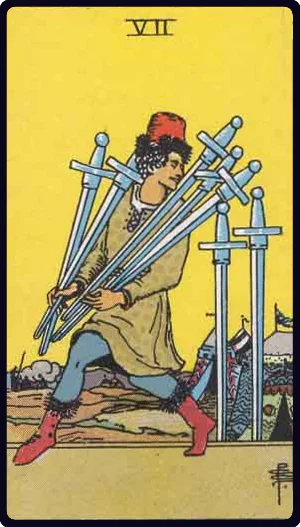
On the card: A figure stealthily carries away five swords while two remain planted in the ground, suggesting theft, deception, or getting away with something questionable. The camp in the background appears unaware of the theft, representing successful but ethically questionable cleverness. This is someone who plays their cards close, hard to read and harder to trust.
Seven of Swords strengths and weaknesses
Seven of Swords at their best: deception, theft, stealth, getting away. Seven of Swords at their worst: deception exposed, honest confession, facing consequences, authenticity choice.
Seven of Swords as a person in relationships
In love, the Seven of Swords often indicates romantic deception, infidelity, or sneaky behavior that betrays trust in relationships. Someone may be cheating, lying about their feelings, or manipulating romantic situations for personal gain. This card can also suggest the need to be strategic about romance, but warns against using deceptive tactics that will ultimately damage relationships.
How to recognise a Seven of Swords person
The armful of swords stands for stolen goods: ill-gotten gains. The two standing swords stand for incomplete theft: not everything lost. The tip-toe stance stands for stealth and cunning: avoiding confrontation. Their motto could be the card's affirmation: I use my intelligence and strategic thinking for ethical purposes, choosing honesty and integrity even when deception might seem advantageous.
Read the full Seven of Swords meaning →
The meaning above is general guidance. To discover who this person is in your life and where it is heading, try our soulmate tarot reading for a personalised answer about your own situation.
Based on your person card: Seven of Swords
What isn't he telling you?
Your person card — Seven of Swords — is where it starts. The Relationship Truth Report shows how it actually plays out for you.
Taro’s Tarot
Relationship Truth
See exactly what they feel.
Nothing to lose. Full refund if it misses.
Prepared for
You
- See the gap between his real feelings and the facade
- Find out what he's concealing — and why
- Honest trust assessment with rebuild guidance
If your report doesn't feel genuinely specific to you — full refund, no questions asked.
Seven of Swords Reversed: As a Person
When reversed, the Seven of Swords suggests that deceptive behavior is being exposed, confession of wrongdoing, or choosing honesty over continued deception. You may be ready to come clean about dishonest behavior, facing consequences for past deceptions, or deciding to change patterns of manipulation and cunning for more authentic approaches to challenges.
Dealing with a Seven of Swords reversed person
In love, the reversed Seven of Swords indicates confessing romantic deceptions, choosing honesty in relationships, or working to rebuild trust after betrayal. You may be ready to admit to infidelity, stop manipulative romantic behavior, or face the consequences of relationship dishonesty. This card supports choosing authentic love over strategic romance.
Esoteric Correspondences
Golden Dawn Title
Sept d'Épée
Lord of Unstable Effort
Element
air
Planet
Moon
Zodiac Sign
Aquarius
Decan
3rd decan
20°-30°
Dates
February 9-18
Explore Seven of Swords in Other Contexts
Seven of Swords As a Person FAQs
Common questions answered
What does Seven of Swords represent as a person?
Is Seven of Swords a good person to have in my life?
How does Seven of Swords reversed change the personality?
Can Seven of Swords represent me in a reading?
Still have questions? We're here to help!
Contact Support →Explore More Tarot Readings
Discover different ways to gain insight and guidance through our free tarot card readings