Six of Swords As a Person
Six of Swords as a person represents someone defined by transition, moving on, guidance. Transitioning from relationship difficulties, healing from romantic wounds, or guided relationship growth.
Last updated: November 2, 2026
Quick Answer
Six of Swords as a person is someone in a transition phase rather than a fixed type. Upright, this is transition from difficulties, gradual healing, and guided journey toward better times. Reversed, resistance to change, delayed transition, or difficulty accepting help.
Key Facts
- •Six of Swords is card 6 of the swords suit; as a person it describes a phase more than a type.
- •Six of Swords reversed as a person: change resistance, transition delays and help rejection.
- •In a yes or no reading, Six of Swords upright is a Yes; reversed, a No.
Personalised reading
What does Six of Swords mean for you?
Drawn it yourself? Add the other cards from your spread, or draw the rest live, and we'll read them together. No card in hand? Draw three now for your own question.
How to read Six of Swords as a person
The Six of Swords represents transition, moving away from difficult situations toward calmer and more positive circumstances. This card indicates that while you may still be carrying the wounds or lessons from past challenges, you're making progress toward healing and better times. The journey may be gradual and require patience, but you're definitely moving in the right direction. Often this transition is aided by a guide, mentor, or supportive person who helps you navigate through the difficulties.
What kind of person is Six of Swords?
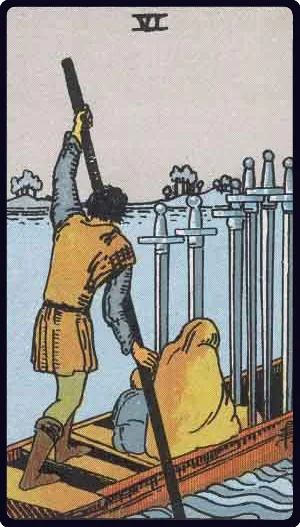
On the card: A figure guides a boat carrying passengers and six swords across water from rough shores toward calmer waters. The passengers appear to be leaving behind difficulties, symbolizing transition, gradual healing, and the journey from troubled times toward greater peace and stability.
Six of Swords strengths and weaknesses
Six of Swords at their best: transition, moving on, guidance, journey. Six of Swords at their worst: change resistance, transition delays, help rejection, healing setbacks.
Six of Swords as a person in relationships
In love, the Six of Swords indicates transitioning away from relationship difficulties, healing from romantic wounds, or receiving guidance that helps your relationship improve. You may be moving past conflicts with your partner, healing from previous romantic trauma, or finding that couples counseling or wise advice helps your relationship reach calmer waters. For singles, this card suggests healing from past heartbreak and becoming ready for healthier love.
How to recognise a Six of Swords person
The ferryman stands for guide through transition: help navigating difficulties. The calm waters stand for smoother passage: moving toward peace. The distant shore stands for better times ahead: hope on the horizon. Their motto could be the card's affirmation: I trust in my ability to navigate through difficulties toward calmer waters, accepting guidance and support that helps me heal and grow.
Read the full Six of Swords meaning →
The meaning above is general guidance. To discover who this person is in your life and where it is heading, try our soulmate tarot reading for a personalised answer about your own situation.
Based on your person card: Six of Swords
What isn't he telling you?
Your person card — Six of Swords — is where it starts. The Relationship Truth Report shows how it actually plays out for you.
Taro’s Tarot
Relationship Truth
See exactly what they feel.
Nothing to lose. Full refund if it misses.
Prepared for
You
- See the gap between his real feelings and the facade
- Find out what he's concealing — and why
- Honest trust assessment with rebuild guidance
If your report doesn't feel genuinely specific to you — full refund, no questions asked.
Six of Swords Reversed: As a Person
When reversed, the Six of Swords suggests resistance to necessary changes, delayed transitions, or difficulty accepting help or guidance from others. You may be clinging to familiar difficulties rather than moving toward improvement, afraid to leave your comfort zone even when it's harmful, or too proud to accept assistance. This card can also indicate setbacks in the healing process or movement backward instead of forward.
Dealing with a Six of Swords reversed person
In love, the reversed Six of Swords indicates resistance to relationship changes that would be beneficial, avoiding the healing work needed for romantic growth, or rejecting couples counseling or relationship advice. You may be staying in unhealthy relationship patterns, afraid to move past romantic trauma, or too stubborn to accept help in improving your love life.
Esoteric Correspondences
Golden Dawn Title
Lord of Earned Success
Mercury in Aquarius
Element
air
Planet
Mercury
Zodiac Sign
Aquarius
Decan
2nd decan
10°-20°
Dates
January 30 - February 8
Explore Six of Swords in Other Contexts
Six of Swords As a Person FAQs
Common questions answered
What does Six of Swords represent as a person?
Is Six of Swords a good person to have in my life?
How does Six of Swords reversed change the personality?
Can Six of Swords represent me in a reading?
Still have questions? We're here to help!
Contact Support →Explore More Tarot Readings
Discover different ways to gain insight and guidance through our free tarot card readings