5 Best Attachment Style Books in 2026 (Honestly Reviewed)
The best attachment style book for most readers is Attached by Amir Levine and Rachel Heller, the pop- science classic that introduced adult attachment theory to a general audience and is still the most widely cited entry point. For couples who want to do the work together, Sue Johnson's Hold Me Tightis the standard recommendation from Emotionally Focused Therapy. If you're healing from a trauma-shaped attachment pattern, Diane Poole Heller's The Power of Attachment integrates somatic work with the framework. Below we review five attachment books, with clear picks for what you're actually trying to do with the information. Updated May 2026.
Attachment theory is one of the few corners of relationship psychology where the popular books and the academic literature agree on most of the basics. The bad books in this genre tend to be the ones that promise you can change your style in six weeks. We've read across the shelf. If you haven't identified your style yet, our free attachment style quiz is a faster first step than any book.
Full disclosure
We wrote one of the books in this space.
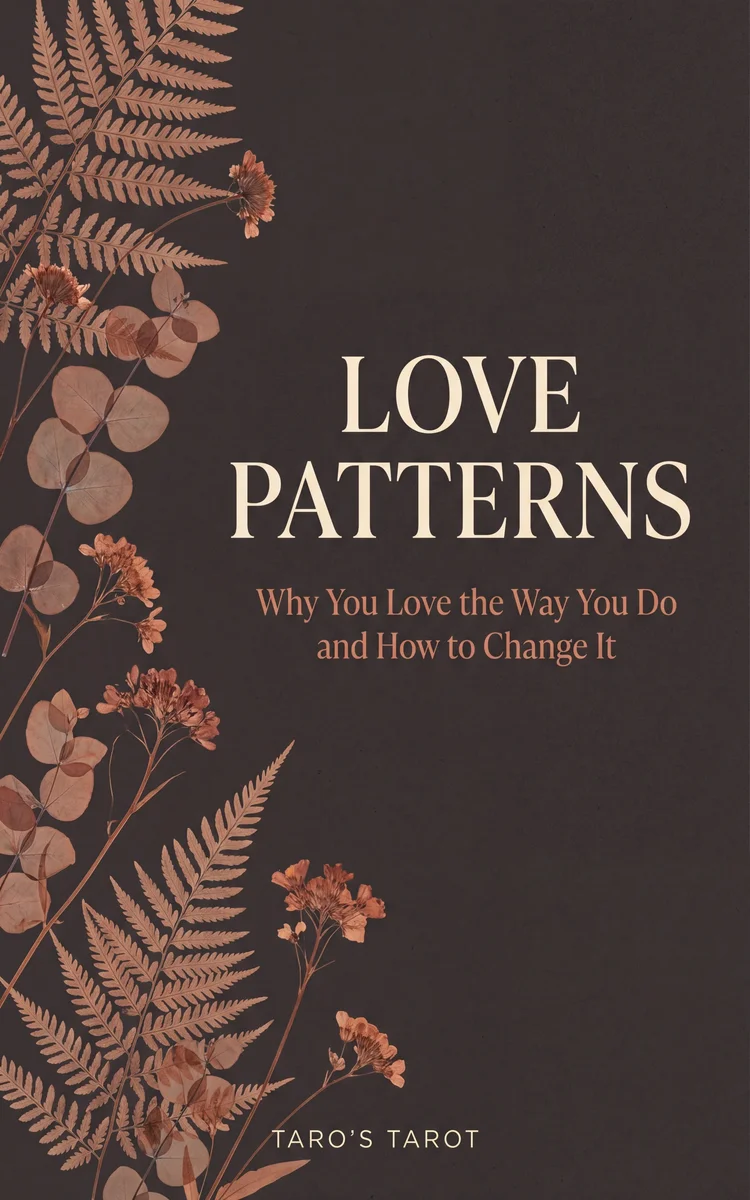
Before we get into the list: we publish Love Patterns, a 117-page PDF on attachment theory, trauma bonding, limerence, and earned security. We've kept it out of the ranked list on principle, but you should know it exists before reading our reviews.
In This Guide
Best Attachment Style Books at a Glance
| # | Book | Author | Best For | Angle |
|---|---|---|---|---|
| 1 | AttachedTop Pick | Levine & Heller | First-time readers | Pop-science (2010) |
| 2 | Hold Me Tight | Sue Johnson | Couples doing the work | Emotionally Focused Therapy |
| 3 | Wired for Love | Stan Tatkin | Couples + nervous system | Psychobiological |
| 4 | The Power of Attachment | Diane Poole Heller | Trauma-shaped patterns | Somatic / trauma-informed |
| 5 | Polysecure | Jessica Fern | Beyond monogamy | Theory expansion |
Attached — The Pop-Science Classic
by Amir Levine, MD & Rachel Heller, MA · Tarcher · 2010 · ~304 pages
Attached is the book that pulled adult attachment theory out of the academic literature and put it into the hands of regular readers. Levine is a psychiatrist; Heller is a counsellor; the writing is warmer and clearer than most pop-psychology books. The four-style framework lands in the first few chapters with relationship examples that almost everyone recognises in themselves or their last partner.
What sets Attached apart is the practical orientation. The authors care about helping you choose better partners and communicate more effectively now, not about explaining the entire developmental theory. If you are unfamiliar with attachment styles, this is almost always the right first read. If you already know the framework, treat it as a refresher rather than the deep dive.
Pros
- + The most accessible attachment style book in print
- + Practical, dating-and-partner focused
- + Clear examples of each style in real situations
- + Co-authored by a psychiatrist and a clinician
Cons
- − Light on healing and earned security
- − Treats fearful-avoidant as a footnote rather than a fourth style
- −Conclusions occasionally read as “just date a secure”
Best For
Anyone reading their first book on attachment, or anyone who wants the framework explained well enough to recognise their own patterns by the end of chapter three.
Hold Me Tight — Couples Therapy in Book Form
by Dr. Sue Johnson · Little, Brown Spark · 2008 · ~310 pages
Sue Johnson developed Emotionally Focused Therapy, which is the most empirically supported couples therapy modality currently practised. Hold Me Tight is the consumer translation of that work: seven structured conversations that help couples interrupt attachment-driven conflict cycles and rebuild emotional safety. It's less about diagnosing your style and more about doing something with it.
The book works best when both partners read it. Reading it alone will give you the theory and a clear vocabulary for what your relationship is actually doing during conflict, but the conversations are designed for two. If you're looking for a self-contained healing read, this isn't the right fit. If your partner is open to the work, it's the strongest entry on this list.
Pros
- + Backed by the most evidence-supported couples modality
- + Concrete conversation structures, not just theory
- + Names attachment-driven conflict cycles clearly
- + Useful even mid-relationship, not only at the start
Cons
- − Designed for couples, less useful solo
- − Heteronormative framing in some examples
- − Heavier reading commitment than Attached
Best For
Couples in a working relationship who want to interrupt the same recurring conflict cycle, with a partner willing to read alongside.
Wired for Love — Couples Through a Nervous-System Lens
by Dr. Stan Tatkin · New Harbinger · 2012 · ~232 pages
Tatkin developed the Psychobiological Approach to Couple Therapy (PACT), which integrates attachment theory with arousal-regulation and interpersonal neurobiology. Where Hold Me Tight focuses on emotional safety, Wired for Love focuses on the nervous system: what happens in your body during conflict, how your reflexes betray your style, and what couples can do in real time to interrupt the pattern.
Tatkin uses three labels (anchor, island, wave) that map roughly to secure, avoidant, and anxious. Some readers find this relabelling useful; others find it unnecessary jargon on top of a framework that already had names. Either way, the nervous-system framing fills a gap in the literature, especially if you find yourself reacting before you can think during conflict with your partner.
Pros
- + Strong on nervous-system regulation in couples
- + Practical exercises for real-time conflict
- + Explicit about what couples need to commit to
- + Shorter than Hold Me Tight; faster read
Cons
- − Anchor / island / wave terminology is non-standard
- − Less depth on origins than Poole Heller
- − Best paired with another book for full picture
Best For
Couples who keep escalating during conflict and need nervous-system-level tools, not just communication advice.
The Power of Attachment — Trauma-Informed Healing
by Diane Poole Heller, PhD · Sounds True · 2019 · ~232 pages
Poole Heller trained with Peter Levine in somatic experiencing, and this book is the most explicitly trauma-informed entry on this list. Where most attachment books treat insecure styles as patterns to recognise and work around, Poole Heller treats them as adaptations of a nervous system that learned not to trust connection. The healing work she describes is correspondingly slower and more body-based.
This is the book to reach for if you have a trauma history, if insight alone has not changed your patterns, or if you have done therapy and want a complementary read that respects how disregulation actually feels rather than just naming it. The exercises lean somatic. They will feel slow if you came in expecting a faster cognitive book. That slowness is the point.
Pros
- + Trauma-informed throughout; rare in this genre
- + Strong on disorganised / fearful-avoidant attachment
- + Somatic exercises included
- + Complements rather than competes with therapy
Cons
- − Slower reading pace than Attached
- − Less directly applicable for couples
- − Assumes some baseline familiarity with the framework
Best For
Readers with a trauma history, fearful-avoidant attachment, or anyone for whom insight alone has stopped making the patterns easier.
Polysecure — Attachment Beyond Monogamy
by Jessica Fern · Thornapple Press · 2020 · ~252 pages
Polysecure is the most original recent contribution to the attachment literature. Fern, a couples and family therapist, argues that attachment theory has been quietly assuming a dyadic monogamous framework, and asks what secure attachment actually looks like across multiple ongoing relationships. The book is specifically for consensually non-monogamous readers, but the framework she develops is useful even for monogamous readers because it forces a clearer question: what does secure attachment mean to you, independent of relationship structure?
Fern's “HEARTS” model (Here, Expressed delight, Attunement, Rituals, Turning towards, Secure base) is the book's practical core. It works as a checklist for the felt-sense of secure attachment, regardless of how many partners are involved. If you're monogamous, skim the non-monogamy-specific chapters and read the rest closely.
Pros
- + Genuinely original extension of attachment theory
- + HEARTS model gives a concrete picture of secure behaviour
- + Useful for monogamous readers too
- + Therapist-authored; clinically grounded
Cons
- − Assumes some familiarity with attachment theory
- − Several chapters are non-monogamy-specific
- − Less hand-holding than Attached
Best For
Polyamorous and consensually non-monogamous readers, and monogamous readers who want a fresh angle on what secure attachment actually is in practice.
A Note on Our Own Book
As mentioned at the top, we publish Love Patterns. We've kept it out of the ranked list on principle, but here's where it actually sits relative to the five above.
We wrote the book we wanted to exist when we were reading everything else. It covers attachment styles, but also the things that often get split across separate books: trauma bonding, limerence, the fawn response, the inner-child work, earned security as actual behaviour change. The voice is closer to Poole Heller than Levine. It won't suit you if you want a fast pop-science read or a couples-only manual.
Fair caveats. It's digital-only (PDF), self-published, and newer than any of the five, so the review count is smaller. If you want a physical book or a citation-heavy academic read, pick from the list above. If you want everything we'd want in one read, with named researchers throughout and explicit pointers to therapy where therapy is the right answer, ours is worth a look.
How to Choose an Attachment Style Book
Match the Book to What You're Trying to Do
Attachment books split roughly into pop-science (Attached), couples therapy (Hold Me Tight, Wired for Love), trauma-informed healing (The Power of Attachment), and theory expansion (Polysecure). Picking the angle that matches your situation matters more than picking the most-cited title.
Read More Than One Angle
One book is rarely enough. Attached gives you the framework. A second book gives you what to do with it. If you're a couple, Hold Me Tight or Wired for Love. If you're healing solo, Poole Heller or our own Love Patterns. The second read is where the actual change starts.
Be Wary of Six-Week Promises
Earned security is a years-long process. Any book that promises you can change your attachment style in six weeks, or that frames attachment work as primarily mindset, is overpromising. The strongest books in this genre are honest that the change is slow, somatic, and often requires a therapist alongside the reading.
Reading Order Tip
Start with Attached for the framework. Then add one angle-specific book: Hold Me Tight if you're in a working relationship, Poole Heller if you're healing solo, Polysecure if you're non-monogamous or want a fresh frame on secure attachment. Two books will cover most of what this genre offers.
What to Avoid in Attachment Style Books
Books that promise quick change
Any title that frames earned security as a six-week or thirty-day process is overpromising. Real change takes months and usually involves a therapist, a partner, or both.
Books that pathologise one style as the villain
Avoidant attachment in particular gets a hostile treatment in some pop books. The strongest authors describe avoidance as an adaptation, not a character flaw. The same applies to anxious and disorganised styles.
Books with paid coaching upsells in every chapter
The book should stand on its own. If half the text is a funnel into a five-figure coaching programme, that's a signal you're reading marketing material with a book cover.
Anything that tells you to date your way to security
“Just date a secure” is bad advice that occasionally appears in this genre. Earned security is internal work first. A secure partner can help, but you can't outsource the regulation skills.
Frequently Asked Questions About Attachment Style Books
What is the best attachment style book for beginners?
Attached by Amir Levine and Rachel Heller is almost always the right starting point. It is short, accessible, and explains the four adult attachment styles with relationship examples that make the framework click in an afternoon. After Attached, most readers want to go deeper into either the couples-therapy angle (Hold Me Tight by Sue Johnson) or the trauma-informed healing angle (The Power of Attachment by Diane Poole Heller). Pick one to follow it up.
Is there an attachment style book that focuses on healing, not just diagnosis?
Diane Poole Heller's The Power of Attachment is the most explicitly healing-focused entry. She trained with Peter Levine in somatic experiencing, so the book sits inside a trauma-informed framework rather than an academic one. Hold Me Tight by Sue Johnson is healing-focused too, but specifically for couples doing the work together rather than for an individual reader.
Which attachment style book is best for anxious attachment specifically?
Attached covers anxious attachment well as one of three insecure styles. For anxious attachment in depth, Insecure in Love by Leslie Becker-Phelps is more focused, though it is less canonical. The Power of Attachment by Diane Poole Heller is also strong for anxious readers because it pairs the diagnosis with somatic regulation work, which is often what anxious attachment needs more of than insight.
Are attachment style books worth reading if I have already taken a quiz?
Yes. The quiz tells you your style. The book tells you what is underneath the style, why it formed, why it keeps running, and what specifically changes it. Earned security is a years-long process, and reading is one of the cheapest investments you can make in it. Most attachment books include exercises, partner guidance, or therapy-adjacent reflections that no quiz result can match.
Should I read more than one attachment style book?
Yes, especially across angles. The genre splits roughly into pop-science (Attached), couples therapy (Hold Me Tight, Wired for Love), trauma-informed (The Power of Attachment), and theory expansion (Polysecure). Reading one book per angle gives you a fuller picture than three books from the same camp. Start with Attached, then add one more depending on what you actually want to do with the information.
Is there an attachment book that goes beyond monogamous relationships?
Polysecure by Jessica Fern extends attachment theory into consensual non-monogamy and other non-traditional relationship structures. Even if you are monogamous, it is one of the more original recent contributions to the literature because it forced the field to reconsider whether attachment-secure behaviour is dyadic by definition.
Not Sure What Your Attachment Style Is?
Take our free 10-question attachment style quiz. Find out if you're secure, anxious, avoidant, or fearful-avoidant, with personalised relationship guidance for what comes next.
Continue Reading
The 4 Attachment Styles Guide
Deep-dive guides for secure, anxious, avoidant, and fearful-avoidant attachment.
The Anxious-Avoidant Trap
Why this dynamic is so common, and what it actually takes to break the loop.
Trauma Bonding Signs
The neurochemistry of why you can't leave, and what distinguishes trauma bonding from love.
Love Patterns
Our own 117-page PDF. Attachment theory, trauma bonding, limerence, and earned security in one place.